Menu

My Mission
Articles
Podcast
Events
Workplace Education
Clinician Education
Newson Clinics
Hormones Unlocked
Books
Research
Media
Contact

Balance App
Track symptoms, get insights and feel more in control.

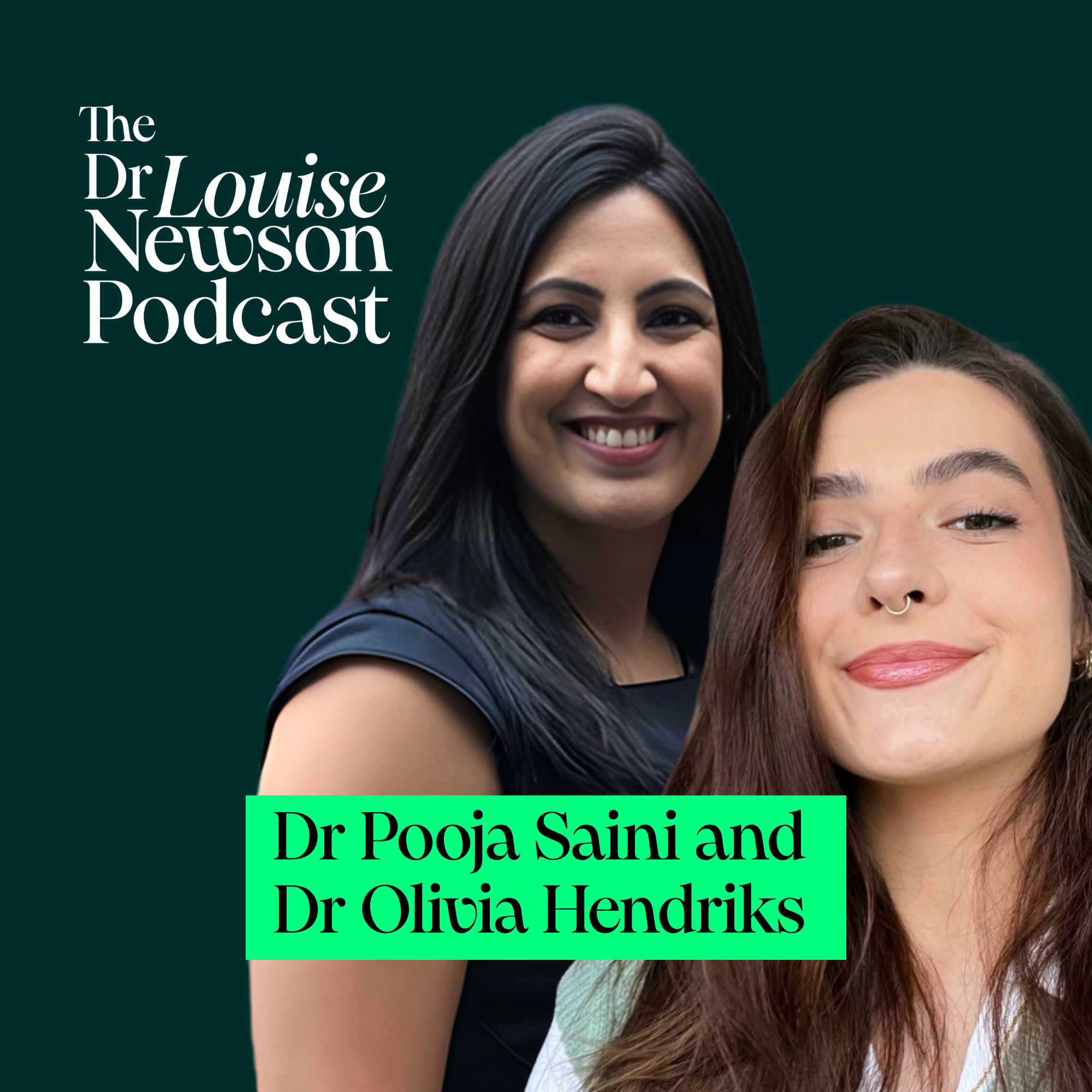
In this episode, Dr Louise Newson is joined by Dr Pooja Saini and psychologist Dr Olivia Hendriks to discuss their important research into perimenopause, menopause and suicide risk. Together, they explore why hormonal changes during perimenopause and menopause can have such profound impacts on mental health, and why this connection is still often overlooked in both research and clinical care.
They also discuss findings showing significant improvements in mental health and suicidal thoughts with appropriate hormone treatments, and why greater awareness, better research and more frequent prescribing of hormones are urgently needed to improve the health of women.
This is a really important episode highlighting the important link between menopause and suicide risk that can’t be ignored.
Let’s connect
👉 Read the full researchpaper discussed in this episode: https://www.drlouisenewson.co.uk/knowledge/hormone-related-suicide-risk-going-undetected
👉 More from Dr LouiseNewson: https://linkin.bio/drlouisenewson

Dr Louise Newson is an award-winning physician, respected women's hormone specialist, educator, and author committed to increasing awareness and knowledge of perimenopause, menopause, and lifelong hormone health. Each week, Louise dives into the newest research, treatments and hot topic issues, providing accessible, evidence-based information to empower your future health. Joined by fellow experts and special guests, with answers to your burning questions, Louise explores how hormones impact every aspect of our lives.
Described as the "medic who kickstarted the menopause revolution", Louise aims to empower a generation of women to have a greater understanding, choice and control over their treatment, bodies, minds and future health through their hormones. She is the creator of the award-winning free balance app, a Sunday Times bestselling author and the founder of the Newson Health clinic. With over three decades of clinical experience, Louise is a member of the Royal College of Physicians, a Fellow of the Royal College of GPs, a Visiting Fellow at Cambridge, a regular contributor to academic journals including the Lancet and the British Journal of General Practice, and has been awarded an honorary Doctorate of Health from Bradford University.
About 28 million people in the UK are thought to be livingwith chronic pain – that’s 43% of the population, according to the 2011 Census.
But what is chronic pain, and how can it overlap with theperimenopause and menopause?
In this week’s episode Dr Louise is joined by Dr DeepakRavindran, a consultant in pain medicine and author of The Pain-Free Mindset: 7 Steps to Taking Control and OvercomingChronic Pain.
Dr Deepak unpicks the science behind chronic, or persist,pain and the two discuss the relationship between hormones, inflammation andpain.
Dr Louise and Dr Deepak have co-authored a new article whichoffers 10 top tips for primary care practitioners on improving care for womenwith fatigue and/or pain. You can access the article here.
Follow Dr Deepak on Instagram, LinkedIn and X.
Click here to find out more about Newson Health

Content advisory: this podcast contains themes of suicide and mental health.
This week on the podcast, Dr Louise is joined by Andrea Newton, a postmenopausal woman whose own experience of mental health during the menopause lead her to train as a tutor with the National Centre for Suicide Prevention Training. Over the last six years, Andrea has trained thousands of people in suicide intervention skills and she is now training to become a menopause coach.
Andrea explains how her work in the corporate world has allowed her to share the importance of educating line managers, HR managers, and everyone about the menopause. She is also the author of the book, Could it be Your Hormones Love? (And Other Questions Not to Ask a Menopausal Woman).
Andrea shares her tips on widening the conversation about menopause:
You can follow Andrea on LinkedIn, Instagram @in.her.right.mind and Facebook @InHerRightMind
Click here to find out more about Newson Health
Contact the Samaritans for 24-hour, confidential support by calling 116 123 or email jo@samaritans.org.
Related articles
Westlund Tam L, Parry BL. (2003), ‘Does oestrogen enhance the antidepressant effects of fluoxetine?’, J Affect Disord. 77(1):87-92. Doi: 10.1016/s0165-0327(02)00357-9
Ibrahim WW, Safar MM, Khattab MM, Agha AM. (2016), ‘17β-Estradiol augments antidepressant efficacy of escitalopram in ovariectomized rats: Neuroprotective and serotonin reuptake transporter modulatory effects,’ Psychoneuroendocrinology. 74: 240-250. 10.1016/j.psyneuen.2016.09.013
While there are limitations to these studies – one is a small cohort, one is an animal study – they help demonstrate that more research is needed on how oestrogen levels affect antidepressant efficacy.
This week on the podcast Dr Louise meets comedian Anne Gildea, who will be joining Louise on her 34-date theatre tour this autumn, Hormones and Menopause: The Great Debate.
Anne, a founding member of Irish musical-comedy trio The Nualas talks to Louise about her diagnosis of breast cancer, aged 45, and her ensuing menopausal symptoms, which she was unprepared for. She explains how her research inspired her to create her own show, How to Get the Menopause and Enjoy It.
Louise and Anne discuss why they’ve come together to create a new show that will take you on a journey through the history of women’s health and lead you to see menopause and hormones in a whole different light.
Finally, the pair share some of the reasons they think people should come to the show:
You can follow Anne on Instagram @annegildea
To buy tickets to the show click here
Click here to find out more about Newson Health
This week on the podcast, Dr Louise is joined by Elin Sullivan, a young woman who suffered a myriad of symptoms for years before getting the right treatment.
Elin first experienced recurring urinary tract infections at 19 years old, and twice required hospitalisation. She also suffered from sweats, sleep disruption and fatigue, shaking and lichen sclerosus. After a chance encounter with Louise, she tried local hormones, which was transformative, and now takes testosterone to balance her low levels.
Elin talks about how hard it can be to experience perimenopausal symptoms at a young age and shares her tips for other younger women experiencing issues that they think might be down to their hormones:
Click here to find out more about Newson Health.
This week on the podcast Dr Louise is joined by Dr Felice Gersh, who is double board-certified in OB-GYN and Integrative Medicine, and specialises in female health, with a focus on managing female hormonal dysfunctions.
She is the author of the book PCOS SOS: A Gynecologist’s Lifeline to Naturally Restore Your Rhythms, Hormones, and Happiness, and recently published a paper on oestrogen and cardiovascular disease, and a 2021 paper on HRT.
Here she talks about the family of oestrogens and the important role of hormones on the heart. Finally, she shares three tips on improving heart and whole body health:
You can follow Dr Felice on Instagram @dr.felicegersh and Facebook @felicegershmd.
Click here for more about Newson Health.
This week Dr Louise is joined by Aoife O’Sullivan, a family medicine doctor who trained in Dublin before completing a second family medicine residency at the University of Maryland.
After taking some time out to complete extra training in perimenopausal and menopausal care, including Newson Health’s Confidence in the Menopause course, Dr Aoife is passionate about providing more comprehensive and holistic care to women during midlife.
Dr Aoife share the ways clinicians, and all people, can educate themselves in order to improve the health of women in the US, and across the world:
You can follow Dr Aoife on Instagram @portlandmenopausedoc
Find out more about the Confidence in the Menopause course and click here for more about Newson Health.
This week on the podcast Dr Louise is joined by a new colleague, Dr Louisa James, a psychiatrist who has recently joined the team at Newson Health.
Dr Louisa’s personal experience of the menopause prompted her to learn more about the impact of hormones, and incorporate her knowledge in her role as an NHS consultant psychiatrist in a home treatment service. Here she discusses the importance, and power, of asking patients about their hormones during a psychiatric appointment.
Finally, Dr Louisa shares her tips for thinking about your hormones alongside your mental health:
1.Consider whether this feels different to any previous episodes of depression you may have experienced or if your symptoms are fluctuating. Some women have suicidal thoughts or are depressed at certain times of the month. Track your symptoms and look at the fluctuations.
Dr Louisa James is now offering consultations to existing Newson Health patients. Click here for details.
This week is a celebration of Dr Louise Newson’s new paperback book, a revised and updated version of the bestselling The Definitive Guide to the Perimenopause & Menopause. Dr Louise is joined by Kat Keogh, who worked on the book with her and is the head of editorial at Newson Health and across the balance website and app.
Here Kat turns the tables and asks Dr Louise the questions, discovering why the subject of HRT doses warranted more attention in the book, the importance of hearing directly from women experiencing the menopause as well as experts in their fields, plus how Louise felt sharing her personal experiences.
Finally, Dr Louise shares three reasons she thinks people should buy the book:
1. The bright yellow cover is uplifting, and when you’re happier you’re healthier.
2. It’s packed with information so you’ll learn something that will either help you or a loved one.
3. Increasing awareness of hormones, perimenopause, menopause, plus PMS and PMDD will help women feel less lonely, more included and more listened to.
Pre-order the paperback book here
Click here to find out more about Newson Health.
This week on the podcast, Dr Louise is joined by Tova Gillespie, a working single parent to two daughters, one of whom has severe disabilities and complex medical needs. Here she talks about the challenges of being perimenopausal while being a carer and how it’s easy to not recognise or understand your symptoms.
Louise and Tova discuss how it’s easy for your own needs to end up at the bottom of the to-do list when you’re a carer or have a busy family life, and Tova shares three tips for anyone who may not be looking after themselves:
Learn more about Tova on her YouTube channel. Or follow her on Instagram @parentXP
Click here to find out more about Newson Health.
Dr Louise Newson: [00:00:11] Hello, I’m Doctor Louise Newson, I’m a GP and menopause specialist, and I’m also the founder of the Newson Health Menopause and Wellbeing Centre here in Stratford-upon-Avon. I’m also the founder of the free balance app. Each week on my podcast, join me and my special guests where we discuss all things perimenopause and menopause. We talk about the latest research, bust myths on menopause symptoms and treatments, and often share moving and always inspirational personal stories. This podcast is brought to you by the Newson Health Group, which has clinics across the UK dedicated to providing individualised perimenopause and menopause care for all women. Today on the podcast, I’ve got somebody with me who I have met in real life before, and she’s with me now. Who many of you will heard of. Who’s very inspirational and very open actually, about her own story. So Bryony Gordon, who’s recently written Mad Woman and in the middle, I’ll hold it up for those of you that are watching, it says Menopause, Binge Eating, OCD: How to Survive a World that Thinks You’re the Problem. And my goodness me, this book resonated so much with me personally but also, I know for a lot of people that I see, so amazing to have you on my podcast, I’m super excited. Thanks, Bryony for coming. [00:01:40][89.4]
Bryony Gordon: [00:01:41] Thanks for having me. [00:01:41][0.8]
Dr Louise Newson: [00:01:43] It’s great. So we met in CarFest actually, didn’t we last year, which was great… [00:01:47][4.5]
Bryony Gordon: [00:01:47] Oh yeah, very, very woman centric CarFest. Oh my God, that’s such a that’s such a stereotype of me. [00:01:56][8.1]
Dr Louise Newson: [00:01:56] Yeah, but it was great. And I, in fact, I’m going back this year. [00:01:59][3.1]
Bryony Gordon: [00:01:59] Me too! I love CarFast. Everyone. All women should know that, obviously women like cars as well but the best thing about it is that Chris Evans puts on, also, he does like SpaFest, which is amazing. It’s what, actually for me, it’s more of a wellbeing festival than it is a car festival. [00:02:17][17.9]
Dr Louise Newson: [00:02:19] Well I didn’t know what to expect. So I went and I was thinking, and I actually went with two of my children, and my middle daughter, who was 18, was like, I’m just going to stay in the hotel with my boyfriend. I don’t even want to come to the stupid festival. And I was like, well, just come for a bit. Anyway. I had to drag her out at the end. We kept going back to dance a bit more before we left, but yeah, it was really interesting because I thought there was something for everyone and it was a real wholesome, happy festival, wasn’t it? [00:02:43][24.1]
Bryony Gordon: [00:02:44] Yeah, my daughter, who’s about to be 11, loves it, it’s like her annual. But you got to stay in a hotel. Yeah, I stay in a tent next to Chris Evans’s Winnebago. No but it’s quite nice. Like, I don’t make it sound like I pitch my tent outside because… [00:03:03][19.1]
Dr Louise Newson: [00:03:04] Oh no, well I’d stay in a nice tent, I just not very good at sleeping on the floor and being all cold. [00:03:08][4.7]
Bryony Gordon: [00:03:09] You don’t sleep on the floor. It’s a bed. It’s a proper bed. [00:03:11][2.4]
Dr Louise Newson: [00:03:11] Okay, well, I would do that. I would definitely do that. But, yeah. No, it was great. And actually this time I’m going to talk every day actually and mix it up a bit. So but because it’s not just about menopause actually, lots of people know me as a menopause specialist but I am a clinician. I’m a physician, I’m interested in holistic health, but I’m more interested in the role of our hormones. So whether you are having periods or not having periods or whether you’re perimenopausal or menopausal, you still have hormone receptors on every cell of our body. And when we talk about horemones, there’s just three that I’m really interested in, which is oestradiol, progesteorne, testosterone. Like there’s hundreds of hormones in our body. [00:03:53][41.6]
Bryony Gordon: [00:03:53] But it’s so funny, Louise, because, like, I love this conversation. I love having these conversations because I always remember, like, it’s wild to me that it’s taken till I got to my 40s to, like, accept how powerful hormones are, you know, like they’re the most powerful chemicals known to human kind. And yet my interpretation of them for so long has been to be dismissed because of my hoemones. Oh, you’re just hormonal. And I’m like, what? Why are we dismissing these because, and for me, you know, what Mad Woman is about is understanding the role that hormones have played in my mental health since I was like 11. You know, like, we talk about menopause now, but it’s actually it’s the whole of our reproductive lives. And, you know, for me it was the realisation came, I’ve had crippling OCD and I first got it when I was about 11 and, you know, on and off throughout my life. And then it came back very badly in 2022. And someone said to me, have you thought about your hormones? And I was like, I’m too young. And they were like, no babes, you’re not, I was like 41 at the time. And I went and had my hormones tested. And they were, they didn’t actually say this because I know you’ll probably know this as a doctor, you’re not allowed to say this, but they were like your levels of oestrogen, like we think probably Dwayne The Rock Johnson has higher levels of oestrogen. I mean they were like so low. And I went on oestrogen and you know I was told all the usual like it can take three months you know. And no word of a lie, Louise, within about two days I was like you know in Disney movies where the princess wakes up and the birds start coming and. [00:05:35][101.9]
Dr Louise Newson: [00:05:35] It’s all colour. [00:05:36][0.2]
Bryony Gordon: [00:05:36] …the wind blows and it’s like la la la la la. Sorry for the singing. That was what it was like. It was incredible. Like the OCD had just, I describe it like the noise had just gone. And, you know, that set me down this path of kind of looking into, well, hang on a second. This is actually really important because there have been times where I’ve nearly lost my life because of my mental ill health. And then when I went on the progesterone bit. It was like as immediate. I felt suicidal and all this stuff started linking up, you know? I’d been on the pill very briefly when I was 21. I’d had to come off it because it was so dark, made me feel so dark. When I was pregnant, I was under psychiatric care from the local authority. And obviously your body is full of progesterone when you’re pregnant and, you know, starting to kind of join up these dots and realise that probably I’m incredibly progesterone intolerant. And perhaps there’s been an element of PMDD throughout my life and just that sort of feeling quite angry, really. That for so long, this stuff has been dismissed. And you know, Louise, you’ll know this, it’s still dismissed. Like there’s a backlash now, you know, to all the conversation about the menopause. You know, when I think to myself, if men went through the menopause. [00:06:54][78.3]
Dr Louise Newson: [00:06:55] Oh my goodness, it’d be so different. [00:06:56][1.2]
Bryony Gordon: [00:06:56] It would be the only thing we were allowed to talk about. You know? [00:07:00][3.8]
Dr Louise Newson: [00:07:01] It really saddens me, Bryony. And it frustrates me as a woman and actually as a mother of three daughters, but also as a medic, because no one taught me this when I was going through it. And I really enjoyed psychiatry. I did a psychiatry job in a very deprived area of Manchester. It’s a privilege being a doctor, and it’s a privilege talking to people who were very deprived, very neglected by society, actually, and most people in other walks of life would not have the privilege of talking to these people in the ways that I can, because I can learn lots of things that are quite confidential, that they wouldn’t talk to others about, their abuse or about their, you know, domestic abuse or drug abuse or how hard their life is when they’re in a council estate with, you know, six children, single mum, alcoholic, whatever. And I don’t judge anyone for who they are because that’s how, part of my training. But actually, I’ve always tried my best as a doctor. Like I work really hard and I want to individualise, care and give people choice but I never had hormones in my toolbox for choice because no one taught me. We were taught a lot about contraception. We were taught a lot about the Depo-Provera injection. Give that to as many people as possible. And then when they started to, I started to give the Depo to women. Often it was women who had had 5 or 6 children who they didn’t want to be pregnant again, of course, and I felt a bit uncomfortable giving this injection because I thought, I don’t know what the long term risks are, I don’t really know. And then there were some studies to show, well, there was some osteoporosis or thinning of the bones. And I thought, oh, hang on a minute. We’re switching off their natural hormones. The natural hormones build bone. But they also are really important for mental health and these women are quite flat and quite low. And everyone’s saying, oh, but they’re complex women. They live in council estates, Louise, don’t worry about them. And I’m like hang on a minute. [00:08:52][111.3]
Bryony Gordon: [00:08:52] I mean, there’s something, it’s quite dark. I mean, it’s essentially sort of like, I’m not going to use the word sterilising, but. [00:08:59][6.4]
Dr Louise Newson: [00:08:59] Well, it is, but it’s also giving them a chemical menopause as well, which I hadn’t realised. And then even we’re going to Women’s Revolt exhibition at the Tate, which is the most amazing exhibition a few weeks ago with my children, there was something from 1979, this poster that these women had drawn with a picture of the syringe saying, ban the Depo, 1979. It’s a synthetic hormone. It messes with our brains. Don’t trust the doctors. 45 years later, we’ve got the implant. It’s again, it’s just a chemical progesterone that is switching off hormones. But the other thing that I didn’t know, which I only found out a few years ago, which I’m quite embarrassed about to admit, but I don’t care, admitting my failures is that I didn’t know these hormones were produced in our brains. Our brain synthesises oestradiol, progesterone, and testosterone. So it’s not all about our ovaries. So we always say, oh, it’s your ovaries playing up. It’s, you know, your ovaries because it’s that time of the month. But actually our brain is a powerhouse and it produces these hormones and which psychiatrist, which neuro researchers have been looking at the role of female hormones in our brain? Very few. And there are people with PMDD, like you say, but also OCD, ADHD, which I think there is a hormonal element, probably based in the brain, but we haven’t done as much research. [00:10:19][79.8]
Bryony Gordon: [00:10:20] I absolutely agree Louise and I think, you know, for me, OCD, the first time I experienced OCD, I was about 11, right. You know, and I got my period about six months later. Now I think there’s an enormous temptation to kind of grab for the, Oh, that’s why I’m like, I am, you know, and like just hormones are the reason and I don’t think that’s the case. I think I probably always have, you know, a predisposition to mental illness, OK. But I do recognise that my ability to deal with that mental illness is massively affected by where my hormones are at any given time, and that’s crucial because it’s the difference between being in a raging sea with a life raft and, you know, or just being naked in the Atlantic Ocean and nothing, you know. And I do think that’s really key because and I also think I believe, like, you know, now you’ll get this as a doctor, you’d look back at kind of Victorian times when doctors didn’t know that the surgeons didn’t know that they should wash their hands. [00:11:25][64.7]
Dr Louise Newson: [00:11:26] It’s Semmelweis isn’t it? [00:11:27][0.3]
Bryony Gordon: [00:11:27] They believed germs were came through the air so they would like, keep the window, you know, like there was, and we look back and go, how did they not know that? You know, and I’m sure that in 100 years time, you know, they’ll be people, our like great great granddaughters or whatever will be have it sitting on a whatever the version of a podcast is, you know, and 2124 and going, God, can you believe they had no idea about the effects of hormones on our mental health? [00:11:57][30.0]
Dr Louise Newson: [00:11:57] Well, it’s very interesting. So I was reading some history books, as you do when you haven’t got anything else to do. And it’s 1789 was one that I read and it’s describing the menopause, but it describes the mental turmoil for these women, and it describes how it’s cyclical and the periods are a cure for their mental anguish. And so they used to do bloodletting. So they used to do cuts even under our breasts and in the legs to let out blood, because they thought that would help our mood. And, and I understand that actually, when we do have our periods, our hormone levels often improve. And before our periods is when our hormone levels are at their lowest. So even then, in the 1700s, they knew there was something that was changing in a woman’s body. And they did describe some flushes and sweats. But this mental health and then hysteria, hysterectomy, obviously mental health, it. [00:12:51][53.3]
Bryony Gordon: [00:12:51] Hysteria comes from the Greek word for womb doesn’t it? [00:12:52][0.2]
Dr Louise Newson: [00:12:54] Yes absolutely does. And then actually I was finding some adverts for a presentation I was giving about misogyny recently, and it was adverts from the 50s and 60s and they used to give us, when I say us, I mean women, not me personally, barbiturates and benzodiazepine to keep us at the home, to quieten us down because we had this mental issues going on and there was even an advert for, housewive’s headache. And she had a broom in her hands and she like oh. But that was, I’m sure, related to our hormones. You know… [00:13:26][32.3]
Bryony Gordon: [00:13:26] I think it’s so interesting how we’ve lost touch with our own, our bodies and our kind of ownership of them. So, like, I think this is really crucial. So Mad Woman, the mad woman of my title is not, it’s like your damn right I’m mad, I’m fucking furious because, you know, like, a lot of this stuff that we experience is totally appropriate. It’s totally appropriate because we, of course, women experience imposter syndrome, you know, because we live in a society that’s a patriarchy, that is not, has never been set up for us and is still not really. Right. OK. So all of these things I think are really appropriate. But also I read this book, which I just think is fantastic, called Women Who Run with the Wolves by Clarissa Pinkola Estes. It’s quite a classic book, and she speaks about back in ancient tribal times how, you know, they used to write about women being sent off because they were dirty during the times of their, you know, menstruation, right? And she says, even now I can imagine, you know, like, if we were told to do that, we’d like go, oh, no, we’re being sent off and then get round the corner and go, woohoo! But how actually these areas where women came together were like really crucial to connect and exchange ideas and feel and also just go with the flow of our bodies. And of course, you know, we don’t. We have adapted through, you know, this is I mean, this is like this is a much bigger political discussion and socio political discussion. But like in the last 100 years, you know, the freedom we have been given by the contraceptive pill is still only freedom so that we fit in to a male world like, there is no point at which men are ever asked to adapt to a world with women in it, you know? And that’s the fucking truth. And it makes me so cross. And that’s what this book is all about, is like. And all along you’ve been telling me I’m the problem? Like babes. I’m not the problem. I’m the fucking solution. [00:15:30][123.3]
Dr Louise Newson: [00:15:32] No, I totally agree, and it’s even more complicated when you talk about hormones because with contraception there’s advantages to the man, to society because we don’t get pregnant. But actually with the menopause, the advantages are that women become, weller, they become more vocal, they become less invisible, they become more in control. They’re more likely to be like CEOs and on boards and not give up their jobs. Mmm, that’s a bit scary isn’t it. And it’s a bit like this sort of, I don’t know, I always think, you know, the Elvis Presley film, with Elvis and the women suddenly got very liberated. They were gyrating their hips and, like, having a wonderful time in front of Elvis. And the men hated them being so happy. And Elvis was taken off, wasn’t he, to go into the Navy. And they was like, you can’t dance like that on the stage. You can’t let women be happy. [00:16:21][49.5]
Bryony Gordon: [00:16:22] My experience, my like, personal experience professionally has been that men generally have definitely in the last few years since I started to go through that and start to really sort of own my power and step into it and not, you know, they don’t like it. Like I found my interesting is that actually, since I got sober, I’m an alcoholic in recovery. But, you know, for me, the process of getting sober has been like, in a way, I needed alcohol for my 20s and my 30s because it was the only way I could could numb myself to fit into a patriarchy, right? And in a way, you know, you would think like an alcoholic getting sober was a good thing. But what I’ve really discovered, actually, is that in terms of profession, in terms of the male worlds in which I exist, I’m probably saying too much here, but it’s it’s been much harder. Like, they don’t like it, like they like Bryony, who, you know, Bryony, 29-year-old Bryony, a coke addict and an alcoholic and, you know, happy to do whatever they were asked, like people pleasing. Brilliant. She’s great. You know, but 43-year-old Bryony who’s going no, actually I don’t want to do this thing you’ve asked me to. And I think I’m worth more than that. And I don’t agree with you. You know, these are normal things that, you know, we should all be able to have conversations about. It’s like, well, OK, you’re dead to me. That’s been my experience. [00:17:49][87.5]
Dr Louise Newson: [00:17:50] Yeah, I totally agree. And what saddens me is I see and speak to a lot of women who have taken to alcohol, drugs, even class A drugs to try and help the demons in their brain that are associated with their hormonal changes. And I spoke to someone recently who became an alcoholic aged 14 actually. She wanted to escape from the hormonal changes. She didn’t realise what was going on. Before her period she was so dark. Very violent household, stepfather that, you know, really, she didn’t want to be near. So it was convenient for her stepdad and mum for her to be away from the house with all sorts of children and young adults who were helping her to drink more and more. And she’s now in her late 40s, and she’s getting these thoughts again, and she’s very, very scared. She’s sober. She doesn’t want to go back to drinking alcohol but she doesn’t know what to do. And it took for just for me to say, will it be related to your hormones like it was when you were 14? You know. [00:18:45][54.8]
Bryony Gordon: [00:18:45] It’s a really interesting point, though as well, because I have this belief as well, that there’s a kind of witchy magic to menopause and the hormones and what they bring up, right, are the things that you absolutely need to deal with. It’s like your body going, are you going to deal with this? Because if you want to move into the next however many decades of your life and own them and enjoy them as you deserve to because you’re a fucking queen, you’re going to have to deal with this issue, you know? And for me, that’s very much been the case is the paranoia, the imposter sense, the kind of like, oh, maybe I’m not that good at what I do is like, you know, I feel it’s like my body been asking me to step into that thing of going. You can start on your own two feet babes, you’re OK. [00:19:29][43.9]
Dr Louise Newson: [00:19:31] And it is interesting. So a lot of people who think they’re progesterone intolerant, it’s worth maybe saying a little bit because there are some people who are intolerant of synthetic progesterone. We still call them progesterone, like progesterone-only pill but it’s been chemically modified. So it’s not the same. So it doesn’t have the same beneficial effects in the body. And there are a lot of people who are intolerant of those, but they’re fine with the natural progesterone. But even the natural progesterone is very anti-inflammatory in the brain. It helps like actually the brain to rewire itself. [00:20:01][30.5]
Bryony Gordon: [00:20:02] Lots of women really like progesterone don’t they? [00:20:03][1.5]
Dr Louise Newson: [00:20:04] They do. It’s like a real Marmite. Some people love it. It helps them feel calmer. It helps feel more relaxed. It helps them sleep and others, about 10% probably of women, just don’t like it at all. But I was speaking to someone recently and there’s there is increasing evidence because it helps the neural networks and pathways to reform, some people feel worse before they feel better, because it’s actually these thoughts that you say that like it will bring things and traumas to the surface, which are quite hard sometimes to understand. But then once the body is reduced in its inflammation, these pathways reform. You deal with that process and then you feel amazing afterwards. So I actually am intolerant, or I thought I was, of progesterone and I used to have, I started it when I started like my clinic and my work and my I used to literally say to my husband, I want to close the clinic. I want to stay in this bedroom. I do not want to get up, I feel awful. And it took me a while to realise it was the progesterone. But I was speaking to this other doctor recently, he said. Yes, but that’s probably internally what you really wanted to do but you were too scared to admit it. And I am quite a negative dark person. But he said, actually, if you’d continued and maybe increased the dose and used it in a different way, say off license, we often use it vaginally, you would have actually come out of that quite a lot quicker and then you would feel even stronger. It’s a bit like some sort of therapy or whatever, and it’s the rebuilding of the brain. And I thought, actually, that is really interesting because when you have a side effect to a medication, we’ve all done it, you try something once, feal awful go, right, I’m never touching that again. But actually, maybe it was because it wasn’t the right dose or type or you hadn’t had it for long enough. And him explaining that in a very simple way, thought actually, it’s a way of you dealing with demons in your head. And I think when you’re older, because a lot of it is older women who are menopausal, not always, younger women can. But when you’re older, you’ve got life experiences so this kick ass attitude you now have Bryony is part of it because you’ve experienced so much in your life. And that’s where I think menopausal women have the edge and the advantage, because we’ve got these mixed emotions and we’ve got life experience, and there is always somewhere in our head telling us, no, Louise, no Bryony, you’re not as bad as you think you are. Like, look at the good you can do. You’re not actually stupid either, even though lots of men and others are telling you that you’re really stupid. Actually, you’re not. And that takes quite a lot, doesn’t it, to really do it. [00:22:33][149.2]
Bryony Gordon: [00:22:34] It takes a, do you know Louise, it takes a hell of a lot. It takes a hell of a lot. And it’s like, it’s quite profound and I think and quite beautiful. And that idea is as I was listening to you talk and, like, pushing through things and, and I think even if it’s not, you know, like for me, it’s like even just understanding that I can have that reaction to synthetic hormones or whatever. It’s like it gives me a bit of distance and it allows me to go, OK, this is not me. This is not not necessarily true. This whole thing of like, you know, you’re terrible. Everyone hates you. I’m like, is that true? Is actually the challenge here to be questioning this internal dialogue? And I think it is and I, I was reading a brilliant something recently about sort of gratitude and how, actually what gratitude is sort of like when you go through tough times, it’s not going, oh, I’m really grateful for these tough times because it means I’m alive. It was like, you know. It’s like going, no what I’m grateful for is what I’m learning. The strength that I am going to gain from having to go through this shitty experience. [00:23:46][72.0]
Dr Louise Newson: [00:23:46] And I think it is so important, like I do quite a lot of yoga, and sometimes the instructor will say, it’s really good to wobble because then you’ll only grow stronger. And I’m thinking, yeah, that’s good, because it’s a bit like being pushed down or having a negative experience. You will grow stronger, but it’s so hard. And I always look at people and always think, oh, they’re lucky they’ve got all this, they’ve got all that, but no one knows what’s going on internally. And, you know, I had the biggest negative experience of my life when my dad died when I was nine, and I could have spent my whole life feeling sorry for myself. Instead, it’s like, do you know what? That was so awful. Nothing can be as bad as that. Well, very few things, but actually it’s going to make me more independent, more resilient, not to depend on other people, not rely on other people. Because no one prepared me for his death. And I’m still cross about that because it was in the 70s and you didn’t talk to your children. So that lack of trust I had for my, you know, people who looked after me, my grandparents, my mother, it was really, really, you know, it’s been very deep seated, but actually it’s helping me with my work now. So when people try and throw mud at me, it’s like, hang on a minute, I’m still independent. I’m still going to carry on, although it’s hard and I think this is the same with anything, isn’t it? When the children get bullied at school. It’s like, no, you’ve got to keep going. You know, if you believe you’re doing is right, just keep going. And and that’s what we want as women, isn’t it? If we know what we’re doing is right and we’ve got good values and integrity, we’ve just got to have that strength. But I think until you’ve been pushed down, you don’t know how to keep strong. Does that make sense? [00:25:22][95.6]
Bryony Gordon: [00:25:23] It does, yeah. It does, it’s about resilience. That’s resilience isn’t it. It’s like resilience is not refusing to fall over. It’s falling over and getting up again. You know like that’s what. It’s, which is helpful as I sit here and I’m supposed to be running four marathons in two weeks’ time and my leg is in bits and I’m like, well, maybe my legs actually just getting stronger in preparation for these marathons. [00:25:50][27.3]
Dr Louise Newson: [00:25:51] Yeah. But I think what’s interesting now that we didn’t have many years ago is that women can form, women work in mysterious ways. We’ve got social media, we’ve obviously always had media, but we’ve got ways where women can really build. So this whole thing about whether we want hormones or not, whether we want to do yoga or not, whether we want to drink alcohol or not, we can share our experiences in ways that I don’t think men do in the same way, because we’re quite honest. But we have this sort of secret network, really, and that’s amplified when it comes to the whole menopause, perimenopause, hormonal thing. And I think I don’t think it’s going to be as long as 100 years Bryony. I think our next generation are so like even more resilient than us. And they’re more open to change than us. And they’re more they’ve got more common sense, actually, in some ways, because my children are like, Mummy what’s the big fuss, it’s just hormones. Like, let’s talk about other things that are more, you know, difficult. So I think having women together is very powerful when they’re in the right frame of mind. We really do pick each other up a lot, I think. [00:26:57][66.0]
Bryony Gordon: [00:26:58] No, I agree, I feel like this conversation has picked me up quite alot, I was in quite a like doldrums about an hour ago. And now I’m like, hmm yeah, let’s go out and kick some arse. [00:27:07][9.3]
Dr Louise Newson: [00:27:09] But that’s what we need. I mean, I honestly, my husband can tell you there was many times where I, I want to give up everything and throw the towel in. [00:27:16][7.6]
Bryony Gordon: [00:27:17] I do, all the time. Every day is a battle to not. Every day, I’m like, when can I just run away to Cornwall, live by the sea and live in a commune. [00:27:28][11.0]
Dr Louise Newson: [00:27:29] Yeah, can I join you? [00:27:29][0.3]
Bryony Gordon: [00:27:30] Yes. Like… Like there’s a question where I go, maybe that’s the matriarchy. Maybe the matriarchy is we all get to go and live in the commune together, and we all support each other. And our men come and they go, do you know what actually, this is really awesome. And we go, well, maybe we could create a human-rarchy. [00:27:48][18.0]
Dr Louise Newson: [00:27:52] Oh, it’s great, it’s great, I think. What I love is the honesty and I think like I am such an honest person, but in your book you say all these things that like so many of us and I don’t know how many because we don’t talk, but I certainly have this monkey chatter, this negativity in my brain a lot that I have to suppress, suppress, suppress. Otherwise I get nothing done. So actually, it was really, you don’t know how reassuring it was to read your book, to know that, you know, many of us haven’t been diagnosed with various things, but we know we have them, but actually we just try and suppress them. But actually, for you to allow us to think mmm yeah actually Bryony is not alone in this, but Bryony is really vocal, I think it’s amazing. So thank you is what I want to say. [00:28:35][42.5]
Bryony Gordon: [00:28:35] Thank you Louise. [00:28:35][0.0]
Dr Louise Newson: [00:28:35] But before I end, I always end on three take home tips. So I would ask, if it’s OK, three things that you would like to tell your former self or people who are younger who have just been told, oh, it’s your hormones, don’t worry. [00:28:52][16.2]
Bryony Gordon: [00:28:52] Okay? Stop dismissing yourself. Stop dismissing yourself, okay? It’s not just anything. It’s valid because it’s your experience. So stop dismissing yourself right, the moment you get into that frame of mind, everything is quite liberating. Unless, you know, like I discount my point of view or my feelings because they’re mine. Just because they’re mine. I’m like, oh, the other person must be right. No. Maybe sometimes you’re right, OK. Maybe sometimes you’re wrong. But that’s also OK. My other thing is, I think a lot of my stuff has been this obsession about being a good girl, you know, and want it. And for me, it’s like, I would say it’s OK sometimes that you’re bad. We all are. You know, I think the society wants us to live as women in a way that isn’t very human, you know, like. And, you know, I suppose confidence is a trick. No one has confidence, you know, it’s a trick. No one has confidence. I don’t have confidence. I just have a will. I just have a desperation not to spend the rest of my life hating on myself because it’s such a waste of energy. [00:30:03][70.7]
Dr Louise Newson: [00:30:04] Yeah, I love that. That’s so important. Great tips. And honestly, I could talk for longer, but it’s been brilliant. So thank you and I look forward to seeing you at CarFest. [00:30:13][9.6]
Bryony Gordon: [00:30:14] Oh me too. Thank you Louise, thanks for having me. [00:30:17][2.5]
Dr Louise Newson: [00:30:17] Thanks, Bryony. [00:30:17][0.4]
Dr Louise Newson: [00:30:23] You can find out more about Newson Health Group by visiting www.newsonhealthcare.co.uk. And you can download the free balance app on the App Store or Google Play. [00:30:23][0.0]

This week, Dr Louise is once again joined by journalist and activist Kate Muir, who made the Davina McCall documentary Sex, Myths and the Menopause. In Kate’s new book, Everything You Need to Know About the Pill (but were too afraid to ask), she turns her attention to the hormones commonly used in the contraceptive pill.
Kate shares personal stories of how women have been negatively affected by synthetic hormones and uncovers the bad science and patriarchy that have had such an impact on women’s health. She also offers hope that women have options and can demand change.
Finally, Kate shares three things every women should know about hormones and the pill:
You can follow Kate on Instagram at @muirka and on @pillscandal
Click here to find out more about Newson Health.
This week we mark 250 episodes of the Dr Louise Newson Podcast!
And joining Dr Louise this week is Anita Nicholson, a nurse practitioner and menopause expert at Age Management Center in the US, where she aims to help patients lead the best quality of life for as long as they can.
Here, Dr Louise and Anita compare notes on the attitudes towards testosterone in the UK and the US, share their clinical experience of the benefits it can provide women, particularly in restoring their zest for life.
Finally, Anita shares three things she thinks could make a huge difference to women’s health:
You can follow Anita on Instagram @menopause_agewellfnp
In this week’s podcast Dr Louise is joined by Dr Mary Claire Haver, an obstetrics and gynaecology doctor and a menopause specialist in the US. Dr Louise and Dr Mary Claire discuss the challenges of ensuring all women have access to evidence-based information and treatment, and their hopes for change.
Dr Mary Claire shares her three tips to help menopausal women improve their health:
You can follow Dr Mary Claire on Instagram at @drmaryclaire
Click here to find out more about Newson Health
Pre-order the revised and updated paperback edition of Dr Louise’s Sunday Times bestseller The Definitive Guide to the Perimenopause and Menopause here
References to studies discussed in this week’s episode
J Gen Intern Med 2006; 21:363–6
J Gen Intern Med 2004;19:791–804
The Dr Louise Newson Podcast is celebrating two huge milestones this week: not only is the podcast five years old, we’ve hit six million downloads since Dr Louise started her podcast back in March 2019!
Making a welcome return to the podcast this week is world-renowned neuroscientist Dr Lisa Mosconi, PhD. Her new book, The Menopause Brain is released on 21 March and in it Dr Lisa shares some of the fascinating changes that occur to the brain during menopause.
In this episode, Dr Lisa explains how our understanding of the importance of hormones’ role in the brain is relatively new – man was walking on the moon almost 30 years before scientists realised that the hormones that play an important part in ovarian function also have a fundamental role in the brain.
She explains that she wrote her book to empower women with the information they need to navigate the menopause – by understanding why your brain might feel foggy and the science behind it, she hopes to reassure and enlighten.
You can follow Dr Lisa Mosconi on Instagram @dr_mosconi
Click here to find out more about Newson Health
Joining Dr Louise on this week’s podcast is Alex Newman, a substance misuse therapist with a special interest in the menopause.
Alex’s passion is supporting women who are self-medicating menopausal symptoms with alcohol and drugs – a recent survey by Newson Health of nearly 1,200 women found some were spending nearly £3,000 a year on alcohol and over-the-counter medication in a bid to cope with menopause-related symptoms.
The pair discuss the relationship between substance misuse and menopause, and crucially, strategies on how to get help for yourself or a loved one.
Follow Alex on Instagram @alexnewmantherapy or email alexnewman.therapy@gmail.com.
Click here to find out more about Newson Health
Content advisory: this episode contains themes of suicide and self-harm
Joining Dr Louise on this week’s podcast is Wendy Barker. Wendy experienced postnatal depression after the birth of her first child in the late 80s and was later diagnosed with premenstrual dysphoric disorder (PMDD), a very severe form of premenstrual syndrome.
‘For probably three weeks of the month, I was like a coiled spring,’ Wendy recalls.
‘And the only way that I would get anything sort of relief from that would be to either rage, scream, shout, and then there’d be the tears. And then I would think that’s it until it starts all over again.’
Wendy movingly describes the impact of PMDD on her physical and mental health and her relationship with her family, her fight for a diagnosis and ongoing access to treatment, plus her advice for others in similar situations.
You can find more information about PMDD in Dr Louise’s book, the Definitive Guide to the Perimenopause and Menopause. And you can listen back to episode 216 of the podcast with Dr Hannah Ward on progesterone, PMDD, postnatal depression and menopause.
Click here for more information on Newson Health
Contact the Samaritans for 24-hour, confidential support by calling 116 123 or email jo@samaritans.org
This week Dr Louise is joined by feminist cultural historian Dr Elinor Cleghorn, author of Unwell Women, which unpacks the roots of the misunderstanding, mystification and misdiagnosis of women’s bodies, illness and pain. From the ‘wandering womb’ of ancient Greece to today’s shifting understanding of hormones, menstruation and menopause, Unwell Women is the story of women who have suffered, challenged and rewritten medical misogyny.
Elinor tells Dr Louise how the book draws on her own experience of being dismissed by doctors for years before finally being diagnosed with systemic lupus, an autoimmune condition which is nine times more prevalent among women than men. Dr Louise and Elinor also discuss how women’s health, including menopause, has been viewed through the ages, and the misconceptions that need to be consigned to the history books once and for all.
Follow Dr Elinor on Instagram @elinorcleghorn
Click here to find out more about Newson Health
On this week’s podcast, Dr Louise is joined by Dr Ashley Winter, a urologist and sexual medicine specialist, and Dr Sarah Glynne, a GP and menopause specialist who is a member of the research team at Newson Health and chairs a working party that promotes access to evidence-based menopause care for patients with breast cancer.
They discuss Fezolinetant – brand name Veoza – a new drug recently approved in the UK and other countries to treat moderate to severe hot flushes in menopausal women aged 45 to 60 years.
Related articles
Lederman S., Ottery F.D., Cano A., Santoro N., Shapiro M., Stute P., et al. (2023) ‘Fezolinetant for treatment of moderate-to-severe vasomotor symptoms associated with menopause (SKYLIGHT 1): a phase 3 randomised controlled study’, Lancet, 401(10382):1091-102. doi.org/10.1016/S0140-6736(23)00085-5
Johnson K.A., Martin N., Nappi R.E., Neal-Perry G., Shapiro M., Stute P., et al. (2023), ‘Efficacy and safety of fezolinetant in moderate to severe vasomotor symptoms associated with menopause: a Phase 3 RCT’, J Clin Endocrinol Metab, 108(8):1981-97. Doi:10.1210/clinem/dgad058
Douxfils J., Beaudart C., Dogne J.M. (2023), ‘Risk of neoplasm with the neurokinin 3 receptor antagonist fezolinetant’, Lancet, 402(10413):1623-5. doi.org/10.1016/S0140-6736(23)01634-3
Follow Dr Ashley Winter on X and Instagram @ashleygwinter
Follow Dr Sarah Glynne on Instagram @sarahglynne
Click here to find out more about Newson Health
In this episode, Dr Louise is joined by Dr Clair Crockett, a GP and menopause specialist at Newson Health. Dr Clair has completed diplomas in Obstetrics and Gynaecology, and Sexual and Reproductive Health, and fits coils and implants.
Here, she discusses some of the challenges for perimenopausal and menopausal women when it comes to contraception, and the importance of individualisation. She gives an insight into the hormones used in the contraceptive pill and HRT and shares how the Mirena coil can be transformative for some women.
Finally, Dr Clair suggests three things to consider about contraception:
With Valentine’s Day just around the corner, this week’s podcast looks at how menopause can affect sex and intimacy.
Joining Dr Louise is US-based Dr Kelly Casperson, urologic surgeon, author, and sex educator with expertise in hormones and pelvic health, whose passion is empowering women to embrace their best love lives.
They talk about how genitourinary symptoms, such as recurrent UTIs, can impact sex, why communication is crucial and the importance of education in helping women make informed decisions about their treatment and health.
Follow Dr Kelly on Instagram @kellycaspersonmd and listen to her podcast here
Click here to find out more about Newson Health
Advisory: this podcast includes themes of mental health and suicide
Do you find yourself easily distracted, with your attention rapidly shifting between different things?
If so, you could be one of the legion of women who are under-diagnosed for attention deficit hyperactivity disorder (ADHD).
Here, Australia-based psychiatrist and ADHD expert Dr David Chapman joins Dr Louise to discuss what ADHD is, how it affects women and the impact that female hormones – which have a powerful role in the brain – can have on symptoms.
He talks about how ADHD symptoms can worsen for women just before their periods and around their perimenopause, and sets out the common treatment options, including increasingly the role of HRT and the Pill, and how lifestyle changes such as mindfulness can help women affected by ADHD.
Dr Louise and Dr David also discuss how symptoms may only need treating if they are having an impact on a women’s life.
Download balance’s ADHD and menopause booklet here.
Click here for more about Newson Health.
Contact the Samaritans for 24-hour, confidential support by calling 116 123 or email
On this week’s podcast Dr Louise is joined by Dr Rupy Aujla, founder of The Doctor’s Kitchen, which aims to inspire and educate about the joy of food and the medicinal effects of eating well.
Dr Rupy shares his thoughts on how to best enjoy a healthy and fulfilling diet and looks at some of the challenges food can bring during the perimenopause and menopause, but also how it can be a time to rethink and set new nutrition habits.
While the new year is often a time to set goals or resolutions, Dr Rupy believes that consistency is the key to success and it can come through small steps, such as simply adding on vegetable to every single meal.
Finally, Dr Rupy shares his three top tips for healthy eating:
Follow Dr Rupy on socials @doctors_kitchen
Click here for more on Newson Health
On this week’s podcast, Dr Louise is joined by Dr Peter Greenhouse, a menopause specialist with 40 years’ experience in women’s sexual healthcare who is actively involved in postgraduate lecturing.
He has recently spoken out about NICE’s draft menopause guideline update, and tells Dr Louise it contains inappropriate and inaccurate statements, particularly concerning HRT and breast cancer safety, and ignores the cardioprotective effect of HRT when it’s started within 10 years of the menopausal transition.
Dr Peter challenges NICE’s stance on HRT for primary prevention and proposes a pre-emptive approach that could help reduce the amount of other medications GPs are prescribing menopausal women.
Finally, he shares his belief that women should be able to take as much HRT for as long as they need to.
You can read about Newson Health’s response to the NICE draft guideline consultation here.
Follow Dr Peter Greenhouse on X @GreenhousePeter
Click here for more on Newson Health
This week Dr Louise is joined by Dr Hussain Al-Zubaidi, our brand-new fitness and longevity coach on the balance app. Dr Hussain is a GP who runs an NHS-based fitness and lifestyle clinic that helps patients to eat better, move more and connect with their community.
Dr Hussain is a long-distance triathlete but he hasn’t always been fit – a shock medical appointment prompted him into action after years of inertia and slowly but steadily he lost 24 kilos.
Here Dr Hussain shares what he’s learnt, including shifting your mindset from thinking about exercise as an obligation to choosing which movements you enjoy, be it a walk with friends or dancing. He explains why menopause can pose a challenge but also an opportunity to figure out what positive steps you can take for a healthier, happier you.
Finally, Dr Hussain shares three things you can do in this new year to improve your quality of life and longevity:
Get a partner in crime – someone who can support you. Without my wife, I wouldn’t have made these changes.
Try to control the cues in your life – we all have cues that trigger behaviours that we’re not happy with. You might need to change your evening routine, for example.
Harness self-belief. It really matters and is so powerful.
You can access Dr Hussain’s new content on the balance app, and follow him on Instagram @irondoctorhaz.
Click here for more about Newson Health.
Menopause often happens at a time when you are juggling a career, relationships and caring responsibilities.
Here Dr Nadira Awal, a GP and menopause specialist, joins Dr Louise to discuss her work in raising awareness of the menopause and the importance of partners and families understanding what their loved on is going through.
Dr Nadira’s personal experience of the menopause helped drive her passion for educating and supporting other women, especially those in ethnic minority communities who may not feel able to speak openly about it. She talks about increased health risks owing to genetics, particularly with diabetes and increased blood pressure, and the challenge of treating a woman’s symptoms holistically in a ten-minute GP appointment.
Follow Dr Nadira on Instagram @pauseandcohealthcare and on Facebook at Pause and Co Healthcare.
Click here for more about Newson Health
This week Dr Louise is joined by Dr Ruth Beesley, a GP who works in central Peterborough and who specialises in working with the homeless, those with alcohol or drug addictions and vulnerable women who engage in sex work.
Dr Ruth talks about the challenges vulnerable groups of women face and how their trauma can act as a barrier to accessing the healthcare they need, both in general and for the menopause. Passionate about reducing health inequalities, Dr Ruth tells us about her outreach clinic and a new mobile bus clinic, both of which allow her to reach more women.
Finally, Dr Ruth shares her learnings on working with hard-to-reach groups and reflects on the three things that have made her job so rewarding:
Click here to find out more about Newson Health Group
In this episode Dr Louise is joined by world-renowned neuroscientist Dr Lisa Mosconi, PhD. Dr Lisa is Director of the Alzheimer’s Prevention Clinic and Women’s Brain Initiative at Weill Cornell Medicine in New York and author of bestsellers The XX Brain and Brain Food.
Dr Lisa was studying nuclear medicine and neuroscience when her grandmother and her grandmother’s three sisters all developed Alzheimer’s. Dr Lisa became interested in the cause of Alzheimer’s and why women are more susceptible. Her research has shown that, rather than a disease of old age, it starts in midlife and menopause potentially plays a part.
Dr Lisa discusses her most recent paper, which found that women who took hormones in midlife to treat their menopause symptoms were less likely to develop dementia than those who hadn’t taken oestrogen.
Finally, Dr Lisa shares three things to consider about female hormones:
Follow Dr Lisa on Instagram @dr_mosconi
Click here to find out more about Newson Health
Content advisory: this podcast contains themes of mental health and suicide
Dr Louise is joined by her patient Trudie Jennings in this episode to talk about the complexities around HRT during and after treatment for breast cancer.
Trudie describes how she started HRT to successfully manage crippling anxiety and other menopause symptoms and a few months later she was diagnosed with an aggressive breast cancer.
NICE guidance states women should stop taking systemic HRT if they are diagnosed with breast cancer. However, after careful discussion with her cancer doctor and nurse, Trudie decided to continue with HRT during her treatment as, for her, the menopause symptoms were more challenging than her cancer treatment.
Trudie and Dr Louise discuss shared decision making and informed consent, and how important it is for women with and after breast cancer to be fully informed about potential risks, benefits and uncertainties about HRT following a breast cancer diagnosis so they can make the best decision that is right for them.
Trudie’s three tips for women who have had breast cancer and are struggling with their menopause:
Contact the Samaritans for 24-hour, confidential support by calling 116 123 or email jo@samaritans.org
Click here to find out more about Newson Health
This week on the podcast Dr Louise speaks to Dr Ashley Winter, a urologist and sexual medicine specialist, based in Los Angeles.
Dr Ashley has seen the transformative effects of vaginal hormones on women – not only those who are menopausal, but also women who experience cyclical symptoms of bladder pain, UTIs and painful sex.
She shares her frustration on the situation in the US, where inaccurate and harmful warnings are included in every oestrogen product available, and her hopes of dispelling the fearmongering by talking, looking at the evidence and sharing her clinical experience.
Finally, Dr Ashley gives three reasons why women should use vaginal hormones:
Follow Ashley on X and Instagram @ashleygwinter
.png)
This week Dr Louise is joined by broadcaster and former international gymnast, Gabby Logan. Gabby is the host of her own successful podcast The Mid Point where she speaks about midlife challenges, and here she shares her own experiences of the menopause.
Gabby reflects on the impact of the menstrual cycle on female athletes and the positive impact of speaking about it and increasing awareness. She shares how exercise is helping her to forge and cement friendships and make time for herself, and how HRT helped her to rekindle her vigour for exercise.
Finally, Gabby shares three reasons why we should all be exercising, regardless of our age:
1. It’s future proofing. I want to be active in my 80s, playing golf, going for long walks and getting myself out of a chair without it being a kind of a national incident. So I’m doing things now that are going to help empower me.
2. It’s good for your mental health. In my 20s, I realised somehow that exercise was good for me mentally. I knew that going for a run was about clearing my brain, getting back on track if I’d had a wobbly day or starting the day well. That feeling has grown and I know exercise is vital for mental health.
3. It’s about balance. Think 80/20. If you are going to fall off, have a glass of wine or a gin and tonic at the weekends, don’t feel bad about it. The exercise I’m doing will hopefully help to negate some of the toxins I might occasionally put inside me.
Follow Gabby on Instagram @gabbylogan
Leading US oncologist Dr Avrum Bluming joins Dr Louise Newson to talk about the crucial role of oestrogen in women’s health.
Despite HRT’s proven benefits in protecting against heart disease, bone fracture and cognitive decline, many women still avoid it over breast cancer fears.
It’s been more than 20 years since media headlines about a study called the Women’s Health Initiative linked HRT to an increased risk of breast cancer. In this podcast, Dr Bluming says that in fact we now know oestrogen alone decreases the risk of breast cancer development by 23% and risk of death from breast cancer by 40%.
He also disputes the findings of the WHI study that combined progesterone and oestrogen HRT leads to a small increase in breast cancer cases.
‘It is very upsetting when such an influential study continues to misquote their own data,’ says Dr Bluming, who has spent 25 years studying the benefits and risks of HRT in breast cancer survivors.
Dr Bluming points out that oestrogen used to be a treatment for breast cancer before chemotherapy was developed, and that rates of breast cancer increase as we age, despite the fact our oestrogen levels fall as we get older.
You can read about Dr Bluming’s latest paper here, and listen to an earlier podcast Dr Newson and Dr Bluming recorded here.
Raquela Mosquera joins Dr Louise Newson in this episode to talk about the turmoil, anxiety and unexplained bleeding she went through during her menopause.
Raquela is the mum of Joe Wicks, the fitness coach who kept the country moving during lockdown and who has also appeared on Dr Louise’s podcast. Joe put Raquela in touch with Dr Louise after she confided her worries over her symptoms.
The anxiety, brain fog and isolation led to Raquela leaving the job she loved, but adjusting her HRT has transformed her life. Listen to Raquela and Dr Louise share tips about how to get the right HRT dose and type to suit you to get the maximum benefit.
Raquela’s three tips:
1. Educate yourself on the symptoms of the menopause and right down all your symptoms before seeing your GP, including when these symptoms started and what can make them worse.
2. Be a menopause warrior. Chat about your experience to friends and family to reduce the stigma around the menopause.
3. Don’t be scared of HRT. Go to your GP and talk about whether it could work for you before making any decisions.
Testosterone is an important sex hormone for both men and women (although women have much lower levels) produced by your ovaries and adrenal glands and declines during the menopause.
When it comes to menopause, testosterone is a hormone that can be misunderstood, and many women struggle to access testosterone treatment on the NHS.
Here Dr Louise and her Newson Health colleague, GP and Menopause Specialist Dr Catherine Coward, talk about how it can be a valuable addition to HRT for women around the menopause and beyond.
NICE menopause guidance recommends testosterone can be beneficial for women experiencing low libido where HRT alone hasn’t helped. Yet Dr Louise and Dr Catherine talk how in their clinical experience, testosterone benefits can extend beyond sex drive-related symptoms, with patients reporting improvements including having more energy, and reduced brain fog and anxiety.
In this episode, Dr Louise speaks to the youngest of her three daughters, Lucy, about all things menopause. Lucy, 12, recalls making her mother an HRT tote bag when she was six, plus hiding in her room when there were arguments at home, when Dr Louise was struggling with her symptoms.
Lucy shares her experience of having her mum in the public eye, gives Dr Louise sage advice for dealing with bullies and offers her views on why menopausal women need help to remain in the workplace. In a survey conducted for her book, Dr Louise discovered 75% of women had never discussed menopause in their home when they were growing up. Barriers included a lack of knowledge, embarrassment, lack of communication, being short on time and feelings of shame around the topic.
While Lucy has had lots of conversations about the menopause at home, she reveals that school education on the subject was limited. But conversations with children about the menopause are important as they can help normalise it.
Personal trainer, wellness coach and mum-of-three Lavina Mehta MBE joins Dr Louise in this week’s episode to share her advice on boosting your activity levels during the perimenopause and menopause.
As a British Asian, Lavina is passionate about ensuring her message of the benefits of exercise reaches all communities, and highlights how exercise can treat, prevent and reduce the risks of chronic diseases like Alzheimer’s, diabetes and heart disease.
Lavina encourages busy women to begin ‘exercise snacks’, which are short bursts of activity that can be slotted into full days.
Finally, Lavina shares her three easy wins to improve future health:
1. Start strength training and prioritise building your muscle mass over losing weight.
2. Start off small with exercise ‘snacks’, which means adding little bite-sized chunks of exercise throughout your day. It all counts and it is never too late to start.
3. Keep talking, keep learning, keep educating yourself and keep sharing your journey with everyone around you.
For more about Lavina visit her website and follow on Instagram at @feelgoodwithlavina, plus feel good workouts and exercise snacks on her YouTube channel @feelgoodwithlavina.
Content advisory: this podcast episode contains themes of mental health and suicide
It’s a family affair on this week’s podcast as Dr Louise is joined by her eldest daughter Jessica for a special episode on the eve of World Menopause Day.
Jessica talks frankly about the impact of PMS and coping with hormone changes with migraine, as well as the strategies that helped her. Mother and daughter also discuss the importance of demystifying menopause and hormone changes through honest conversations between families, friends – and even complete strangers.
Contact the Samaritans for 24-hour, confidential support by calling 116 123 or email jo@samaritans.org
This week, Dr Louise speaks to Italian Menopause Society president Dr Marco Gambacciani.
Early in his career Dr Marco specialised in reproductive endocrinology. He became interested in the occurrence of cardiovascular disease and osteoporosis during the menopause, and his menopause clinic was the first in Italy to have a bone density scanner. On a personal level, Dr Marco saw the devastating effects of osteoporosis first-hand after his grandmother was diagnosed with the condition. Dr Marco also shares his frustrations on the lack of understanding of how hormones can affect women’s cardiovascular health. On a more hopeful note, he is urging the Italian government to make menopause clinics available all over Italy.
Finally, Dr Marco shares the three reasons why he believes women should consider HRT when they’re younger:
Follow Dr Marco on Instagram @m.gambacciani
October marks World Menopause Month, and on this week’s podcast, Dr Louise is joined by Newson Health colleague Dr Penny Ward to talk about the relaunch of our Confidence in the Menopause.
Confidence in the Menopause is a CPD-accredited online course from Newson Health which is designed to increase your knowledge of, and confidence in, managing all aspects of the perimenopause and menopause. The course contains free and subscriber-only modules and is designed not only for those working in healthcare: it’s for everyone. We’ve included tailored information for non-healthcare professionals, whether you are a woman looking for information to help you make the right decisions and get the most out of their healthcare consultations, or a partner, friend or colleague who simply wants to know more.
Dr Penny’s top three reasons for completing Confidence in the Menopause:
Find out more about Confidence in the Menopause here
Content advisory: this podcast contains themes of mental health and suicide
On this week’s episode of the Dr Louise Newson Podcast, Anna Mcgrory shares her story of how her mental health was severely affected by menopause.
Anna tells Dr Louise how therapy and medication had helped her successfully manage her obsessive compulsive disorder (OCD) and mild depression symptoms for over a decade. But out of the blue, Anna’s symptoms returned and quickly spiralled. Anna was admitted to hospital, on six psychiatric drugs but still didn’t feel better.
Thankfully, after learning about the impact of hormones on mental health and being prescribed HRT, things changed for the better.
Anna’s top three tips:
1. Have more open conversations, starting from at home with the kids. This will filter through society, making menopause less of an unspoken thing and more of a just another thing about the body.
2. Make sure your resources are evidence based. There’s a lot of information on social media, so just make sure that whoever you’re listening to is appropriately qualified.
3. Advocate for yourself. If your symptoms are hormone related and you’re being told you’re too young or whatever, try again and don’t just give up at that first hurdle.
Anna is on Instagram @Hormones.on.her_mind. Find out more about OCD through charities OCD-UK and OCD Action.
Contact the Samaritans for 24-hour, confidential support by calling 116 123 or email jo@samaritans.org
In this week’s podcast, food writer, author and award-winning entrepreneur Freda Shafi talks about her work raising awareness of menopause and recording the experiences in the Pakistani community in West Yorkshire.
Freda shares her own menopause story, and she and Dr Louise discuss key barriers women face accessing care, and ways to improve knowledge to empower women to advocate for themselves.
‘I’m a South Asian woman, I’m a Pakistani, I’m a British Pakistani woman, and I know I represent a certain demographic,’ says Freda.
‘I feel as though I can reach many women through the fact that I am from the community. That may be platforms for women like myself who are able to cascade that information and let that reverberate across those communities.’
Freda’s top three tips:
1. Help represent your community to spread awareness of menopause symptoms, treatments and services and help tackle the stigma that still surrounds this area.
2. Get a second opinion if you don’t feel your healthcare professional has given you the right diagnosis. Explore the materials that are out there, including the balance app, so that you’re informed when you see your doctor.
3. Boost training in the menopause for community leaders so that they can signpost women to local services that can help support them.
Follow Freda on Instagram @fredishafi_spiceitup
Bestselling author, screenwriter and TV presenter Emma Kennedy joins Dr Louise Newson in this episode to talk candidly about her menopause experience.
Emma describes how she thought she had got through her menopause when terrifying heart palpitations and anxiety struck.
After always being fearful of HRT due to a strong family history of breast cancer, a careful and detailed discussion with a GP around the risks and benefits led to her starting a low dose of hormones.
‘It’s the first time I’ve ever cried in front of a doctor,’ she says.
‘Ever, ever. I felt that terrible. [But] Just that tiny amount of estrogen and the heart palpitations stopped in 48 hours and they haven’t come back. It’s like a miracle.’
Dr Louise and Emma talk about the importance of a personalised discussion between a doctor and a patient to assess whether and what type of HRT may be the right choice. Emma also talks about the lifestyle changes she has made to reduce breast cancer risk and help control menopausal symptoms.
Emma, who wrote the bestselling The Tent, The Bucket and Me, also talks about her frustration with the pain and discomfort women are often expected to put up with during routine procedures.
She gives a stirring call to action for the speculum – the device used in many intimate procedures – to be, at the very least, radically improved. For more about Emma visit her website and you can follow her on Instagram @emma67 or Threads @emmak67
In this podcast, Jill Chmielewski, a nurse, educator and women’s advocate, talks about her mission to guide midlife women to greater wellbeing.
Dr Louise and Jill discuss the powerful and poorly understood role of hormones in women’s health throughout their life, HRT and the importance of women advocating strongly for their own needs. Jill advises women should prepare well in advance for the menopause, as hormonal changes can begin earlier than you may expect.
Jill’s three top tips:
For more about Jill visit her website here and you can follow Jill on Instagram @jill.chmielewski.
Content advisory: this podcast contains themes of mental health and suicide
Joining Dr Louise on the podcast this week are Lynsey and her husband Kieran. Lynsey movingly describes a rapid deterioration in her mental health during the perimenopause which saw her sectioned under the Mental Health Act.
‘I just felt desperate that this was a new version of me and I couldn’t work out why,’ she recalls.
Lynsey and Kieran, who is a GP, speak to Dr Louise about the need for greater understanding of how hormonal changes during the perimenopause and menopause can impact on mental health, coupled with improved access to HRT.
Contact the Samaritans for 24-hour, confidential support by calling 116 123 or email jo@samaritans.org
On this week’s podcast, Dr Louise is joined by award-winning US broadcast journalist, podcast host and menopause campaigner Tamsen Fadal.
Tamsen describes how she didn’t recognise she was menopausal after suffering from hot flushes, brain fog and heart palpitations, as she believed she was still having periods. This prompted her to find out more and support other women along the way, including spreading awareness via the #MenopauseTok campaign on social media.
Dr Louise and Tamsen discuss the impact of menopause on careers, barriers to accessing treatment, the importance of being informed – and the growing voice of menopausal women on social media.
Here are Tamsen’s top three tips:
1. Listen to yourself and your body and don’t miss signs that could be the perimenopause by putting them down to being busy or stressed.
2. Try and carve out time just for yourself, even when things are really busy.
3. Find your people: surround yourself with a community to support you through the perimenopause, menopause and beyond.
Follow Tamsen on Instagram @tamsenfadal and Tiktok @tamsenfadal.
Regular listeners will know there is much more to the menopause than hot flushes – but how do hormone changes affect your memory, mood and cognition?
This week Dr Louise is joined by Dr Dan Reisel, Specialist Registrar in gynaecology at University College London and Newson Health Clinical Research Lead, to take a closer look at the relationship between hormones and brain health.
Dr Dan says awareness is improving, but researchers must up their game when it comes to studying the female brain. While mood and memory symptoms are common in menopause, too often, studies focus on male brains as they don’t want to deal with the complexity of female sex hormones, he adds.
Dr Dan’s three take home tips:
1. If you’re going through the perimenopause or menopause and struggling with symptoms, don’t just accept how you feel. Seek out options for treatment such as HRT that can improve your symptoms.
2. Become an advocate for better care for women going through the menopause – speak to your friends, healthcare professionals and colleagues about your experiences.
3. If you are offered the chance to take part in research seize that opportunity to make your voice heard and improve the experience for women in the future.
You can follow Dr Dan on Twitter at @danreisel
Progesterone is a hormone produced after ovulation and dominates the second half of your menstrual cycle. Progesterone balances the effects of oestrogen, supports the body during pregnancy and is known as the relaxing hormone.
But how can progesterone impact your mental health in the run up to periods, after childbirth and during the perimenopause and menopause?
Joining Dr Louise this week is Newson Health GP and Menopause Specialist Dr Hannah Ward, whose interest in the menopause and HRT was ignited following her own hormonal struggles after the birth of her children.
Here, Dr Hannah shares her personal experiences of progesterone treatment, and takes us through the key differences between body identical progesterone and synthetic progestogens.
Joining Dr Louise this week is trailblazing US urologist and sexual health doctor Dr Rachel Rubin, to address these common menopause symptoms and the relief vaginal hormones – often used alongside systemic HRT – can bring.
Dr Rachel explains why we need to stop using terms like vaginal dryness and vaginal atrophy, which hugely downplay the impact of declining hormones on your whole genitourinary system.
‘When we say women have vaginal dryness, we minimise their symptoms, we minimise that it’s no big deal, that you can just use a little lubricant, a little moisturiser,’ says Dr Rachel.
Plus, Dr Rachel and Dr Louise also discuss DHEA – a hormone treatment which converts to oestrogen and testosterone in the vagina – and the benefits this can bring to women struggling with genitourinary syndrome of the menopause (GSM), again often alongside systemic HRT.
Dr Rachel's top three tips if you are struggling with GSM.
1. Know that if you have any symptoms that affect yourvagina, vulva or urinary system and you’re over the age of 45, you deserve avaginal hormone product.
2. Talk to your healthcare professional about access to thistreatment that can prevent urinary tract infections, decrease your frequencyand urgency of needing to urinate, decrease your pain in intercourse and leadto better lubrication, arousal and orgasm.
3. Keep using your localised hormone replacement: it is a safe product, so can be used long term to sustain the benefits.
Follow Dr Rachel on Instagram @drrachelrubin.
Noticed that your eyes are feeling drier, grittier or even more watery lately? It could be dry eye syndrome.
July marks Dry Eye Awareness Month, and what you may not know is dry eyes can be a hidden symptom of menopause.
In fact, one in four of the nearly 6,000 women surveyed ahead of the release of Dr Louise’s book, the Definitive Guide to the Perimenopause and Menopause, said they experienced dry eyes during the menopause.
Joining Dr Louise on this week’s podcast is Maria McGoldrick, a clinical performance consultant for Specsavers who is based in Scotland. Maria, who is an optometrist with 13 years’ experience, gives us the lowdown on the typical symptoms of dry eyes and treatments that can help.
Maria’s top three tips to optimise your eye health:
1. Have a regular eye test, ideally once every two years.
2. If you suspect you may have dry eyes, make an appointment with an optometrist so this can be assessed and a treatment plan devised.
3. If you are perimenopausal or menopausal and have an eye appointment coming up, mention this to your optometrist. This will help them support you and make the right treatment plan for you.
Podcaster, author and journalist Lorraine Candy returns to the podcast this week to talk about thriving in midlife and the importance of sharing menopause knowledge and spreading awareness.
Lorraine is co-host of the popular podcast series Postcards from Midlife, which often looks at the Generation X experience of the perimenopause and menopause. In this episode, she joins Dr Louise to discuss her new book What’s Wrong With Me? 101 Things Midlife Women Need to Know, which is a compelling and reassuring account of how to live a magnificent midlife. The book draws on many women’s experiences to look at the emotional side of midlife and how our identity as women can change during this time.
Lorraine shares three reasons you should buy her new book:
1. It will make you laugh – which is always important.
2. It is packed full of expert advice that can support you to change your life in midlife.
3. Find out more about the emotional changes and impact of midlife, looking at how your identity can change in your 40s and 50s.
Click here for more details on Lorraine’s new book. You can access the Podcasts from Midlife podcast here and follow her on Twitter and Instagram.
This episode looks at how hormone changes impact women in the workplace and in their personal lives – and why do many women put their own needs last?
Dr Louise is joined by Dr Claire Kaye, an executive career coach and former GP specialising in perimenopause and menopause in the workplace. Dr Claire explains how career coaching can help bring about clarity and focus, particularly when you’re dealing with physical and psychological symptoms during the perimenopause and menopause.
And both Dr Claire and Dr Louise offer advice on how to navigate these changes and overcome negative emotions to prioritise your own health and wellbeing.
Dr Claire’s top three tips for building self-esteem:
You can follow Dr Claire on Instagram @drclairekayecoaching, LinkedIn @drclairekaye or visit her website here.
Dr Louise Newson is an award-winning physician, respected women's hormone specialist, educator, and author committed to increasing awareness and knowledge of perimenopause, menopause, and lifelong hormone health. Each week, Louise dives into the newest research, treatments and hot topic issues, providing accessible, evidence-based information to empower your future health. Joined by fellow experts and special guests, with answers to your burning questions, Louise explores how hormones impact every aspect of our lives.
Described as the "medic who kickstarted the menopause revolution", Louise aims to empower a generation of women to have a greater understanding, choice and control over their treatment, bodies, minds and future health through their hormones. She is the creator of the award-winning free balance app, a Sunday Times bestselling author and the founder of the Newson Health clinic. With over three decades of clinical experience, Louise is a member of the Royal College of Physicians, a Fellow of the Royal College of GPs, a Visiting Fellow at Cambridge, a regular contributor to academic journals including the Lancet and the British Journal of General Practice, and has been awarded an honorary Doctorate of Health from Bradford University.