Menu

My Mission
Articles
Podcast
Events
Workplace Education
Clinician Education
Newson Clinics
Hormones Unlocked
Books
Research
Media
Contact

Balance App
Track symptoms, get insights and feel more in control.


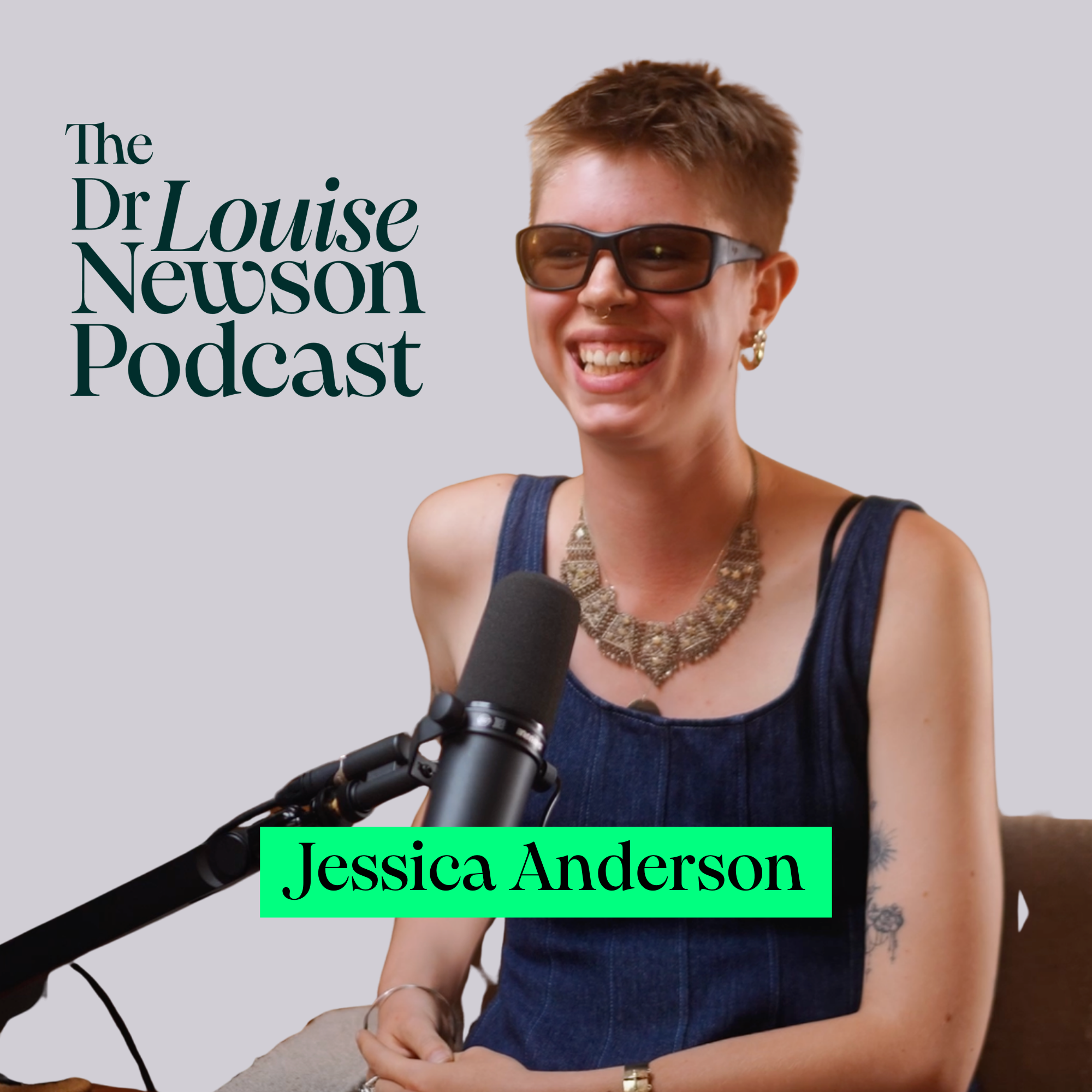
In this episode, Dr Louise Newson is joined by her daughter Jessica for a very personal conversation about living with chronic migraine, PMDD and the long journey toward feeling well again. Jessica talks openly about the years of debilitating symptoms, the medications that helped (and those that didn’t), the impact on her studies and music, and the frustration of not being fully heard in medical consultations.
They explore how hormonal fluctuations contributed to Jess’s symptoms, the role of HRT in stabilising her health and the difference that careful, holistic care made after a long period of uncertainty. They also reflect on the importance of being listened to, the small incremental changes that add up, and why young women deserve better recognition and support when experiencing severe hormonal or chronic health issues.
It’s an emotional conversation about resilience, advocacy and the steady work of rebuilding quality of life with a chronic condition.
LET'S CONNECT
Subscribe here 👉 https://www.youtube.com/@menopause_doctor
Website 👉 https://www.drlouisenewson.co.uk/
Instagram 👉 / @drlouisenewsonpodcast
LinkedIn 👉 / https://www.linkedin.com/in/drlouisenewson/
TikTok 👉 / https://www.tiktok.com/@drlouisenewson
Spotify 👉 https://open.spotify.com/show/7dCctfyI9bODGDaFnjfKhg
LEARN MORE
Learn more about Jessica and her music here 👉
https://www.theroyalsackbutcollective.com/
Follow Jessica on Instagram here 👉
https://www.instagram.com/jessbullanderson/
https://www.instagram.com/jessbullanderson.art/
https://www.instagram.com/jessbullanderson.music/
Download my balance app 👉
https://www.balance-menopause.com/balance-app/
Get tickets for my new theatre tour, Breaking the Cycle 👉
https://www.nlp-ltd.com/dr-louise-newson-breaking-the-cycle/
Dr Louise Newson: I've got Jess, my oldest daughter on my podcast today. It's quite an emotional podcast because we're talking about living with a chronic disease, we talk about migraine, we talked about PMDD, we talk about side effects of other medication that may or may not help a disorder and how she's really built up and transformed her life by making lots and lots of different adjustments, but also sadly some of the treatments that haven't helped her and some of ways doctors have spoken to her as well. So there's a lot to listen to in this podcast. It's quite sensitive, but it's a really important conversation. So Jessica, you're here in real life.
Jessica Anderson: Yep.
Dr Louise Newson: Last time we did it remotely, your podcast.
Jessica Anderson: We did.
Dr Louise Newson: And you had long hair.
Jessica Anderson: Yes.
Dr Louise Newson: And you might or might not have been taking hormones. Can't quite remember.
Jessica Anderson: I think I was taking estrogen.
Dr Louise Newson: So I was talking to someone this morning, actually, who I've not met before, and I was telling her a bit about you, and I hope you don't mind me saying you have like the cleanest life ever, and it's got better and better in that you've never been bad, but you really, really, you don't drink alcohol, you don't eat processed foods, your natural fibres, everything. But you've had to be like this because of your migraines.
Jessica Anderson: Yeah.
Dr Louise Newson: And I always feel a bit guilty because I, migraine is an inherited condition that I have given you. I've given you lots of love, but I've also given you migraine. And I was telling her about the year that you had, which we don't really want to talk about because it was horrendous, but you have been medicalised and given medication, so many medications by different neurologists, different specialties, different, you've had different neurologists that you've seen, you've had different chest consultants that you've seen. You've seen different GPs, you've had different types of medication, they've been different doses. Some of them have been given in an off-label dose, off-licence use.
Jessica Anderson: Shock.
Dr Louise Newson: Yeah. And you've also had hormones. You still have migraines. You're wearing your glasses because the light in here could trigger a migraine. So you're always really sensitive, but out of all the medicines that you've tried over the last five years which ones have made the best difference to your life?
Jessica Anderson: Well, obviously, HRT, well, I feel like we might need to give some background to people listening to the podcast. Obviously always had migraine it's a genetic neurological disorder as you said it's from you, like Sophie sometimes gets migraine and I had my migraine my whole life and it gradually got worse and worse until like when I was 16 started taking medication to try and prevent migraine and then it was just constantly snowballing, and it led to, well, in lockdown, just being bedbound for weeks and weeks with just terrible migraines and trialling loads of different medications and seeing the top neurologist in Manchester, because that's where my school was, and the neurologist just said, this is your quality of life and you need to accept it. And then came to London, just got worse and worse and worse, had things like medication overuse headache. Um, was told I couldn't be helped. And then I met a neurologist who was amazing and has changed my life. As you know, it took a couple of years. And when we met him, he took an amazingly detailed history and said, I will be able to sort you. It will take time. We need to unravel everything. During that process had really severe memory loss and I lost access to my short term and my longterm memory. And couldn't do anything. I'm a trombonist, I can read music, I had to interrupt my studies, I couldn't paint. And then at that time I was having like 21, I think cranial nerve block injections every week for months. And I had that and I also had a treatment in hospital which reset all of the pain pathways in my brain. And I made all of the lifestyle changes that I could possibly make for migraine. And I was really interested in things like Alexander Technique and NLP, neuro-linguistic programming and rewiring my brain and how can I elevate myself and how I can I make the 1% gains to feel better and a combination of all the holistic treatments as well as all like the amazing work that my neurologist has done has led to now me being able to have this quality of life which is the best it's ever been and I don't, I never fathomed that I would be able to live in the way I do now. And during that time, with memory loss and trialling loads of different medications and some being off-licence, not that that matters, and some being licenced and, you know, being given things like anti-psychotic medication because that's meant to help for migraine but actually it didn't help and we didn't know that, but it's just terrible medication side effects. Taking HRT, which you noticed that during lockdown when I started getting really ill was originally, really just took it because every month you realised that I was really depressed for like three, four days. And I wasn't even aware of my cycle at the time because my periods were so heavy because, so my periods were so heavy, so I had a coil, so it didn't have any bleeding. And we noticed that it was my cycle, started taking estrogen, all of a sudden I didn't feel this flatness, but also I wasn't getting migraines that were triggered by hormonal fluctuations. Which was life-changing, and when I was really ill and in so much pain, a few years down the line, I know if I hadn't had the HRT at the time and I had those fluctuations, I wouldn't be here today. So I was, people can't comprehend, obviously you know, but people can comprehend how ill I was. So, I was taking estrogen, and now I take testosterone and progesterone too. And it's changed my life. I was talking to this man that I met yesterday, an 80-year-old man, and was, you know, saying, what does your mum do for work? And I said, you, know, she's in menopause, specialist and GP, and he sort of freaked, and I said oh, it's not really to do menopause. Menopause is a long-term hormone deficiency. It's to do with hormonal imbalances, and that happens throughout, you know, your whole lifespan. It's not just at the end of your life. And all of a sudden, like, this man just got it. And he was so on board with what I was saying. And yeah, so HRT has been, like obviously incredible for me.
Dr Louise Newson: Yeah, and I don't want to get emotional because it's been a really hard journey for everybody in the family. And I think, you know, with a lot of my work you know the pushbacks that I get, and I think it's so important for people to understand your story and other people's story because holistic medicine is so important. We have to look at everything. And with migraine, there are so many different triggers. I have migraine but not nearly as bad as you. And it's trying to unpick absolutely everything. We do it all the time with our patients as well. And hormonal changes is one part of it. And I still feel guilty because a while ago, before I understood as much as I do about hormones, someone did prescribe for you a synthetic progesterone to try and help with your bleeding. And I remember walking down Baker Street in London and your skin was terrible. Do you remember?
Jessica Anderson: It was so bad.
Dr Louise Newson: Your mood was very flat. And you said to me, I think it's progesterone. And I said, oh, I don't think it is because I didn't know how else to help you at the time. And looking back, that was totally the wrong thing for you to have a synthetic hormone in your body. But, you know, when people are really ill, you do clutch at straws. And I've really tried to be your mum, not your doctor. And I sat in so many consultations with you and listened to different consultation style. And when that doctor in Manchester said, that's just the way that you're going to be. And he offered you a drug called Topiramate, which suits some people, but it does cause a lot of side effects. And we were trying to ask about having Botox, which you have as well regularly. And he said, no, because you have to fail three medications before you can have the...
Jessica Anderson: I know. It's crazy these.. because for example, it's like fail three medications at the highest possible dose you can tolerate. So I was at sixth form, music specialist sixth form. It was really intense. And I remember I was trying to stomach the highest possible dose I could have of propanolol, which is beta blocker. And we've found out, obviously I'm really sensitive to medication. So I don't take a daily medication now other HRT. And I was going to perform and I just thought, I don't feel excited, I don't like music, I'm, I, I don't understand what's happening to me. And I spoke to you and you said, Oh yeah, didn't you realise that you're not going to feel any psychological effects of anxiety? I was like, no, cause I was just prescribed this. I was told this is for migraine. It's not gonna, you know, and when I was trying to stomach a really high dose of, um, candesartan and then I was just...
Dr Louise Newson: Fainting.
Jessica Anderson: It was just, it was just so bad. I know it's a mild medication compared to some others.
Dr Louise Newson: This is what surprised me, candesartan is a blood pressure lowering treatment. It's not licenced for migraine, but off-licence we know it can help some people for prophylaxis, it's mentioned in guidelines, but no one ever told you the potential side effects of these medications. You were given them in good faith, which is fine, but it just surprises me that no one's sat down and said you might have this side effect, you might just look out for this. So when you were feeling flatter in your mood on the propanolol, you thought it could have been anything, or you were depressed. And there are lots of times that you have been very low in your mood, but giving you antidepressants would not have been the right thing. I remember when you were assessed by a psychologist in Queen's Square and they were saying that you might have depression. Well, of course, because you couldn't function with your mind.
Jessica Anderson: Well, yeah, I mean, I was diagnosed with severe depression because, like, I couldn't, you know, was at the point of, do I piss myself or do I get out of bed? Because I'm in so much pain, I actually don't think I can walk to go to the bathroom. You know, it's It's not, it's not light staff.
Dr Louise Newson: No, and your migraines just wouldn't lift and wouldn't improve and you had many times where they were so bad. But we're not dwelling on that because they're so much better. But it's the way that, you know, I spend a lot of time in consultations with patients and I'm really honest with them. And I'll always say, look, I'm not sure how I can help you or I've done as much as I can, but I'd like you to see someone else for another opinion. But that was never offered. It was very much this is the way you're to be now and if we'd listened to a few of the doctors years ago I can't even imagine what would have happened. But when you did see the doctor that you're under now in Queen's Square, and just having time where he listened to you. And I remember coming away and thinking, wow, he actually understands. And it's not a quick fix. And I think that's the same with any chronic condition. And obviously migraine is a chronic condition.
Jessica Anderson: Yeah, and also realising you know all the lifestyle changes, it's going to take at least three months for you to basically feel any benefit and all these kinds of things. And at the time when you're so ill, you know, and people would say to me, oh, maybe, maybe you should just drink more water. And you think, fuck off, like you don't know what I've gone through. This is actually ridiculous. And now that I'm more balanced day to day, and most of my time is pain free, and I occasionally have migraine, I realised Obviously, yeah, it's really beneficial that you drink, you know, so many, you know how I was saying about this book I read the other day and loads of people are chronically dehydrated, but it's just as all these tiny little things all come together and all these 1% gains, which you can do. But then also thinking about all the people with hormonal issues, which are diagnosed not as hormonal issues, and you think. Almost all the incremental gains and benefits in your body from having the right hormones for your body. So it's so frustrating. And then thinking about people not being listened to by their doctors or having good bedside manner. Like I was telling you about my friend the other day who, their gynaecologist just said, well have you ever considered that maybe you just have painful periods? And that's just how it is. You think oh.
Dr Louise Newson: It's awful. It's an uphill battle. And you know, you've been exposed to the medical system a lot earlier than lots of people have, but I just wanted to, I know we've talked before about PMDD, premenstrual dysphoric disorder. But it is important because I see a lot of people who are your age, you know you're 22, but your age is early 20s and it's always dismissed. Oh, you will feel a bit bad. It just before your period. So you're just going to have a bad few days. But what really resonated with me and I know a lot of people when I talk about it is when you told me, those three days, you didn't want to pick up your trombone. You didn't want to join in when we were in COVID, like just household meals. You just felt really flat and joyless. But it was when you said to me, but it's the rest of the days where you're dreading those days coming.
Jessica Anderson: And also that, you know, if we're just thinking about trombone playing, if you don't, it's a very physical instrument, if I don't play for three days, it would take at least three days to get my playing back to the standard it was before those three days even happened. So then you've lost so much more time. And then also you've got that with skills and not continuing doing work that I do enjoy doing but in those three days you think, oh my god, do I want to quit music? Do I just hate everything that's in my life? And it's obviously not to do with that. And when you come out of that, you look back and you think why did I feel that bad? Maybe there is something deep rooted. Maybe I don't like music. And actually it's not to deal with that, it's maybe your estrogen was a bit low.
Dr Louise Newson: Yeah. So it's not just those three days where you're suffering, is it?
Jessica Anderson: No, and it's the all psychological reflection on it, and it's always, it's the same, you know, when you say, if I have a migraine and how it impacts your brain with these diagonal waveforms, which can cause like depression and anxiety, well, they do cause depression and anxiety in the moment. And you always say, don't think about it when you have a migraine. Let's talk about it tomorrow, if you're still worried about this. And it always comes to tomorrow and it's, oh yeah, that was a migraine. That wasn't me. But when you're, when that was happening every month, you think, Oh, maybe is me.
Dr Louise Newson: Yeah, and I know I've seen quite a few of your friends as patients who have suffered as well because they've been more open with you talking to you or you've picked it up on them because they're maybe not coming to rehearsals or they're having symptoms in a cyclical way.
Jessica Anderson: Now it's great that discussions are really open, especially my generation. People say, oh, I'm struggling with this and I feel this way. And I, I wonder the discussions when I'm not there, people go, yeah, I feel that way too, it's shit and it's this kind of solidarity thing, but when I am there, I'm like, oh did you know that it actually doesn't need to be like this? And people, you know, and I say, I feel the same every single day. I don't have these dips, my mood is the same. I feel the same person, my identity and sense of self minus when I have migraine is really secure and people don't realise.
Dr Louise Newson: Does that surprise people when you say that?
Jessica Anderson: Yeah, everyone is always shocked.
Dr Louise Newson: Because so many people have hormonal changes.
Jessica Anderson: So many people will have hormonial fluctuations.
Dr Louise Newson: But it's been normalised.
Jessica Anderson:Yeah, completely. So when I say, oh, there is actually a solution you don't need to feel this way. Everyone's really shocked. And then the whole thing is also, I'm there for those discussions, obviously. You know, my friends can, they know where to go for help, but what about all the people that can't go anywhere? You know, all the people that don't know there's solutions and you just have to deal with the pain or whatever it is that, you know, bowel issues or like vaginal dryness, that's a big thing. And people are just taught you have to deal with it.
Dr Louise Newson: It's not fair, is it?
Jessica Anderson: No.
Dr Louise Newson: So, when you say to people that you're taking hormones, are they surprised when you're young?
Jessica Anderson: I really, I actually really like the reaction from guys when I say, oh yeah, I take estrogen and testosterone and progesterone, they go, what? You take testosterone? I go, oh, yeah, like I probably have, you know, equal to or more testosterone in my body now than you do as a man. And as a men, you've got estrogen in your body and it's being produced in the brain and they just, it sort of blows their minds open. Yeah, people are really shocked by it and then they're really intrigued and they're really curious and they often go, oh yeah, I know someone that could benefit from that. I knew someone that feels, oh, I had no idea that these were linked.
Dr Louise Newson: But if you tell people what you were taking, hormones in contraceptive pill, they wouldn't bat an eyelid.
Jessica Anderson: No, even though they're synthetic, so it's not the hormones, it's the synthetic version of the hormones. It's not same as the hormone itself.
Dr Louise Newson: Yeah, it's interesting, isn't it? Because all you're doing is topping up what your body wasn't producing and you have a hormonal coil in which is probably stopping you ovulate and stopping your own natural hormones as well because it's synthetic. So all you are doing is having a very low dose, which is really helping. But you were using estrogen through the skin, the estradiol patches. But when the weather was hot...
Jessica Anderson: God, that was terrible. That was so, that was so bad. Because the patches weren't sticking and I didn't realise that it was the glue that the estradiol's in. So that's how it's absorbed. And I was just, yeah, I was just feeling terrible. Like I was getting this vaginal dryness. I was getting, I was getting loads of ingrown hairs. I never get ingrown hairs. I don't even shave my legs. And my body just wasn't... happy. I was getting ingrown hairs, like my eyes were dry. I was feeling way more anxious. I thought maybe I was worried about, I don't know, at the time I was in Basel, like, doing sackbut playing, which is a historical trombone for those who don't know. And it was a really exciting thing. And I was just, I was really overwhelmed. And we even, do you remember, we had I had to change a date so I was going to Basel. Because, yeah, I forget about this, my migraine was so bad and we didn't know why my migraines were so bad, and it was so stressful because it was the worst it had been in years. I remember daddy had to come to London and look after me. And it was just because my patches weren't sticking.
Dr Louise Newson: Because I remember asking you about physical symptoms because you were getting palpitations as well weren't you?
Jessica Anderson: Yeah, so many heart palpitations and I hadn't had them, had heart palpitations when I was in sixth form when I wasn't taking HRT.
Dr Louise Newson: So you had palpitations, you had vaginal dryness and cystitis...
Jessica Anderson: I was having like 20 heart palpitations. Yeah, cystitis. That was terrible.
Dr Louise Newson: So you use vaginal hormones as well, don't you?
Jessica Anderson: Even my tinnitus was worse. You know? Um, yeah, sorry. Yeah. I, I use pessaries. They're great.
Dr Louise Newson: Which as I've just done a podcast earlier, which is coming out with a urologist who's great. And we were talking a lot about vaginal hormones, how younger people can use them as well, especially when it comes to cystitis and urinary symptoms and frequency as well. But the thing is in medicine, if we don't ask the questions as doctors, we don't get the answers. So I could have, if I was a pure migraine specialist, I would have just concentrated on your migraines that had got worse that time when you had to cancel that trip. But I'm not, I think about everything all the time. So asking those specific questions about your palpitations, your other physical symptoms puts together. So then you change preparation...
Jessica Anderson: Yeah, because I was having joint pain.
Jessica Anderson: Yeah, yeah.
Jessica Anderson: It was actually kind of crazy, wasn't it?
Dr Louise Newson: But I think you can see how people can gaslight themselves as well, why they think it's their fault or they think there's something else going on and don't. So then if they're not telling the doctors, the doctors don't always pick up all the symptoms. And that's why it's really important that doctors and clinicians are really, really well trained so they can ask the right questions.
Jessica Anderson: Also, it's hard to know everything that you need to remember to say to a clinician and also everything which is relevant to a clinician because, you know, obviously you or daddy come to my appointments because you're able to talk in like medical jargon and sometimes I'll be there and I'll say, okay, so I've had this, this, and you do it less than daddy, but daddy will go, oh, you don't need to tell them that, that's not relevant. But this thing is really relevant that you've just said. Obviously, as a lay person, I don't know what's relevant. And if you don't have a medic that's sat by your side saying, oh, actually, she forgot to tell you that this also happened.
Dr Louise Newson: So one of the drugs that you were given was an inhaler and it's very similar to something called oxybutynin which is an antimuscarinic treatment that some of the guidelines say can be given to women as a treatment for hot flushes because it can help sometimes with hot flushes. But when you had it, it caused lots of symptoms. Do you remember?
Jessica Anderson: Well, that was when I started taking pessaries, because I all of a sudden had like such bad vaginal dryness. I could barely walk and it was, it was terrible. It was so bad.
Dr Louise Newson: But you also, you couldn't read very well, do you remember you were saying...
Jessica Anderson: Yeah and I had all these like black spots in the corner of my vision and it felt like I felt so on edge because it felt like there was just something behind me that I couldn't quite see.
Dr Louise Newson: And your skin was really dry as well.
Jessica Anderson: Yeah, that was terrible. And then my lips weren't good, and my lips were splitting, and then that was terrible for playing trombone. And I was more prone to getting spots around here as well, and then obviously that was really... It was really, yeah.
Dr Louise Newson: It was awful. So I'm bringing that up, not to give you trauma, but what I was thinking was when we realised that it was the inhaler that was similar to the oxybutynin and that you have all these antimuscarinic side effects and you stopped and you started to feel a lot better. I remember a few weeks later saying to you, do you know what, that's the medication that people use as a non-hormonal treatment.
Jessica Anderson: I know. And I remember I just started crying.
Dr Louise Newson: I know, you burst into tears thinking about the women.
Jessica Anderson: It was so horrible.
Dr Louise Newson: Yeah. And this is where I have an issue. So I don't mind if people take hormones or not. But what I feel really sad is these non-hormonal treatments that are given to women to try and maybe help a hot flush, because there isn't very good evidence that they work for other symptoms and they don't work for the health benefits. So women are given them, like you've been given drugs in good faith from doctors, but they're not talking about the side effects. But the side effects are often worse than the symptom that they're trying to treat. And, you know, you are sensitive to medication, not everyone on oxybutynin is going to have those symptoms, but oxybutynin is also associated with an increased risk of dementia. And your memory was going as well when you were taking that inhaler because we were worried there was something else going on. So the power of these other drugs, I think just can't be underestimated.
Jessica Anderson: I know.
Dr Louise Newson: So you also had olanzapine, which is an anti-psychotic medication. So it's used a lot for people with psychosis, very severe depression it's sometimes used. And I see a lot of women who have been misdiagnosed with a mental health condition when it's related to their hormones. And a lot of these people are given antipsychotic medication. And we know that they have different side effects, but a lot of people experience side effects with them. And it didn't help, you did it? [
Jessica Anderson: It given to me in good faith in that it could help and I don't, you know, I'm completely fine that it was prescribed to me and I tried it and it didn't work. And I think, you know, for some people that will be the medication and that helps them and that's great. But people also don't know and they're not being told and doctors maybe aren't aware, or aren't aware that, oh, also this could help, so maybe also try this medication. See what you prefer, like maybe it's a combination, it just... It's really sad to think that there are so many people that don't know the quality of life that they could have.
Dr Louise Newson: And I think this is where us knowing that the side effects are related to a drug, but a lot of people think it's part of their condition. So they're living with side effects of a drug that they might not need to have. And some of our data shows that when we give hormones and add in testosterone, we can de-prescribe. So we can reduce the prescribing of antidepressants, antipsychotics, some of the other painkillers and drugs as well. It's always a balance and we always are like trying to look at optimising treatment for our patients but sometimes once you're on a medication that's it you just carry on with it and that's a real problem.
Jessica Anderson: I know.
Dr Louise Newson: So you also play the trombone in all sorts of groups, all sorts of orchestras, all sorts of people and you're often like saying to me mummy this person is so obviously menopausal this, especially when you are with older people and it's one of those once you see it, it's hard to unsee. But you're really young and you're still seeing the suffering that's going on all the time. Do you think in your mind that things are going to change?
Jessica Anderson: Yeah.
Dr Louise Newson: Do you?
Jessica Anderson: Well yeah I think...
Dr Louise Newson: Do you think there's a difference in your generation of people, like your friends, once you educate them, talk to them, are they thinking differently?
Jessica Anderson: Once I talk to them about things and you know obviously they can look at Balance and like loads of free resources online then like it changes their life and then they're always talking about it. I don't know if I was saying it to Sophie the other day but people often ask me when I see them they go, oh how's your mum? Like that's the first thing they ask before going, how's your partner? How's your mum? How is your dad? Oh, how's Alex? You know, people are really interested in the work that you're doing and how it can positively impact them and their lives. So I hope it will, it will change and shift. But I think one of the sort of scary things is when people are aware of, you know, maybe someone's okay talking about the menopause and they don't see it as a taboo and they think, yeah, we need to talk about the menopause. It's important to have awareness there, that's great, but then it stops at the awareness and there's no...
Dr Louise Newson: It's not enough, is it?
Jessica Anderson: They don't know about treatment or they've been told, don't go near HRT or all this kind of stuff and that's really sad or people say, oh yeah, I'm through it now, so I don't, you know, I wouldn't benefit from HRT anyway and you think, well, Even if you, you just look at preventing Alzheimer's. Obviously, you've, I'm not, you can talk to other people about this, but I just think it's really important to push the conversation further to be like, this doesn't need to be an issue. This just needs to be, in the same way, you know, how you always use the example of your thyroid isn't working, here's some thyroxine, great. It's not this whole, oh, we need to talk about like all the issues around it...
Dr Louise Newson: It should be easier. Jessica Anderson: Yeah, it should be simpler. Because as you say, it is simple medicine for the vast majority of people. And even when it's not simple and it's more nuanced and complicated, and, you know, as a esteemed medical person you have the expertise and training and, you know, clinical practice to be able to help people in a nuanced way. But yeah, so I just think that's, yeah, it's really sad.
Dr Louise Newson: It is sad because there is a simple solution for a problem that's affecting every woman. So we've talked a lot. There's been a lot of medical jargon. There's lots of things, but I know there will be people listening who have chronic diseases. There'll be people with migraines, maybe fibromyalgia, chronic pain. So I just want three take-home tips from you. You are a really good advocate for yourself. You're a really great advocate for your future health. But it's not easy and you've worked really hard at it. And you know, the proof is in the pudding and it takes time and patience. Every little adjustment, every little, your treatment lifestyle, you've had to wait. So people that are maybe listening think, well, it's all right for her. She looks great. She feels great. We've been really open that it hasn't been easy, not just for you, but for us as a family. So what three things do you think people listening could think, right, this is what's going to help. What would you suggest people to do if they've got a chronic disease and they feel that they're not getting to the place that they want to?
Jessica Anderson: But that was really hard, and I think... a big thing is people not being listened to, and you talk about, you know, people being medically gaslit and told, oh, it can't be that bad, or, oh you've got this one really big bad symptom, so we're not going to talk about all the other symptoms. And you know it's the same when I was really ill, and people were like, oh you can't that ill, people don't know. So I think, you know... being listened to is a really big thing, or finding someone that can listen to you and being validated in how you're feeling. Because it's like, it's rubbish.
Dr Louise Newson: It's real.
Jessica Anderson: Yeah, it is real. It's real and it's rubish. So I think that's probably the main thing. I don't know, because when I was really ill, everyone just said, oh, you need to, you know, you're gonna be so resilient. This is great. Like this is character building. I just think I don't want to be resilient because I don't want to be ill. So I feel like giving advice to people saying oh be resilient, that's not the advice I wanted to hear when I was like ill. But I remember one time I said to my dad, if you don't know what to say, just give me a hug. And I think having that connection with people is really important, because when you're ill, your community just goes sometimes.
Dr Louise Newson: You can't get upset.
Jessica Anderson: A tear hasn't been shed, so, yeah. So yeah, so...
Dr Louise Newson: So being listened to.
Jessica Anderson: Being listened to. Having community and for other people, coming to that person for that community. Yeah, knowing that like nothing is permanent and states can shift, even if you feel so stuck in the moment and sometimes the present moment feels so drawn out and you think this actually isn't gonna change.
Dr Louise Newson: But it will.
Jessica Anderson: But it will, and it's so incremental and small. And then you look back and you go, oh, I was there and now I'm here.
Dr Louise Newson: And that's so important.
Jessica Anderson: And yeah. And you have to realise the value in like even the smallest things. Yeah. Like coming in here and the lights' being triggering, but actually my head's clear and I've got my special glasses, if you talk for ages, but I've got my glasses on and it's fine. And I'm able to manage and like, I feel great and the rest of my day is really exciting and going to a talk and going to a gig. And, but a couple of years ago, I wouldn't have even been able to walk in this building.
Dr Louise Newson: So looking at progress.
Jessica Anderson: I wouldn't have been able to have travelled to even get here, you just...
Dr Louise Newson: I know.
Jessica Anderson: It's amazing, but I think that is so important.
Jessica Anderson: So you have to validate your progress, whatever that is.
Dr Louise Newson: Absolutely, and you need to work with people who understand that progress and can encourage and support. So I know it's been quite emotional, but I'm really grateful because I know what you're saying and the strength that you have as a 22-year-old is quite formidable. So thank you for coming onto the podcast.
Dr Louise Newson: You're very welcome.
Dr Louise Newson: Oh, thank you. You alright?
Jessica Anderson: Yeah, I'm fine.
Dr Louise Newson: Oh, that's quite a lot. Well done.