Menu

My Mission
Articles
Podcast
Events
Workplace Education
Clinician Education
Newson Clinics
Hormones Unlocked
Books
Research
Media
Contact

Balance App
Track symptoms, get insights and feel more in control.


For many women diagnosed with cancer, conversations about hormones end before they’ve even begun. They’re often told they can never take hormone treatment again, without being given the evidence, the options or the opportunity to make an informed choice.
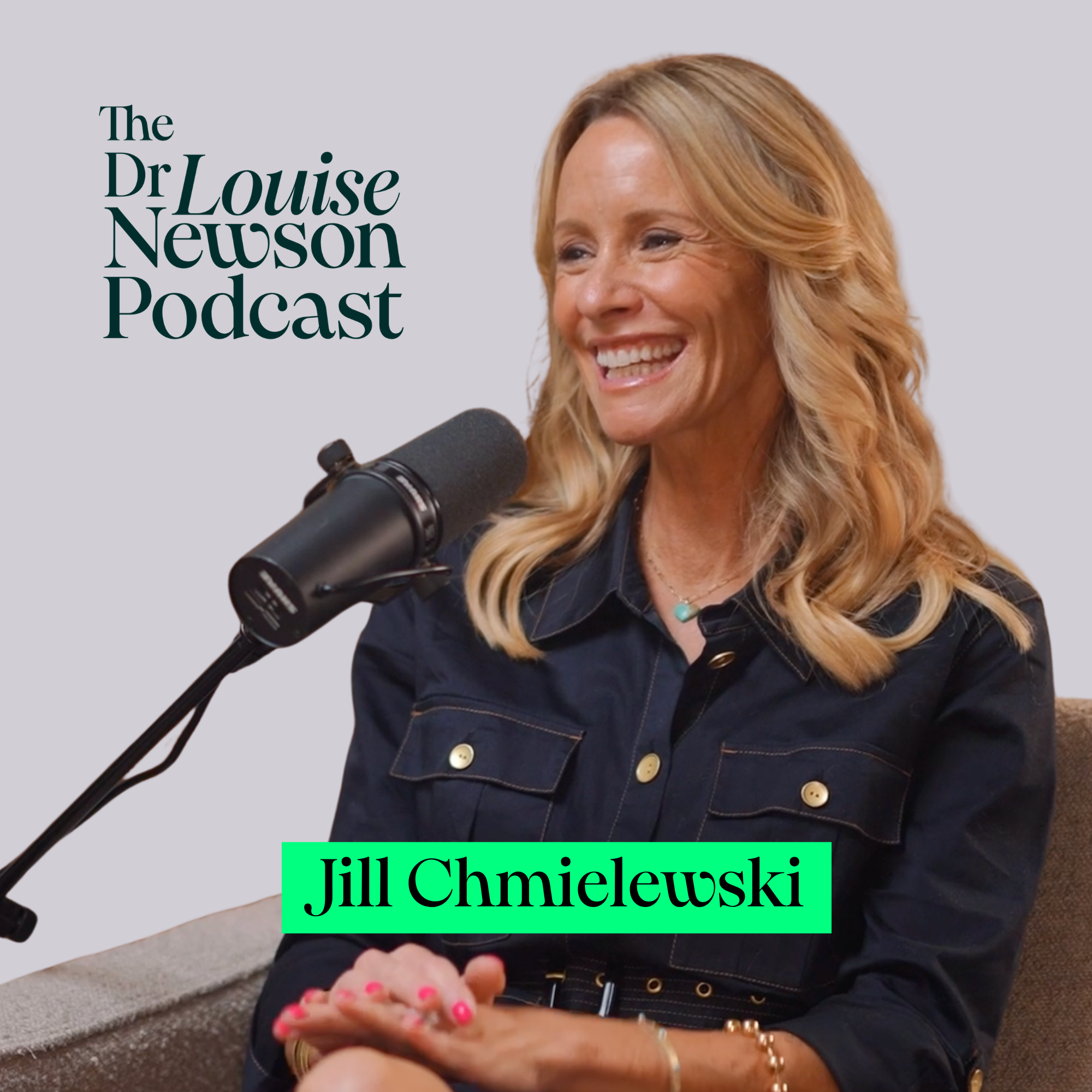
In this episode, Dr Louise Newson is joined by women’s health nurse and educator Jill Chmielewski to discuss why so many women are denied balanced information about hormones after cancer, and why this needs to change.
Together, they explore the widespread misconceptions surrounding hormones, the importance of understanding physiology rather than relying on outdated assumptions, and why decisions about treatment should always consider both long-term health and quality of life.
Whether you’ve had cancer yourself, are supporting someone who has, or simply want to better understand the role hormones play in lifelong health, this episode offers reassurance, evidence and hope.
LET'S CONNECT
👉 Subscribe on YouTube
https://www.youtube.com/@menopause_doctor?utm_source=DLNpodcast+&utm_medium=shownotes&utm_campaign=BAU+
https://www.instagram.com/menopause_doctor/?hl=en&utm_source=DLNpodcast+&utm_medium=shownotes&utm_campaign=BAU+
https://www.linkedin.com/in/drlouisenewson/?utm_source=DLNpodcast+&utm_medium=shownotes&utm_campaign=BAU+
👉 TikTok
https://www.tiktok.com/@drlouisenewson?utm_source=DLNpodcast+&utm_medium=shownotes&utm_campaign=BAU+
👉 Spotify
https://open.spotify.com/show/7dCctfyI9bODGDaFnjfKhg?utm_source=DLNpodcast+&utm_medium=shownotes&utm_campaign=BAU+
LEARN MORE
👉 Download my balance app
https://balance-app.com/?utm_source=DLNpodcast+&utm_medium=shownotes&utm_campaign=BAU+
👉 Order my new book
https://bio.to/ThePowerofHormones?utm_source=DLNpodcast+&utm_medium=shownotes&utm_campaign=BAU+
👉 Speak to Newson Clinic
https://www.newsonhealth.co.uk/?utm_source=louise_podcast&utm_medium=show_notes&utm_campaign=clinic_cross_promotion
👉 Visit my website
https://www.drlouisenewson.co.uk/?utm_source=DLNpodcast+&utm_medium=shownotes&utm_campaign=BAU+
Dr Louise Newson: [01:00:00] This is a real listen to if you have had cancer, know someone who's had cancer. Just share it with them. So today I'm talking with Jill Chmielewski, all about hormones, about what we do in Balance App, but really how we advocate for many women, including those who've had cancer, so many women are pushed away. They're not even allowed to have a conversation about hormones and their future health. So we talk about some of the work that we're doing in Balance. Jill works very closely with us in Balance and how being empowered with knowledge can open up your choices sometimes. So enjoy the episode. So Jill, you are here and do you know what? I've known you for years, you're based in US, I'm in the UK, and the last couple of months I've seen you twice in real life. It's just so exciting! [01:00:49][49.5]
Jill Chmielewski: [01:00:50] I know, we've talked about it. I think we talked about like four or five years ago, me coming here, I think, and it didn't happen. So it was so fun a month apart, we get to see each other. [01:01:00][10.1]
Dr Louise Newson: [01:01:00] Oh yeah, we were at this conference in Los Angeles or just outside Los Angeles, spent a lot of time together and it's always weird meeting people in real life because you know quickly it will go one of two ways, that it's either really awkward or we just gel and we had our Valentine's evening out together with Anita, three of us went out for a romantic meal, didn't we, which is great, but you are a nurse. You've got a huge amount of knowledge and experience and we're working really closely together, especially through Balance, the information that we're writing about through Balance that we'll talk about in a bit. But just before we start, tell me a bit about you and why you're so interested in hormones. [01:01:40][40.4]
Jill Chmielewski: [01:01:41] I know. I wish I could even explain why I'm interested in hormones. I've been a nurse for 33 years this year. And I worked in women's health a lot of, many, many during many of my clinical years. And then I think it was really my kids were growing up. I was seeing issues with just some health issues with them. And, I started kind of seeing this whole other side. I kind of got thinking about medicine and that we don't really, it's all about reactive, and we're not looking at how do we prevent things. And I started just learning more about physiology and getting more into the body and how it works and root cause. And hormones kept coming up over and over. And I had never learned anything about hormones. [01:02:16][35.4]
Dr Louise Newson: [01:02:17] So you had no training as a nurse? [01:02:18][1.4]
Jill Chmielewski: [01:02:18] I had no training in hormones. And I worked in reproductive endocrinology and fertility. I worked in gynae, infectious disease, gyne surgery. I had done postpartum work, so I worked in the neonatal ICU, which is not, it's with babies, but we're doing a lot with women, right, pregnant women, and after they have their babies. [01:02:33][15.5]
Dr Louise Newson: [01:02:34] And nothing about hormones? [01:02:35][0.7]
Jill Chmielewski: [01:02:35] Nothing, knew nothing about hormones and even in reproductive endocrinology and infertility, we're helping women get pregnant. We knew about sort of the protocols and procedures, but in terms of what was really happening, it really wasn't explained, yeah. So I sort of started seeking out information, that's how it really started. And I had to really dig because it's not, it's very generalised. It really was, it was just more category or labels for things versus talking about hormones and how they work in the body. It's all about reproduction. So I don't know, something about it just fascinated me and I feel like I've sort of found my calling, at a later stage in life, but I love it. It's just, it all I think about really is helping women with their hormones. [01:03:15][40.4]
Dr Louise Newson: [01:03:16] It's interesting because I know a lot of healthcare professionals and a lot of them are interested, but it comes to the end of the day and they switch off, which is fine, it's their job, but you're one of the few people that I can WhatsApp, I can share papers and we salivate over them. I don't know whether, you know, we're a similar age and I don t know whether we're making up for lost time. I feel, and I know you do too, bad for those patients that we didn't have this information for, you know, many years ago. I feel that the more you learn, the more obvious things are, the more that we have to understand and allow others to understand about how hormones work in the body. Because if we don't understand basic physiology, like nothing else, so you're working with us on Balance, you're doing a lot of writing and, and we started off thinking about you're doing some more American articles, but actually it's not, they're global. So we don't need an American area, it's more to allow people to have more information. But one of the areas we're doing a series of articles on is for women who've had cancer. [01:04:26][70.5]
Jill Chmielewski: [01:04:27] Yeah. [01:04:27][0.0]
Dr Louise Newson: [01:04:28] And it's interesting, we're working with different oncologists who are brilliant and one of them had sent some information which was brilliant, but one of then said with a certain type of cancer, you absolutely can never have HRT. And I pushed back and said, could you just send me the evidence. And of course, there isn't any evidence. They're just scared. And I thought, actually, it's really interesting, because this happens a lot. Somebody the other day reached out to me because she had a meningioma, which is a benign tumour in the brain. And her neurosurgeon said she can never have HRT. So then I wrote back and I said, well, actually. If someone young has an meningioma, one of the treatments is not to remove the ovaries. So they don't worry about hormones in younger women with this condition. And I often say that when I'm training doctors and nurses and healthcare professionals, when they say, can this woman have hormones, you say, well, is the treatment to block her hormones? No, well, therefore that's an easy win, really. And then even if some of the treatment is to block hormones, then it's asking, why are they being blocked? What's the evidence? What's reason? What are the risks of blocking hormones? And this is a really important area of our work especially with patients with cancer. I mean, lots of women get told they can't have hormones but patients with cancers seem to be the most deprived group really, don't they. [01:05:55][87.6]
Jill Chmielewski: [01:05:56] And their quality of life, every time I post about it or write about it, I feel like I get this huge influx of messages. And I mean, women will say, I don't know if life is worth living anymore. This is not life to me, I'll take the risk if there is risk. And I think that just hormones have been bucketed as estrogen bad. And the thing is, there's a lot of nuance even with that in cancers, even breast cancers that are ER-positive. I think it's just been sort of reduced to just estrogen bad, and we sort of just leave it, and these women suffer. We have progesterone, we have testosterone as well, and those are not even part of the conversation. [01:06:35][39.1]
Dr Louise Newson: [01:06:35] No and I feel really sad because every day pretty much but certainly every week people reach out to me on my Instagram and say you're so positive about HRT what about me I've just been diagnosed with, usually an ER so estrogen receptor positive, breast cancer and being told I can never have HRT and there's a real confusion like you say estrogen is an umbrella term for different types of estrogen, estradiol and estrone and synthetic estrogens as well. They're all referred to as estrogen. They are all completely different. So it's like saying fruit, but you've got apples and pears and bananas and you can't say every fruit is yellow. But you can say every banana is, you know, pretty much yellow. So we have to be really careful what we're talking about and estrogen receptors, there are different estrogen receptors, there are alpha and beta and and they all are on every cell in the body. So it's healthy to have estrogen receptors. So then people often say it's an estrogen-driven cancer. It's caused by estrogen. But that doesn't make sense either, does it? [01:07:43][68.1]
Jill Chmielewski: [01:07:42] No, it doesn't make sense. I mean, we would see women when they're pregnant or in their earlier years, if estrogen were the primary driver of breast cancer, we would see that in people in their 20s. That's not what's happening. So it's really that dysregulation in the body. There's so many factors and there's other growth pathways that I think are not often discussed in the breast cancer conversation. I think it's just easier to say, well, estrogen is one of potentially a lever we can pull to stop growth or to reduce it at least right now. And then it sort of stays that way permanently. And it's the only one. And sadly, there's many other growth pathways that do not get addressed. [01:08:19][36.2]
Dr Louise Newson: [01:08:19] Of course there are and cancer is a multi-hit process, actually, and I've written a lot in my book about inflammation, because all diseases of inflammation start with problems of inflammation, and cancer is a disease of inflammation. Cardiovascular disease, even depression is thought to be a disease inflammation, osteoporosis. So everyone seems more scared of cancer than other inflammatory conditions, but if you look at the crux of it all with inflammation. Estradiol reduces inflammation. Our own hormone, like you say, can't be causing cancer because you'd see it a lot more, like, you say in younger women, in pregnant women, and in the past, if pregnant women had a breast cancer, they would encourage them to terminate the pregnancy thinking it would improve outcome. We've got data to show that if women have breast cancer in pregnancy, they don't have worse outcomes, which is, again, reassuring for hormones. But also we do have, like you say, progesterone and testosterone, which work differently to all estrogens in the body. And increasingly in the clinic, I'll talk to women about having testosterone and vaginal hormones, because often they need vaginal hormones as well. And we don't even have the estrogen conversation, because they come back, they're feeling a lot better. They might be on progestorone, and eventually they might be some estradiol as well. But it's very individual. But it is bringing that patient with them and with us because so many women are just told no and then like you say they apart, don't they. [01:09:50][91.2]
Jill Chmielewski: [01:09:51] They fall apart and I think if oncologists are going to prescribe these medications that block hormones or tell women they can't have hormones, they need to understand, really understand what hormones do in the body, not just at the breast but everywhere, because if they're going to recommend something they have to understand that it is going to have, there is collateral impact to the whole body and I thing that that is what really what we're seeing is women that are coming to us saying, I can't live like this anymore. Everything has changed because of these hormones, because hormones are the most potent biochemicals in the body. It's a huge impact to the body when we lose them. [01:10:29][37.3]
Dr Louise Newson: [01:10:29] And it is so important, I had a patient in my clinic recently, and she had been diagnosed with an early breast cancer, she'd had it removed, she had some radiotherapy, she didn't need chemotherapy, and her oncologist said, oh, you might as well have an aromatase inhibitor. And she said, well, I don't want one actually, because her mother's got osteoporosis and possible dementia, she's in a nursing home. And she said to her consultant, well, what if I just give up alcohol because I drink a fair amount? And he said, oh yeah, that's probably as good as taking an aromatase inhibitor. And she quite rightly said, well why didn't you talk to me about this before? And she said, I'm not going to take this. He said, well, you then you need tamoxifen. She said, and I'm going to say that either. I'm just going to pause and I'm going to improve my lifestyle first. And then she came to talk to about hormones. But what I think people don't often understand is that hormones have benefits for their future health. And in lots of women I see, especially women who've had breast cancer several years ago, they're more worried about their risk of osteoporosis or heart disease or dementia than they are about the risk of recurrence. [01:11:41][72.0]
Jill Chmielewski: [01:11:43] Yes, yes [01:11:43][0.2]
Dr Louise Newson: [01:11:43] And that's an individual choice, isn't it? [01:11:45][1.4]
Jill Chmielewski: [01:11:45] It is, it is. I think that women should be, I mean, we live in our bodies, right? It's our lives and we are the experts in our body and we go to our physicians for consultation, but not to be dictated to or told what to do. Just here are the benefits and risks of all the things. And then we as patients should be able to decide for ourselves, right? [01:12:03][18.2]
Dr Louise Newson: [01:12:03] And that's what we're doing with Balance. So Balance app is our app which is really for people to be empowered with knowledge and information so they can make choices that are right for them about their hormone health. It's not associated with any clinics. It is literally just a massive resource for people. And with these cancer series, we are writing about the benefits as well as any potential risks, because they're potential risks. We don't even know. You know, it's a bit like when I buy a car, no-one shows me the studies to say this car is safe. I'm presuming it's safe, but you don't know, you know. So, but we still don't whether hormones are safe or not with some cancers, but a lot of cancers we know there's no detrimental effect. And women are being denied the benefits. And even if we look at vaginal hormones for women who've had breast cancer, not everyone, because doctors always disagree, but the vast majority of guidelines of healthcare professionals or specialists agree that women who've had breast cancer can use vaginal hormones. [01:13:11][68.6]
Jill Chmielewski: [01:13:12] Yeah, and part of what we want to do in that series is really bring evidence for women to take to their providers. We're giving it to them in really those sort of more non-medical terms, because we know that this is really overwhelming for women anyway. But then if we have those studies that they can actually take to the provider to say, here are the studies we have that support. Here's the evidence for why I'm asking. We hope, because I've heard from many colleagues that have said, I didn't know certain things and it was that one patient that came in, brought a study or two studies or three studies. Or was suffering enough and brought something in and it opened my eyes and they shifted their practice. I mean, you and I have both changed our minds on a lot of things in medicine, right? [01:13:51][38.4]
Dr Louise Newson: [01:13:51] And you learn from your patients and I think you should. You know, medicine, I've said many times before, is a science and an art. But the art is individualising care, listening to your patients, but also working out where they're coming from. There are new studies all the time and it's really hard to be abreast of everything. So you learn form other colleagues, you learn from patients. And it might be a patient brings in a study of, you know, sample size of one, So it's showing that, you know. I don't know, lavender oil is going to help their osteoporosis. And you might talk to them to say, well, we do need more studies. But if it's a bigger study and it makes sense, then actually we should be talking about what are the harms if you're not having hormones, you know, you're not sleeping, you're feeling dreadful. You've tried everything else and hormones are likely to benefit you. Then would you like to try is not a bad conversation. [01:14:43][52.5]
Jill Chmielewski: [01:14:44] Yeah, and I think we always go back to physiology. You and I talk about, we're not gonna have quote, unquote 'evidence' in terms of studies on a lot of things, but we can always go back to, especially with hormones, we can go back physiology every time and we look at what hormones do in the body and that's really what we can draw off in what they actually do in body physiologically to make some decisions. So that's sometimes where we have to go. [01:15:07][23.4]
Dr Louise Newson: [01:15:09] Thanks so much for listening to my podcasts. Did you know that if you prefer to watch rather than just listen, my podcasts are available on YouTube every week. You'll find full episodes and additional educational content on hormones, menopause and women's health all grounded in science and real clinical experience. So if you want to stay up to date, revisit episodes or share them with others who might benefit, make sure you subscribe to my YouTube. [01:15:36][26.6]
Dr Louise Newson: [01:15:38] I actually did a review on Monday with a really, really lovely patient, Trudie, who I did a podcast with many years ago, actually. And it was, we worked out it was just over eight years ago I first met her. And she had a really difficult time with mental health and her perimenopause. I gave her hormones, and then she came back for her first review consultation feeling a lot better. But she said, Oh, Dr newson, I found a lump. And I examined her and we were both really sure it was a cancer at just the clinical presentation. So I said well we don't know until we know you, becayse she was petrified of stopping her hormones and feeling as bad as she did before. Anyway she did have a breast cancer it was a very aggressive quite large cancer and I spoke to her oncologist and they said to be honest we're giving her neoadjuvant chemotherapy so chemotherapy before her surgery then we're doing surgery. And we might give her some more chemo, but actually the treatment is so aggressive. Her having a tiny bit of hormones is not gonna make any difference. And I couldn't believe what I was hearing on the phone. And this was eight years ago. And they said, we know nothing about hormones, so we'll work with you on this. And there was a professor, or there still is a professor Tony Branson, who again I've done a podcast with, who I reached out to him and I said, Tony, is this okay? And he said, absolutely, he's so lovely. And so I helped her with her hormones. She went through all this treatment, and she said, a few years later, I would prefer to go through that chemo again, another mastectomy, if it meant that I didn't have to stop my hormones and feel as bad as I did before. Now, that's her judgement call. That's her to decide. And now, thankfully, she's eight years plus on. She's living a wonderful life. She's moved house. She's off her antidepressants. She's really, really healthy. I was looking at her on Monday and thinking I wonder what she would have been like if she'd been on aromatase inhibitor for 10 years, had never had hormones. You know it's not for me, I don't live her life every day but we've got to allow people to choose haven't we? [01:17:46][127.3]
Jill Chmielewski: [01:17:46] I remember, I actually remember listening to that podcast and I re-listened to it recently and I was, I remember talking about her mental health. Her husband, I think, was even begging her to stay on her hormones. [01:17:57][11.6]
Dr Louise Newson: [01:17:59] Because she'd reduced them, you see, because she uses a higher than licensed dose. She uses 200 micrograms of patches because they don't stick on very well. Her level's low on one. And then when people were concerned. for the wrong reasons, about dosing, she decided to reduce and hadn't told her husband. And he kept saying, I'm really worried about you, I'm really worried. And she went back on antidepressants. And then she reached out to me and I said, why have you done this? And did her level and it was really low. And now she's so confident. She's back up and she's fine, but it just shows even those years on the importance of hormones too. [01:18:31][31.8]
Jill Chmielewski: [01:18:32] And not just for like, I think sometimes like you were just saying about like osteoporosis that might be someone's concern or maybe it's cardiovascular disease. But for her, I remember it was this depression. And I think that's for a lot of women. They're like, I don't want to go there again. And especially when you're going through breast cancer treatments, it's a very difficult time anyway. And so for a lot of women, that's where it's really in that immediate period of time. It's the depression. It's the mood and you know, and that's what really gets them. And that's why we have to look at the competing risk, the quality of life. [01:19:05][33.9]
Dr Louise Newson: [01:19:06] It's so important and I see a lot of people who were young when they were diagnosed and then actually they become menopausal because of their chemo or because of the adjuvant endocrine treatment but then their periods come back and they feel a lot better and then they reach their mid-late 40s their periods stop they become menopausal again and that's when they're told they can never have hormones. And I talk to them and say, but hang on, you've had hormones for the last 10, 15 years. So what's the difference? And that's that realisation that actually, there is no difference. You know, all you're doing is replacing those missing hormones in a biological way. [01:19:43][36.8]
Jill Chmielewski: [01:19:43] Yes, I think that's part of what we're trying to do in the Balance app really is giving women again, it goes back to information to make decisions. And we know that healthcare visits are so much shorter these days. You know, women really, you really do have to get educated about your body, you have to understand what's happening. We know a lot of the medical information out there is, you know, difficult to read, but also, you know not always accurate, depending on where you get it. So we're really trying to bring forward evidence-based information so that women can make decisions about their body. And that's just a perfect example. It's like giving women this access to understand what's actually happening, what these hormones do, how they affect them. I think that's why we're working so hard on this app to get... [01:20:28][45.5]
Dr Louise Newson: [01:20:28] And we're very referenced, so we reference a lot and keep it up to date and, you know, we review, we have a team of people that review as well, which is really important. And the way medicine's changing, a lot of my patients don't even have an oncologist. They might see a nurse, they might see someone else, there's no continuity. So then they feel very alone. And the community that we're building in balance is really positive, isn't it? [01:20:54][25.8]
Jill Chmielewski: [01:20:54] Yeah, yeah, everybody's sharing stories. I mean, what you see over and over, women are, first of all, trying to help each other. Somebody posts and somebody else is trying to respond. But I think it's still so startling that so many women are so unsure and posting and scared at this time of their lives, losing hormones and also feeling like they can't find anyone to help treat them. We're really in a situation where women, like access to hormones is... [01:21:19][24.9]
Dr Louise Newson: [01:21:19] It's madness, isn't it? [01:21:21][1.2]
Jill Chmielewski: [01:21:21] ...it's madness. And we have this patch shortage. You know, and which is crazy when you think we've never, as far as I can remember, we've ever had a birth control shortage. We've never had an antidepressant shortage, a statin shortage. When even with the COVID vaccines, we didn't have vaccine shortages. Why do we have patch shortages? It just, again, still feels like women's health is left behind. [01:21:42][21.3]
Dr Louise Newson: [01:21:43] Well of course it is, it's not a priority and so many people misjudge what hormones are. People are pushing alternatives to hormones, whether it's a non-hormonal medication that is prescribed or whether it is a supplement or whatever and I think they're missing the fact that these are basic hormones that have health benefits. And I think that's one of the big things that we get over a lot through Balance. We do monitor symptoms, people have got the health reports, we've increased the number of symptoms so people can really understand, and they're symptoms of hormonal change. So whether you've got PMS, PMDD, postnatal depression, perimenopause, menopause it's hormonal change. So anybody can do the symptom logging, but it's looking at the benefits to future health, because we want to prevent disease as much as possible, don't we? [01:22:37][54.0]
Jill Chmielewski: [01:22:37] Yes, that is, and I think that still is not out there enough. [01:22:41][4.7]
Dr Louise Newson: [01:22:42] It's not. [01:22:42][0.4]
Jill Chmielewski: [01:22:42] Right. It's just, it's all about the here and now and still women are told if your symptoms aren't bad enough. Right. It has to be severe sometimes for women to get treatment. [01:22:50][7.9]
Dr Louise Newson: [01:22:50] Or a certain number of symptoms or whatever, it's just crazy. [01:22:53][2.8]
Jill Chmielewski: [01:22:53] We wouldn't do that with any other hormone, right. We don't have this, like for type 2 or type 1 diabetes, it's not like you have to hit a certain level. There's a point where as insulin is going down, you would replace insulin, same with thyroid hormones. It's just, it's really this cherry picking in medicine when it comes to women's health where we just, they have not been, these hormones have been seen as only ovarian hormones that stay in the ovaries and they don't stay in the ovaries. They're everywhere in the body and so I think they've just been still left as unimportant. [01:23:22][28.9]
Dr Louise Newson: [01:23:22] Yeah, absolutely. It's about periods, it's about fertility, nothing else. [01:23:26][3.5]
Jill Chmielewski: [01:23:26] Yeah, nothing about future health. [01:23:26][0.0]
Dr Louise Newson: [01:23:26] It is crazy. Because the US is quite forward thinking. We are often further behind in the UK, but actually for hormone treatment, we're further ahead, although we're still pretty bad. But I'm quite shocked visiting the US, but also speaking to some of my colleagues in the US. I feel like you're quite a few years behind us. [01:23:47][21.2]
Jill Chmielewski: [01:23:48] I do. Well, I think that's why when I first found you, I think on Instagram or I don't know where, it was maybe on like a website somewhere. That's why I think I was initially so drawn to you because I was like, you were thinking so much of what I had been learning about. And so, and I wasn't seeing it in the US. I didn't see really a person that was sort of pioneering in hormonal conversation in the way that you were and still are. I think even we talked about it recently at our conference. It still feels like some of the lectures were not as forward thinking as I would have thought. [01:24:18][30.6]
Dr Louise Newson: [01:24:21] There's still this sort of wading through treacle, people a bit reserved. There seems to be more people in the US who are just sort of undercover. They're just, they're doing it and they've done it for years and they prescribe very personalised medicine. You know, they are bespoking the hormones. They are giving the natural, you say bioidentical, we say body identical, but they're the natural replacement. And I feel like there's some really amazing people in the US who just haven't put their head up above the parapet. So they're doing it, they've got good clinical experience, but we don't know about them in the same way, but I feel over here, there's less people. One of the things that keeps me vocal is the clinical experience and knowledge that I have because it's very validating. And I think as a clinician, it's important to learn from your, like you say, your patients, what you see, and then you put the science together. But what's gonna make a difference? I mean, you've got the FDA, the black box warning has been removed. Our regulatory bodies are doing nothing about that, so you are more forward in that way. [01:25:21][60.0]
Jill Chmielewski: [01:25:22] Yeah, we are. I think it's women, I think we just have to, I think we have to drive it. And I think that's why we get I feel like I sometimes go in waves too. You get tired of saying the message, you know, you and I have talked about it where I sometimes I'm like, I just need to break off social media, even talking about it, or I feel like I'm saying the same thing over and over. And, you know, I've been saying this for, I think, almost 10 years. 10 years ago, people were like running the other way. When I would say it, when I would talk even with friends about hormonal changes and they were like, well, my doctor says that's not true. Now I'm seeing them come back and say, you know what, you were right. It is hormonal change. But I feel like it's this like, I don't know what it is. It's like, we just cannot move it fast enough for, especially for the number of women that are going through perimenopause and menopause. [01:26:09][46.7]
Dr Louise Newson: [01:26:09] No, and also with Balance, we're doing so much for younger women as well, with hormonal changes, 95% of women have PMS, premenstrual syndrome. Most of us have been told, oh, you just put up with it. It's just normal. But having some progesterone for those few days can make a huge difference. So we really, I think you're right. It's galvanising women. Hopefully them coming onto Balance app, learning more, sharing with others is the way to go. And that's really what we're doing in Balance, we're not judging anyone. It doesn't matter whether they do or don't take hormones or whether they don't exercise. It's up to them, but they just need to have that knowledge, don't they? [01:26:47][38.9]
Jill Chmielewski: [01:26:48] Yeah, it's just like you said before about the benefits and the risks. We're just saying, these are the benefits and risks, now you decide. [01:26:53][5.2]
Dr Louise Newson: [01:26:53] Absolutely. [01:26:53][0.0]
Jill Chmielewski: [01:26:54] And we want to encourage them to advocate for themselves. I think that's part of it. People sometimes give away their power. Like I went to my doctor, I asked, they said no, and I just kind of... [01:27:02][8.3]
Dr Louise Newson: [01:27:02] That's it. They don't know where else to go. [01:27:04][1.3]
Jill Chmielewski: [01:27:04] Yeah. So I think for us to continue to say, no, this is important, and you can continue to advocate for yourself. I think there's a lot of medical misogyny, unfortunately. We just wrote an article recently in the Balance app about medical misogyny. I posted about it this morning. It's 2026 and we're still... [01:27:21][16.8]
Dr Louise Newson: [01:27:21] It's awful, It should not be happening should it. [01:27:22][0.8]
Jill Chmielewski: [01:27:22] It shouldn't be happening anymore. No, I think we feel very strong about this. I know other people do too. So I think having all of us and a lot of our colleagues that are really excited about the work that we're all doing together, supporting each other. We're trying to do a lot more collaborations with other people to get it out there. [01:27:37][15.2]
Dr Louise Newson: [01:27:38] Absolutely. So important. [01:27:38][0.0]
Dr Louise Newson: [01:27:39] So before I end, three take-home tips. There's loads I can ask you, but I do feel we've concentrated a lot for the right reasons for women who have had cancer. So if someone's listening to this and they've had cancer, not necessarily breast cancer, any type of cancer, or they've got friends or colleagues or family who have had cancer, what are the three things or reasons that you think people should be looking at Balance for to help them regarding hormones and history of cancer? [01:28:09][30.1]
Jill Chmielewski: [01:28:10] Well, I think to just get this straight, first of all, I think you get a lot of physiology in a very easy to digest way. So it's not like you're in this physiology textbook, but it's information geared to you so that you understand your body better and how it works. And they understand how hormones work in their body so that they can then, regardless of what kind of cancer you've had, understand maybe how hormones could be beneficial. Let's just say they were told not to use hormones for a past cancer. Maybe it's a current cancer, maybe it's history of cancer so that they really have the true story on that and understand, like you said, if stopping hormones isn't going to be the treatment for that, whatever that is, why would we then say you can't have hormones. So having women access the app for that just for that information, I think, is really important. I think for encouragement and support, I think that's a great place to go to because they're going to see other people that are going through something very similar or have a version of their story and I think there's power in knowing that someone else is going through something similar. And when they're sharing their stories, I think you start to get a little more confidence in that. They'll say, look, what did you do? Did you go to your doctor? What did you ask them? And that you see that conversation happening. And I think it gives them more of that confidence to walk in and advocate for themselves, whatever it is, when they go into an appointment with their provider. The other thing is, I guess I would say just in general, and I said it a little earlier, but don't give away your power to your provider. [01:29:33][82.7]
Dr Louise Newson: [01:29:33] Yeah, it's so important. [01:29:34][0.4]
Jill Chmielewski: [01:29:35] We know ourselves best. We've lived in our bodies every single day, all day. We really are the experts in our own body. We can definitely hire people, physicians, nutritionists, whoever it might be, a fitness consultant, whatever it is, a menopause expert, to give us information, to share information. But then we should take that information and make a decision. We're grown adults. We can make decisions for ourselves. And just because someone is telling you you have to do something, sit with them. Don't give away your power. So a lot of women go in and they feel like, a lot, actually a lot women will go in really feeling like they know their stuff, they read about it and very quickly sort of feel deflated because they're told no, they can't do something and they sort of then give their power over to their doctors. So I just always remind women you are the expert in your body. They are an expert in something. And so, and if you don't like what they say, you can always get a second opinion. [01:30:26][51.2]
Dr Louise Newson: [01:30:26] So important. [01:30:27][0.4]
Jill Chmielewski: [01:30:27] But you take the, you just don't give that away. You get to decide for yourself, you're a grown woman. So you get to decided based on whatever information you have, what resonates with you and what feels right for you. A lot of women say that they don't, whatever the treatment was doesn't resonate with them. It just feels wrong. And I feel like we should trust our intuition on certain things as well. [01:30:46][18.6]
Dr Louise Newson: [01:30:46] And that's so important, so really great advice to end on. If you don't get what you think you should be having, whether it's advice, support, information, treatment from your healthcare practitioner, go and see someone else. And download Balance. [01:31:00][13.6]
Jill Chmielewski: [01:31:00] Yes, and download Balance, yes. [01:31:01][1.0]
Dr Louise Newson: [01:31:03] Thank you so much, Jill, it's been great. And thank you for coming in real life, so good. [01:31:06][3.9]
Jill Chmielewski: [01:31:07] Thanks for having me, it was so good to be here. [01:31:08][1.4]
Dr Louise Newson: [01:31:11] Thanks so much for listening. It would be amazing if you could follow me or subscribe because it will really make a difference to grow numbers, enable this to reach even more people. Thanks so much. [01:31:11][0.0]