Menu

My Mission
Articles
Podcast
Events
Workplace Education
Clinician Education
Newson Clinics
Hormones Unlocked
Books
Research
Media
Contact

Balance App
Track symptoms, get insights and feel more in control.


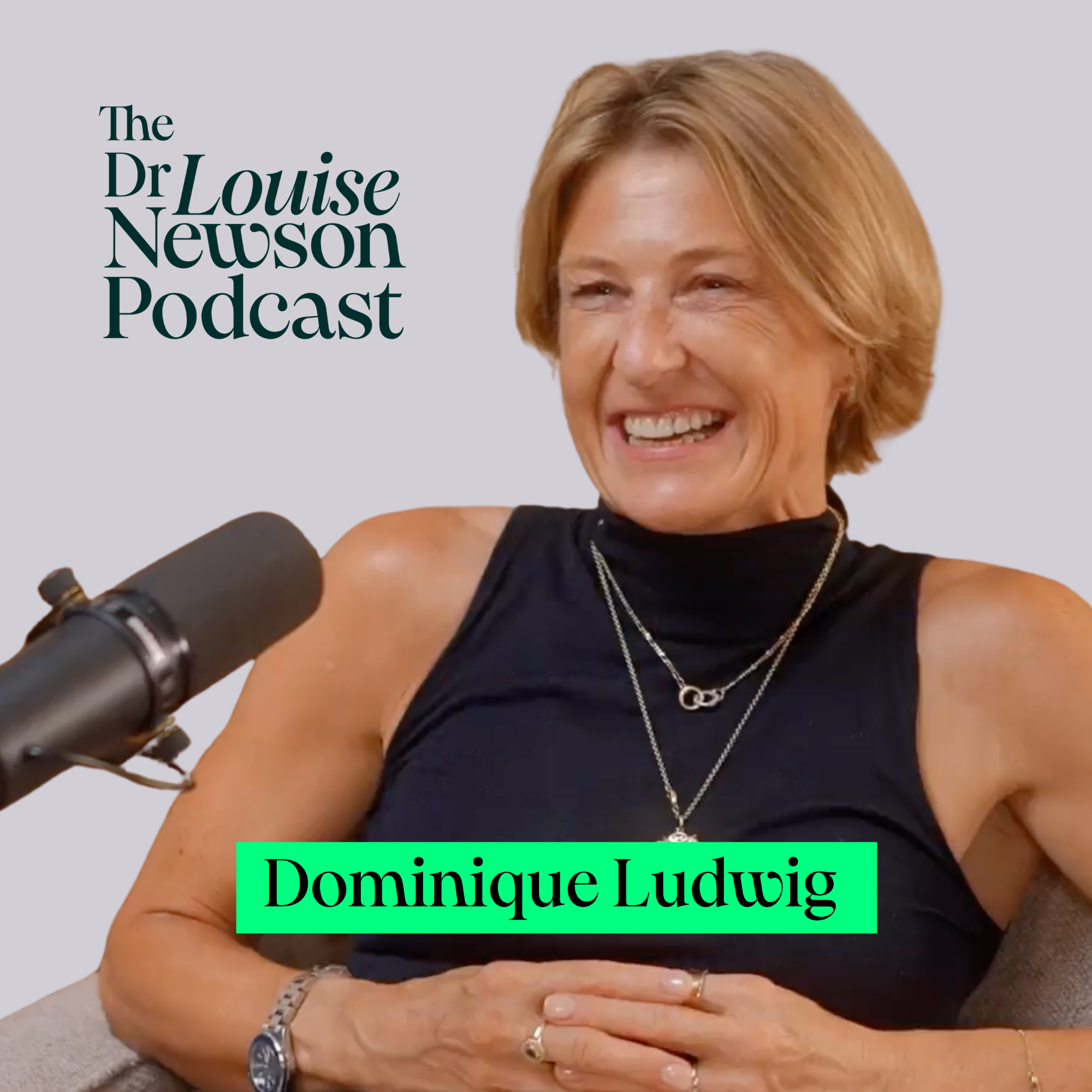
Rose Stokes, journalist and host of the Matter of Fat podcast, joins Dr Louise Newson to talk GLP-1 weight-loss drugs, the hormones behind weight gain and the shame around women's bodies.
Rose has lived with obesity on and off for thirty years and is currently taking GLP-1 medication herself, after months of exercise and calorie counting made no difference to her weight post-pregnancy. She and Louise talk candidly about what these drugs can and can't do, and why "easy" is the last word Rose would use to describe taking them.
Louise explains why women are so often told their weight is a food and exercise problem when the real cause can be hormonal. They also cover the research gaps around GLP-1s and women's hormones and why blame and shame make it harder to get the right help.
Rose closes with her three take-home tips for anyone rethinking their relationship with weight.
@rosestokes
Let’s connect
👉 Track your symptoms andunderstand hormones, download the Balance app: https://bit.ly/4yZty5A
👉 More from Dr LouiseNewson: https://linkin.bio/drlouisenewson
👉 Follow Rose: Insta: @rosestokes
👉 https://podcasts.apple.com/us/podcast/a-matter-of-fat/id6805913565
👉 https://open.spotify.com/show/469s4SFr3DNivfx1dQVyXR?si=9065a05ed85b4723
Dr Louise Newson: [00:00:01] So Rose, it's very exciting for you to be here. We're going to be talking about the podcast you've recently released called A Matter of Fat. So no mincing on the words here. But I used to say to people, if I wasn't a hormone specialist, I would specialise in nutrition. And it's something that as a doctor, I was really not taught about at all, nutrition and I've taught myself a lot. A lot of it's common sense, but there's so much noise. There's so much concern. Are we doing the right thing? The wrong thing? Are we undereating? Are we overeating? Should we be medicalising it? Should we be preventing it? What about weight? What about our metabolism and it's just like, oh my gosh, it's very confusing. So you're going to try and unpick some of this and try to help. [00:00:46][45.4]
Rose Stokes: [00:00:49] I just want to like full disclaimer, I am a journalist, I'm not a healthcare professional so I'll let you, I'll lean into you for the science stuff. But I can tell you what I know as somebody who has lived with obesity on and off for 30 years probably. [00:01:05][15.8]
Dr Louise Newson: [00:01:06] Yes, but you're doing the podcast. It's not just you on your own is it? [00:01:09][2.3]
Rose Stokes: [00:01:09] No, so it's with Dr Giles Yeo, who is one of the world's leading obesity scientists. He's based at the University of Cambridge. [00:01:17][7.5]
Dr Louise Newson: [00:01:18] Yeah, he's super bright. I've, you know, read some of his work, I've listened to him, but sometimes you need someone to translate the science and that's where your important role comes in really, doesn't it? [00:01:29][11.4]
Rose Stokes: [00:01:31] I mean, hopefully. I'm predominantly, I suppose, a health journalist, but as somebody who has been following a lot of the science, obviously with interest, not just as a journalist, but in a very personal capacity, I was starting to notice a lot of the most exciting science, i.e. the stuff that's coming out that's essentially providing proof that the whole personal responsibility narrative around obesity and weight is perhaps not as accurate as we have previously thought. And by that, I mean the idea that people are completely to blame for the size and shape of their bodies. And it struck me that I have found, personally, a lot of comfort in reading that science and understanding that science because obviously, as you know, like there's a huge like moral responsibility narrative and there's a lot shame and there is a lot blame when it comes to obesity, body, like bigger bodies, weight, even carrying any weight that is deemed to be like extra or excess or over or whatever. So for me, it was more about like, how can I get this science to people that could benefit from hearing it and in a way that feels relevant to them, personal to them and helps them to forgive themselves, I suppose, in a way for something that was never actually their fault. [00:02:59][87.8]
Dr Louise Newson: [00:03:01] Yes, it's really important because things have changed so much even over the last 31 years, me being a doctor and the last 55 years of me being around, you know, when I grew up in the 70s, we really didn't have an obesity problem in the same way. And, you know our food choices have changed, but so has our environment changed. And also genetics have changed a lot as well. And it's really important, I think, having responsibility as a physician to individualise care and thinking about how we can prevent disease as well. And the problem I think, and I don't know what you think, but with obesity or people that have different body shapes, it's a lot about cosmetics, a lot about what does she look like in those jeans, what does she look like in that skimpy top or whatever. Whereas I'm actually thinking beyond them because I'm sort of a scientist as well as a physician. I'm thinking about what's going on with their adipocytes, their fat cells. What are the inflammatory chemicals and cytokines, these chemical residues being produced, how's this affecting them? Because I think it's really interesting because I've met a lot of people who are very morbidly obese, but they never have diabetes. They never have a heart attack. Other people who were slim and they have heart disease and what's going on in their body? What's the, how, like you say, there are genetic factors, there's environmental factors. Of course there is food factors as well, but they all have different sort of weights, really, and impacts on each individual person. And I was taught once about, you know, don't listen to your patients, Louise, don't believe them when they tell you that they hardly eat because it's all about food in, you know, calories in, calories out, exercise. And I sort of, over the years, I really know my patients well as a GP, I really got to know them and I did believe them. I didn't believe this doctor who taught me that because I do believe my patients. And the more you understand nutrition, a lot of people are either under eating or they're not eating the right foods or they are not moving in the right way or there's other factors to play. But it's this blame and shame that makes it really difficult. And now we've moved to a culture where, well, let's just inject ourselves and then we don't need to worry, we can just stay sitting on the sofa and eating what we like. And that's not right either. So your podcast is already starting to have these conversations, which is really important. [00:05:31][150.1]
Rose Stokes: [00:05:32] Yeah, and I think just to sort of pick up on the injecting ourselves sort of narrative, I think it is a complex thing. And one thing that I do think is definitely, okay, so full disclosure, I'm currently taking these drugs. And as I explained to you, like in a previous conversation, like the reason I'm doing that, I think a lot of your listeners will probably resonate with this. I had my second child, actually lost some weight in pregnancy because I was borderline gestational diabetic, so I was on like quite a strict diet. And then after that gained quite a lot of weight quite rapidly, like just from postnatal, you know, not moving as much, trying to stay up all night and be up all day with the toddler and all of that stuff. And then, so for me, the reason that I decided to go back on them was that I've spent the past, well, I think 10 or 11 months at the gym doing resistance training three times a week. I was doing two rounds of cardio, doing Pilates, I was eating, I'm not going to talk about the calorie deficit, but I was in what was the recommended calorie deficit and my weight did not change at all. And I got to the stage where, we are hoping that we can have another child, and I'm trying to put my best foot forward in terms of having been through pregnancy before, setting my body up in a way that would put my best foot forward. And, I wanted to lose the last bulk of weight that was between where I am now or where I was then and where I was when I began my last pregnancy. And I got really desperate. I was so like knackered from looking after two small ones, like not eating as much, trying to eat, staying calorie deficit, also exercising all the time. Like, it was just like banging my head against a brick wall. And so what I have found and what I think is really interesting is this sort of narrative of it being easy taking these drugs, like it's somehow makes it easy or it's like cheating or it's the easy way out, which to me sort of stems from this idea that fat people are fat because they haven't been working hard enough or trying hard enough, right. Because if you didn't believe that, then you wouldn't believe it to be cheating. And the other thing I think is really interesting is I would use a lot of words to describe my experience of GLP-1s, but easy is not one of them. The first time I took them was very inadvisably six months postpartum, and I properly crashed out really bad, had terrible anxiety, and just couldn't eat anything. And this time, I've had much more success and actually my weight is going down, which is what I wanted. But the side effects are hard, like for me or have been, that's not to put anyone off, but you know, it's not, it is not what I would say. And also in the meantime had discovered, you know a bunch of nutritionists who were switched onto the idea that, you know, the reality is a lot of people are taking these drugs and, they need advice. So followed recommendations of like, I have a friend, Dr. Federica Amati, who works at Zoe. She had just recently written a book on this subject and she, and so I followed the recommendations in that and this time it's been much better. I've managed to sustain, not lose any muscle, which is the thing that people worry a lot about. But without all of that guidance, the difference in my experience was huge. And, and so for me, a lot of what I'm hoping to do is not, just to be very clear, this podcast isn't a GLP-1 podcast. It's more trying to address, I don't know about you, but I feel like the conversation around weight and bodies in 2026 is more confusing than it's ever been. No one really knows what to think and feel. We've got extreme thinness back on the red carpet. We've got, you know, and this has all come years after, you know, just actually really not that long after the whole body positivity era and the sort of mixed messaging, the not knowing if people around you are taking drugs, the sort secrets, sort of quiet shrinking, but a lot of things that mean that whether you're overweight, obese, whatever, or just, you, know, not the size you want to be. Knowing how to feel about yourself, how to feel about other people. All of these things are more confusing than they used to be, I think, because there's a certain degree of not knowing what... [00:10:37][305.4]
Dr Louise Newson: [00:10:38] Yes, I totally agree. And, you know, when I was a medical student in the 1980s, it was the first time they did gastric banding and gastric bypass operations. And I used to work with a surgeon there who did a lot of those operations and people would be seen by a psychologist before. And it was incredible to see that weight loss, like I'd never seen before in people, but then because their stomach was so small, obviously because of the banding operation. They often had a lot of nutritional deficiencies and they'd come back for follow-up and their nails would be breaking, their hair would be falling out, their skin changes. And obviously it's very expensive to have the surgery. It's very skilled or it was, especially the first operations really were, so you're limited by the number of surgeons. So the advent of GLP-1s has been good and bad for lots of reasons. And as a doctor, anything we give and prescribe has to be very individualised and give our patients the information and knowledge as well. And as many people know, I don't prescribe GLP -1's, but I know a lot about them. I've read a lot of them and the people or the doctors that I really respect who do prescribe them, quite a few of my colleagues in the US are very experienced, but they also make sure their patients are eating really well, that they're exercising properly. They always have a, well, some of them do have this shared care agreement where they, you know they'll put them through the machine for metabolism. They'll look at everything that they're doing. They involve a personal trainer. So that's really important and very responsible of them. And some of them are just on the lower doses as well. Whereas some of my patients seem to get them from their hairdressers and it's one size fits all with no information at all. And so you can't say that those two patients, if you like, are having the same experience. [00:12:27][109.7]
Rose Stokes: [00:12:28] Or are going to have the same outcome right? [00:12:30][1.5]
Dr Louise Newson: [00:12:30] Or the same outcome as well. And so anything in medicine where things are tarred with a negative brush, we have to look at the whole experience of what else is going on, because, you know, as individuals, we to have responsibility, what we eat, but let you say that's why the book is so important or working with a nutritionist who really understands how your body is working. But also for me as a physician, I'll always be thinking about metabolic effects. So as you know, obviously I think a lot about hormones and so many women put on weight if they've got low testosterone, if they've got low progesterone, if they have low estradiol and a lot of my work is moving away from thinking about menopause and periods stopping. It's thinking about these individual hormones and there are a lot people who are in their 20s and 30s with low testosterone and have normal regular periods. They have enough estradiol and progesterone, but testosterone is really important for your metabolism as well, and then when the progesterone goes or estradiol goes, again you get these metabolic shifts, people are more likely to put on weight, and so treating the underlying cause is really imporant, and people sometimes I speak to in the clinic, once I've balanced their hormones with the right type of bioidentical hormone treatment. They say, gosh, I wish I'd done this first because I've been battling with my weight for years and nothing's helped you know. [00:13:56][85.8]
Rose Stokes: [00:13:54] I believe it, right. And ultimately, it's like something that Giles talks about is, I think, I mean, eight in ten prescriptions for GLP-1s are women. We know this. And the highest uptake is people age 30 to 49. So that sort of captures the whole peri to like menopausal and then post-menopausal women segment. And I think the vast majority of the current users are being that group of people. And what Giles says is that these drugs are in effect hormone treatments, right. But we don't really know much about the interactions and effects of fluctuating sex hormones and the effects on these drugs and vice versa. So I think it's really important and it's sort of a lacking area specifically highlighted and sort of emerging thing if we're going to notice that so many women or so many of this group are predominantly those affected. [00:14:59][65.1]
Dr Louise Newson: [00:15:00] And it's really important because we don't have research in, so much in the health of women, we don't have research because it's never needed to be done. It isn't done and it's still ignored. And a lot of research in GLP-1s has not taken into consideration changing hormones or hormone treatments. And then when they do talk about hormone treatments, they're often talking about the contraceptive pill, which is a synthetic hormone. It blocks our own hormones working. So we have to be thinking very differently actually about those natural bioidentical hormones we prescribe and the synthetic contraceptives, because they're gonna have very different effects on GLP-1s. And what's interesting, as we know that, GLP-1s will help to reduce inflammation in the body, and so do the natural hormones as well. And so whether they have a dualistic effect, you know, synergistic effect we still don't really know. So there's a lot that's needed to be understood. And that's really crucially important for people to be asking the questions and thinking in a really holistic way when they're going to start a journey thinking about one of these treatments. [00:16:10][69.7]
Rose Stokes: [00:16:11] And I think also one thing, one of my biggest frustrations after we finished recording the pod was just how much I felt like I was being smacked in the face with the idea that, you know, what we have seen in obesity research and treatment and all of the different, you know, pharma industry, all of investment, like this is a global, like everyone is interested, the speed of innovation that can be achieved when everyone is interested in the outcomes and then you look at something like women's health where you have all of these neglected areas where women are suffering and you think, wow, imagine if that power was put behind like solving endometriosis or finding a way to make it livable. And then you realise like, oh my God, you hear from Giles like, so this is coming down the line, this is going down the line and this is coming down the line and and you start to think, oh my God. Much as I came into this wanting to talk about obesity and the way that it impacts women specifically, I'm now thinking why aren't you helping us in other areas because you could and the speed that these issues can be resolved when they have the force behind them. And the other thing I think is really interesting and important that I wanted to touch on before but because I think you and I have spoken quite a lot at length before about iron deficiency. One of the really important things about GLP1s, and as you say, like having the correct nutrition, and this is why a lot of the private, the way that the private companies are dispensing these drugs without wraparound care means that a lot people are in the dark and they're just feeling their way through it. And if you have a low appetite, which I actually do at the moment and I'm really struggling and I am having to make really sensible decisions about what I do eat when I do eat because I need to make sure that every bite counts more. But you and I actually last year, when I went on them before and crashed out, I ended up severely iron deficient and I'm not surprised. I mean, I was postnatal anyway, but also I didn't really eat anything for four weeks. So or maybe longer, in fact, and it's quite easy to become nutrient deficient when you're not eating normally. And when you have a suppressed appetite, it's really important to make sure that you're hitting certain nutrition goals so that you don't lose muscle, for instance, also become deficient in different areas, specifically as women that we're more vulnerable to. I think that these are sort of upcoming sort of parallel issues that we need to be very aware of and in terms of like making sure that women are properly educated on how to take these drugs well if, I don't think, and I want to say this explicitly, I don't think these drugs are for everyone. I don't think that they are like a panacea. I think that should be used if they are used in order to hit a pause button so that we can sort out all of the reasons why people are ending up like this in the first place or why, as you say, in the 70s, obesity wasn't so much for a problem, there's massive policy angle on this, I think that governments need to do way more to improve our food environment. To improve like our nutrition, education, all of these things. I don't think, I personally don't want these drugs to become the thing that stops innovation or like just stops the drive to improve those other things because from a policy angle, it gives a convenient way of just sidelining the issue, right? I would rather, I don't want my children to be taking these drugs. The way that I see it is I would love for this to give us the time to correct the environment so that we are helping future generations be more healthy. Whether or not that's how the moment is going to be seized or not, I don't know. [00:20:04][233.3]
Dr Louise Newson: [00:20:06] Yeah, I think it's having the right people, educating in the right way and the people without their own agenda or their own conflicts or whatever. And certainly just bringing up three children. My youngest daughter is 15, my oldest is 23. Even in those eight years, food choices have really changed. It's a lot harder to access the greengrocers. It's lot harder to eat in season. It is actively harder to get good meat. You know, all of those things are really. You know, you have to go out of your way to buy an apple now, but it's really easy to get a packet of crisps or whatever when you're filling up with petrol. [00:20:42][35.9]
Rose Stokes: [00:20:42] I mean, as you say, and then there's trends as well, you know, there was the big vegan trend. There's like, I mean all of these things, they do factor in and I, you know, my husband was vegan, currently not, currently vegetarian, but all of these things that I have, like I'm not saying that that's a bad thing at all, but ultimately, there are certain groups that need to, if you're going to change your eating habits quite drastically, that need to understand the implications of that on their broader diet and role of nutrition in their health. [00:21:14][31.3]
Dr Louise Newson: [00:21:15] I totally agree and you know all three of my children have low iron and you know picking up on on the iron deficiency it's really interesting and it's quite hard to diagnose because a ferritin level and iron level could come back as normal and I say 'normal' in inverted commas because it it could still be low and causing symptoms and so we also, what I've realised more when we've got data from the 1980s about it which is only 40 years ago just to remind listeners, that people taking contraceptives, especially oral contraceptives. It can block absorption of zinc, vitamin B vitamins as well. So a lot of people will be nutritionally deficient because so many of us have taken the contraceptive pill thinking it's a hormone and of course it's not. You can't see a nutritional deficiency. It often catches up later with people and we really need to be working. I work closely with people who understand a lot about supplements, people I really value. And that could be really, really useful because often that's the final piece of the puzzle. So I really do think if someone is thinking about a GLP-1 or just thinking about losing weight without a GLP-1, the nutritional value, like you say, of every mouthful should count regardless. You know, I have migraine, which is a blessing and a curse. The blessing is it means I have to eat healthily. Like, I can't slip up, I can't miss a meal because I'll get a migraine. I can't eat processed food because it will trigger a migraine, so I'm sort of lucky because I have this like over me the whole time. Do you know what I mean... [00:22:52][97.2]
Rose Stokes: [00:22:53] I know what you mean. [00:22:54][0.4]
Dr Louise Newson: [00:22:54] I can't hoover up the girls', you know, whatever, birthday cake, because it will just, if I have a migraine then I'm out of function and I can't work. So it's, but I can see how easy it is to just slip. [00:23:05][11.0]
Rose Stokes: [00:23:07] The iron defficiency thing I think is a really big issue. But generally speaking, I mean, also when you're talking about weight and weight loss, which tends to be a conversation that more women are interested, expert in because they've had to be, but also because of the pressure put on women by the beauty standards and what have you. I actually lost a load of weight without these drugs when I was in my late 20s, like a significant amount very quickly, I want to say, a lot, a third of my body weight in under a year. And I got shingles. So there are, you know, a lot these things people pitch it as like we will solve all your problems, however... And as you said, you know, you've had patients that have been living with obesity that have had never any problems with diabetes, never any problems with this stuff. It's not a given that weight has, it doesn't have like a necessarily like completely straight line to... [00:24:10][63.7]
Dr Louise Newson: [00:24:11] Absolutely. [00:24:11][0.0]
Rose Stokes: [00:24:12] ...and that is actually what Giles is most interested in studying. He says, I want to know why you can drop two people down into the same environment and one of them ends up obese and the other one doesn't. Why is that? And why does that person's obesity mean that they're diabetic and that person's obesity doesn't? And he's studying all of that, which I think is part of his superpower and also what he brings to the pod. [00:24:36][23.5]
Dr Louise Newson: [00:24:36] Yeah, it's so important that we do think about this. So we're not naming and shaming people. We're not judging them because there are a lot of slim people that are really unhealthy and we can see that externally, but internally, because as a physician, I worry about future health as well. It's not how we are here and now it's as we age, as we get older. So looking at what we're eating, making every mouthful count, looking at how we move, how we exercise. Our sleep, how we relax, our hormone balance, all of those things are foundational regardless of our body size really. And we all want quick wins, but we can't have them. I realise so much more as I get older, nothing happens overnight, but any good habits, you know, if you just chip away at. [00:25:26][49.8]
Rose Stokes: [00:25:27] Well also, I'm coming at this from, obviously, I've mentioned that in my second pregnancy, I then was closer towards diabetic and my mum was diagnosed pre-diabetic and so, and I had a grandmother that was diabetic. So I am, and because I was like on the borderline of gestational diabetes, I'm now, I think twice as likely to develop type two diabetes in my lifetime and all of these things. So for me, you know, there are massive questions I have to ask about how to look after my metabolic health, how to try and avoid ending up in that situation. I think it's so interesting because there's such an intersection, as you say, between hormones. One day I will at some point get my hormones looked at. But in my family at least, I mean, we all had our own way of discussing this, like science hadn't really caught up with it, but we called it like, we will have the 'fat gene', whatever that is. It was just a sort of mythical idea that, you know, on certain side, on that side of the family, like people were predisposed to gain weight, like now the science is catching up with why that is, and that's super interesting to me, but by no means do I think there's a quick win. And I actually also don't think that GLP-1s are it. First of all, they're prohibitively expensive for loads of people. Like we're only talking about a certain segment of society that can actually access them if they want to via like, because the NHS amount that they can prescribe is so small. So we're looking already just at a certain income bracket, the people that are able to afford it. But also, you know, there's a lot of questions around how you sustain the health, like the weight loss, life after GLP-1s, and I think, yes, you've seen them. Everyone knows someone that's gone on these drugs and halved their body weight, right. But for me, we really need to move away from this whole before and after narrative that's been spun to us on Instagram of like... If you looked at me 10 years ago, I think it was literally 10 years ago, and I was there being, Hey look, I lost all this weight. And like, there's nothing worse than a reformed smoker my mum always says, but like also someone that has lost a lot of weight. I did, and it was actually sort of how I became a journalist. I was writing a blog and a lot people started paying attention about how I'd always been overweight and now I've lost all of this weight and this is, you know, I've worked it all out and blah, blah. And I remember at the time saying to my mum, oh, I want to write a book about it. And she was like, I say this with love, wait until you regain the weight and then write a book because obviously she knew that this was not the end of the story. And actually, hilariously, that is what I'm doing. But you know, mum knows best. But the point is that, you know this idea that the after means the end. I've lost all this weight, I'm finished. When actually, I found personally that trying not to regain weight was harder than being overweight in the first place in terms of the psychological place that it puts you in. Because once you have, and quite publicly lost quite a lot of weight, I was posting about it, everyone around me was talking about it a lot and all of this, when you regain you feel extremely aware of it and very ashamed of it. And I found that that impact on my, even when I was, quote, unquote, you know, everyone in my life was saying, oh, look, you look the best you've ever looked and all of this. Mentally, I was in tatters. It was awful because I was so scared of putting weight on that I was exercising literally every hour of the day, eating nothing. So I just think, I mean, part of what I want is for us to move away from this notion that losing weight will solve all of your problems. I really believe that that's not true. If you can make health choices to improve certain markers in your body if that is right for you, if that's what, you know, if it's sustainable, if its livable for you, like really importantly. But I don't think that simply losing weight is going to solve everything. I really don't think that and I am so passionate about about people... I mean, first of all weight stigma for me is, that is one of my biggest drivers. The things that I've experienced in my life are absolutely horrendous. Obviously, as a GP, what you said about someone saying to you that they're lying, essentially, that is the way that I have been treated in a lot of my interactions with the health service in my live. I think it does have such a profound impact on your personhood. I'm a mother now. I have two small children. I don't know if they have the fat gene or whatever. But I think a lot about how I can try and embed in them different values, different ways of looking at health, different ways of understanding themselves so that they don't suffer the way that I did. But you know... [00:30:54][326.9]
Dr Louise Newson: [00:30:55] No, that's really important advice to end on really that we need to be thinking how we're talking as clinicians, we need be understanding more, we need to have more training in nutrition and we need believing and listening to our patients which is what I say so often, not just about food choices, but also about hormones, about symptoms and so forth. And we need to be making the decision that's right for us and at the time that's right for us and not be judged by any treatment that we make. So I'm very grateful for you being so honest and candid and wish you luck with the rest of the podcast series, which is great. So before I end, I always ask for three take-home tips. So three things. People might be here thinking they might, some listeners will be on GLP-1s, some people might be thinking about them. Some people will have their own views, but that's fine. This podcast isn't really about GLP-1s. It's really people who are thinking, right, the time's come, I'm really going to think about changing my weight in a positive way, but it's never going to be a quick win process. What are the three things that you would say people should start to do or start to think about? [00:32:02][66.9]
Rose Stokes: [00:32:03] Well, I want to be really candid as well, because I think a lot of people come to me and they say, oh yeah, I feel exactly the same. I'm a BMI 26 or something. And I think, so one thing I want be really candid about is get, you know, you have to be realistic about where you are. And there's a big difference between having a weight problem and having a problem with your own weight. Like those are two different things. Second is like understanding that it is a process and that, you know, and it's not going to solve all your problems. I personally, having lost a lot of weight, saw that very clearly that weight loss isn't in itself the silver bullet that people think it is. And also just trying to move away from blame. Like for me, the biggest learning that I've had doing this podcast with Giles is really finally internalising the idea that this was never my fault, like it was not something that I was doing wrong. [00:33:07][63.8]
Dr Louise Newson: [00:33:08] So great advice.Thank you so much, Rose, for your time today. [00:33:10][2.6]
Rose Stokes: [00:33:11] Thank you, so much for having me. [00:33:12][0.7]
Dr Louise Newson: [00:33:12] Really great. Thank you. [00:33:12][0.0]