Menu

My Mission
Articles
Podcast
Events
Workplace Education
Clinician Education
Newson Clinics
Hormones Unlocked
Books
Research
Media
Contact

Balance App
Track symptoms, get insights and feel more in control.


For women living with epilepsy, times of hormonal change can all bring unexpected changes in seizure patterns. Yet many are never told that fluctuating hormones could be playing a role.
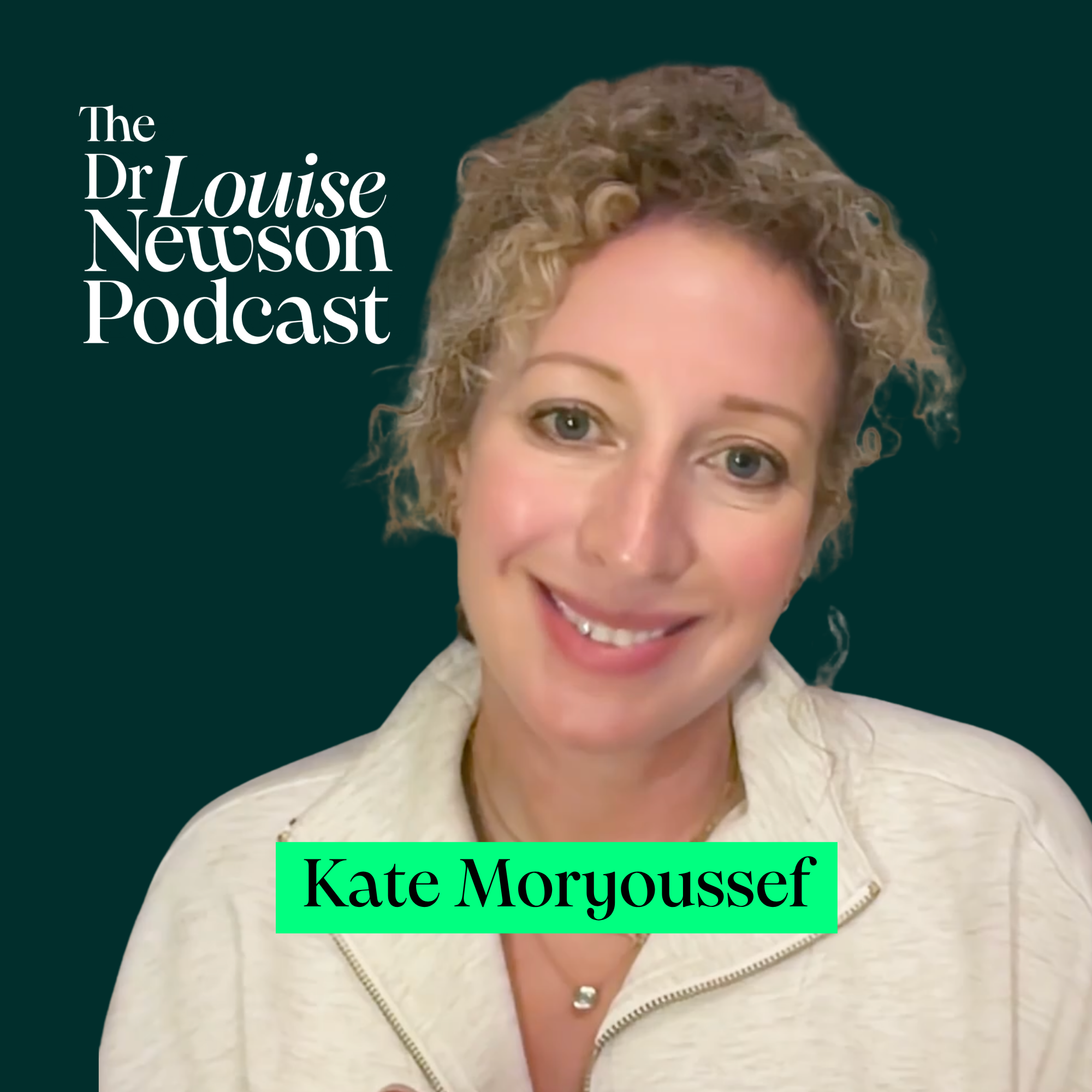
In this episode, Dr Louise Newson is joined by menopause specialist nurse Sian Rees to explore the complex relationship between epilepsy and hormones. Together they discuss why around one in three women with epilepsy experience hormone-related changes in their seizures, why symptoms can worsen during perimenopause and how stabilising hormones may help improve both seizure control and quality of life.
Whether you have epilepsy yourself, care for someone whodoes, or simply want to better understand how hormones affect the brain, thisepisode offers practical insights and an important conversation that has beenmissing for far too long.
LET'S CONNECT
👉 Subscribe on YouTube
https://www.youtube.com/@menopause_doctor?utm_source=DLNpodcast+&utm_medium=shownotes&utm_campaign=BAU+
https://www.instagram.com/menopause_doctor/?hl=en&utm_source=DLNpodcast+&utm_medium=shownotes&utm_campaign=BAU+
https://www.linkedin.com/in/drlouisenewson/?utm_source=DLNpodcast+&utm_medium=shownotes&utm_campaign=BAU+
👉 TikTok
https://www.tiktok.com/@drlouisenewson?utm_source=DLNpodcast+&utm_medium=shownotes&utm_campaign=BAU+
👉 Spotify
https://open.spotify.com/show/7dCctfyI9bODGDaFnjfKhg?utm_source=DLNpodcast+&utm_medium=shownotes&utm_campaign=BAU+
LEARN MORE
👉 Download mybalance app
https://balance-app.com/?utm_source=DLNpodcast+&utm_medium=shownotes&utm_campaign=BAU+
👉 Order my new book
https://bio.to/ThePowerofHormones?utm_source=DLNpodcast+&utm_medium=shownotes&utm_campaign=BAU+
👉 Speak to NewsonClinic
https://www.newsonhealth.co.uk/?utm_source=louise_podcast&utm_medium=show_notes&utm_campaign=clinic_cross_promotion
👉 Visit my website
https://www.drlouisenewson.co.uk/?utm_source=DLNpodcast+&utm_medium=shownotes&utm_campaign=BAU+
Dr Louise Newson: [00:00:02] So, Sian, it's lovely to have you on my podcast. I've known you for quite a few years now, actually. How many years is it? [00:00:07][5.2]
Sian Rees: [00:00:09] Four years I've been working with you with Newson Health. It's gone really quickly. [00:00:12][3.4]
Dr Louise Newson: [00:00:12] Yes, so you're a nurse and actually over four years ago you reached out to me, lots of people reached out on email for advice about a patient and you reached and we sort of had lots of correspondence over emails and then I said to you, how about you working in the clinic and that's what you've done. [00:00:31][18.8]
Sian Rees: [00:00:32] I love it, love it. [00:00:33][0.7]
Dr Louise Newson: [00:00:34] Yeah, and it's great because you know, when I started the clinic and left general practice, I thought, oh, maybe I'll just see the same sort of person all the time and I'll get a bit fed up because I really like variety, but actually we learn so much from our patients and we see patients of all ages, of all ethnicities, of all backgrounds, and also a lot of them have other conditions as well, don't they? [00:00:58][23.8]
Sian Rees: [00:00:58] They do, many of them do, yes. [00:01:00][1.4]
Dr Louise Newson: [00:01:00] Yeah, which is what we're used to, you know, working in general practice we're used to people with more than one condition and we can cope with that. So today we're going to talk about epilepsy actually and I haven't done a podcast about this before and it's very interesting because I quite like history and I was reading a book that was written in the 1800s by a physician who helped people with, well he didn't know at the time about hormones, about women who had problems with their mental health and with other symptoms especially around their periods. And he talked about seizures a lot and there's a whole chapter in this book about women having seizures and some of them were very catastrophic and some of them are very severe and he documented that some of these women had seizures before their bleeding, so before their periods, and it's been very well documented for years. Now I did a neurology job many years ago, in 1994, I worked with a lovely neurologist and we often saw young women who were newly diagnosed with epilepsy. And I never asked about their hormones, but there is an association, isn't there? [00:02:15][74.6]
Sian Rees: [00:02:15] There is, there is, apparently one in three women have what they call cyclical epilepsy, it's called catamenial epilepsy, which their seizures can be affected with their cycle. So some women find they get some more in the middle of the month or some, it may be before a period, it varies massively, but it's, it can be quite disruptive with that, yes. [00:02:34][18.5]
Dr Louise Newson: [00:02:35] And it can sometimes be triggered quite early when in, you know, when people are going through puberty, they have all sorts of changes in their hormones and the brain likes everything the same, doesn't it. It likes calmness and stability. So if we've got these hormones that we make in our brain as well, and they work in our brain, if we got those levels going up and down, It can trigger all sorts of things, including seizures, can't it? [00:02:57][22.8]
Sian Rees: [00:02:59] Pregnancy as well. It can change some women. I did epilepsy clinics when I was in primary care and one lady, when she was pregnant, didn't have a single seizure. The day she gave birth, they came back with a bang. Massively, hormones have such a great big effect on it. [00:03:13][13.9]
Dr Louise Newson: [00:03:13] Yeah, it's very interesting, isn't it. And I don't think we think about hormones enough in a general way, thinking about epilepsy as well, because there's lots of medications, obviously, that are given for epilepsy, but a lot of them have side effects and some of them have longer term health risks as well, don't they? [00:03:34][20.8]
Sian Rees: [00:03:35] They do, yes. [00:03:37][2.9]
Dr Louise Newson: [00:03:38] What, can you explain what some of those side effects and risks are? [00:03:40][2.4]
Sian Rees: [00:03:40] Well, are we talking about menopause as in change of hormones or...? [00:03:46][5.6]
Dr Louise Newson: [00:03:47] So no, with some of the epilepsy medication that's given, because some of them can cause side effects, just things like nausea and weight gain. [00:03:56][9.0]
Sian Rees: [00:03:58] Tiredness, affect their mood because obviously a lot of it works on the brain as well to dampen things down. So it can, you can have a lot of side effects with it. [00:04:05][6.9]
Dr Louise Newson: [00:04:06] And they can interact with other medications as well and that's something you always have to be really careful with, with any medication, but certainly with some of the epilepsy drugs as well. [00:04:14][8.3]
Sian Rees: [00:04:15] They can. Yes, especially the enzyme inducing epilepsy medications, other things can interact with it and like the contraceptive pill potentially can affect it. So they either increase the pill or, you know, it's, it's a very fine line of making things, doesn't affect the seizure control as well, where possible. [00:04:32][16.5]
Dr Louise Newson: [00:04:33] Yes, and I've thought about this a lot, actually, because when I was doing family planning training, I was always taught about the interactions, quite rightly, of contraception with epilepsy medications, especially the ones that induce enzymes because they get metabolised differently. And I was a bit scared seeing women who needed contraception thinking, oh, what am I going to do? But actually, there are non-hormonal methods that we can advise women to have. We sometimes forget that as well. But also, I didn't really know then many years ago that the role of these synthetic hormones in our brain, and they are very different chemical structure to our natural hormones. So they can block our natural hormones working, but they can also have negative effects on the brain. And so, I mean, I'm not sure there are good studies, but you wonder sometimes whether having a synthetic contraception can actually be negative for some women with epilepsy. [00:05:29][55.3]
Sian Rees: [00:05:30] Could possibly be, especially the progestogen. With the natural hormones, the natural progesterone has anti-seizure properties and the estrogen can lower the seizure threshold. So obviously the cycle, if it's cyclical, it can make a massive difference with the seizure frequency. [00:05:46][15.7]
Dr Louise Newson: [00:05:47] Yeah and we need to be really mindful of that because that's one of the reasons why seizures can become more frequent or start actually in the perimenopause and menopause. And often people have a relative progesterone deficiency before even estradiol drops as well. And people sometimes get very confused, don't they, with progesterone and progestogens because progesterone is the lovely natural hormone and progestogens are the synthetic ones. But you're very right in saying that progesterone can be anti-seizure. So it can reduce frequency and severity of seizures as well, can't it? [00:06:24][37.6]
Sian Rees: [00:06:25] So you often find that in the second half of the cycle from ovulation, they can have fewer seizures, but the first half of their cycle, that's sometimes when they can get an increase in seizures as well. And with the perimenopause, the hormones are fluctuating so much, they don't know where they are because they can't predict or it usually comes in the middle of the month. So they can sort of allow for that, that doesn't happen. So that can be a really stressful time. [00:06:48][23.5]
Dr Louise Newson: [00:06:49] Yeah and I think also a lot of general physicians, neurologists aren't trained in prescribing hormones either. So it's a lot easier for them often to think about, let's just give you some seizure medication and not talk about hormones. Whereas it can be very satisfying having the right dose of hormones for women with seizures because if we can get it right and balance those hormones. And even balancing the estradiol, the progesterone, testosterone, as well, and give them the same amount every day it can actually be very beneficial for people. [00:07:27][37.3]
Sian Rees: [00:07:28] It can, yes, I've got one lady that I've seen that comes to us and she's 44, became perimenopausal age 40 and also research does show that some women who have frequent seizures may go through the perimenopause a bit earlier than the average age for menopause. Her seizures changed, she had temporal lobe epilepsy, daily focal seizures, two or three tonic-clonic seizures every year. That was her normal amount of seizures and she knew they would never be completely controlled. She became perimenopausal, her seizure frequency increased, night sweats, she was having anxiety, she wasn't sleeping and tiredness was one of her trigger factors. So of course she ended up with more seizures but now she's on HRT and it's back to where she was before and feels fabulous. [00:08:16][47.9]
Dr Louise Newson: [00:08:17] Isn't that amazing because it's not just about having seizures. It's about not being able to be so independent, not being able to drive, you have to be really careful. I mean, people have to be careful, obviously, when they've had a history of seizures, but it can really like reduce and limit their lives as well, can't it? [00:08:34][16.9]
Sian Rees: [00:08:36] It really affected her massively because she worked full time, she exercised every day and it just threw it all out completely. But when she went on the HRT she went on continuous progesterone because her cycle was up and down but then the normal cyclical regime we would use could have interfered with her cycle so she was on steady progesterone on a transdermal patch and it sort of helped her balance things out a bit more. And she's also on testosterone and she just feels really good. She's got a zest for life back. It's great. [00:09:07][31.1]
Dr Louise Newson: [00:09:07] It's amazing, isn't it? Because often when people are perimenopausal, we start the progesterone for two hours out of four weeks and people still have periods, but there's no reason where we can't just start with the continuous progesterone. [00:09:18][10.8]
Sian Rees: [00:09:19] And that's what we did, yes, started with that first because of the anti-seizure properties, then brought in the estrogen, then brought in testosterone and it worked really well. [00:09:27][8.2]
Dr Louise Newson: [00:09:27] Which is really important because a lot of the time we talk more and more about individualising care, obviously, but also individualising hormones, because in the past it's been very sort of formulaic. You give estrogen and progesterone together, then you might give testosterone and certainly we've all learned over the last, you know, few years especially because we've got bigger in the clinic, we're sharing our experiences and our knowledge. That giving those hormones separately, starting them at the right time, at the right dose, for the right person really can make a difference, can't it? [00:10:01][33.2]
Sian Rees: [00:10:02] Hugely, it is such an individual approach and the longer I do this job, I don't think any lady is the same, any of them at all. [00:10:08][6.7]
Dr Louise Newson: [00:10:09] No, we have a Teams chat going on all the time and it's... [00:10:12][2.9]
Sian Rees: [00:10:12] Oh constantly... [00:10:12][0.3]
Dr Louise Newson: [00:10:12] It's just brilliant. I know, and every so often someone asks something and we all go, I'm not sure, let us know how you get on. It's very supportive though, because medicine, you know, it should be like this, we are all different, you know the way we respond to different foods, to different exercise, to you know our personalities are different, our brains are all differenT. So I know you've been doing training as well for healthcare professionals, haven't you? You've written a great article about epilepsy and you've been doing some training and what's been the response when you've been teaching people about hormones and epilepsy? [00:10:49][37.3]
Sian Rees: [00:10:50] They're just really pleased because it's such an area where there's a fear, isn't there, you know, if it's a patient, do they go to the GP, the GP they're not specialists, some of them are not specialists with hormone replacement therapy either, but they refer to neurology. Neurologists are not specialists so I did a talk last year for epilepsy, at the annual conference for the epilepsy specialist nurses and they gained so much information and it empowered them just to have that conversation with the patient to go through things. And I've worked, as you know, with Epilepsy Action, we've devised a tool, they've devised a toolkit which I had input with that is now available on their website that they can fill in, take it with them. It's a really good resource to take with them to the GP to start that conversation. You know, because they should have the same, if possible, the same care as any other woman. [00:11:34][44.0]
Dr Louise Newson: [00:11:41] Of course they should, course they should. [00:11:41][0.0]
Sian Rees: [00:11:40] They really should. [00:11:41][1.1]
Dr Louise Newson: [00:11:42] But I do think you're right, people are scared and it's easier to say no sometimes in medicine. And the last thing we want to do is cause harm and we'd feel really bad if a seizure frequency increased from a treatment, but actually a lot of people with epilepsy are very empowered and they're very knowledgeable, aren't they. And they're really on board with trying a treatment that might really make a difference. [00:12:04][22.8]
Sian Rees: [00:12:05] And improve their quality of life because like the research is very, there's very little research out there as you know, but the research that is on the old oral synthetic made from pregnant mare's urine, how anybody thought of that I have to say I've no idea and synthetic progestogens could potentially increase the risk of seizures, but a body identical transdermal estrogen, micronised progesterone is unlikely. There's no evidence that it won't, but it's less likely because A. One is transdermal and B. The other one is body identical. So, and I've got about four or five ladies, I think, that I see and they've been fabulous with it. They really have, you know. [00:12:45][40.0]
Dr Louise Newson: [00:12:45] And it's very different because often a lot of them, they've been told by neurologists, oh, you can't have HRT because they're thinking about the synthetic hormones. And, you know, and I often think, you know, when people are stable or more stable with their epilepsy, it's often when their hormones are more stable and, you know, we know that hormones work in the body in a very beneficial way, especially in the brain. So it makes sense to replace what's missing as well. And, you know, there's also some of the drugs can lead to having an increased incidence of osteoporosis, and we know that menopause increases incidence of osteoporosis. If you have a seizure when you're elderly and your bones are weak and you fall, you're more likely to have a fracture as well, aren't you? [00:13:30][44.5]
Sian Rees: [00:13:30] Yes, you are. Women who are on the enzyme-inducing ones are more likely to be affected with their vitamin D levels as well, which increases the risk of osteoporosis. So calcium, vitamin D, weight-bearing exercise as well is really, really important. And the NICE guidelines actually say that all adults taking enzyme-inducing epilepsy medication should have their vitamin D levels checked every two to five years for that reason. Because like you say, if they fall and they get a fracture, like all these things are avoidable. You know, they are avoidable, which is really important. [00:14:03][32.1]
Dr Louise Newson: [00:14:03] And that's where we need to be looking at everything when we look at our patients and try and we want to try and keep people as healthy as possible because we don't want to be draining the NHS. And absolutely for as long as possible, as healthy is possible. And also thinking about younger people as well because we all see more and more women with PMS and PMDD and people whose brain responds more adversely to changing hormone levels. So because they get mood changes, for example, those women are more likely to get epilepsy and sometimes it's not classic seizures. And I remember years ago, there was someone when I was working in New Zealand who used to come in. It felt like every time I was on call, she was in her early 20s and she had these seizures and everyone just thought she was making them up. And I sort of got into that trance thinking, Oh, maybe she is making them up. But when she wasn't having a seizure, she was really lovely. And there was no psychological advantage for her to come into hospital to have this. And I've often really thought about her and wondered how much could have been related to her hormones. [00:15:11][68.2]
Sian Rees: [00:15:13] I think as well, like I say one in three women have catamenial epilepsy, but women with epilepsy, and it's not cyclical, you know, if they're getting all the symptoms of perimenopause, that causes so much anxiety that it could be their trigger factors, which again could cause seizures. And like you say, the progesterone can be really neurocalming. So that's probably an advantage in the overall picture for them as well. [00:15:35][22.0]
Dr Louise Newson: [00:15:35] Yeah, it's very interesting and the other thing is one of my patients recently I've known her for a few years now she's fairly young and she has PMDD and she is on progesterone and she's done very very well, the natural progesterone and then she had a bit of an accident after having sex and took the morning after pill. So her mother reached out to me and was really worried because she'd had a seizure soon after having the morning-after pill and she actually videoed the seizure and it was very harrowing actually to see because this poor girl was really struggling and in casualty they just said, Oh, well come back if it carries on for more than four hours, which is a long time to have a seizure. And so because I knew the family, I still know the family, the mother could reach out, so she had, she was using progesterone as a pessery. So she was, I advised her to increase the dose of the progesterone to try and flood her receptors really of the natural progesterone in the body. So she was having to use the progesterone four or five times a day for a few days, while this synthetic, because it's a synthetic hormone that's used in emergency contraception. [00:16:51][75.6]
Sian Rees: [00:16:52] Yes, it is, isn't it. Yeah, yeah and did it make a difference then? [00:16:55][2.9]
Dr Louise Newson: [00:16:55] Yeah, absolutely. It really did. You know, it was quite hard really to persuade the mother and her daughter to increase the progesterone because it felt a bit paradoxical but it worked quite quickly. But it was very interesting because I thought gosh if I had been on call and she had been my patient 10 years ago, I wouldn't have known what to have done. [00:17:17][21.9]
Sian Rees: [00:17:18] I know, what we know now, I've been with you for over four years, what I know now compared to what I knew at the start is just unbelievable, because the support is there as well, we ask questions constantly, don't we? [00:17:28][10.0]
Dr Louise Newson: [00:17:28] Yes, yes. But I think also we're thinking more, you know, about the brain because we know that the commonest symptoms in our patients affect our brain. So then you immediately think, well, how are hormones working in our brain. What do they do? And then when you think about how the cells work and when we think about epilepsy, we have these sort of action potentials for our nerves to work across our body. And if anything changes the action potential, you can get these sort of sparks really going in the brain. And if the brain activity goes in the wrong way, hence people can have a seizure and epilepsy. But too often we've been so siloed in medicine, we haven't been thinking about it. [00:18:14][46.0]
Sian Rees: [00:18:15] No, I think we're a lot more aware now, aren't we? You know, and then the more I see ladies as well, the more I see the benefit of it. I really do, you know, and it's so lovely to see them leading a normal life. You know. It's very satisfying as well. But it's such a worry for them, isn't it when they become perimenopausal because everything just, we know what it feels like to be perimenopausal without epilepsy. [00:18:36][20.8]
Dr Louise Newson: [00:18:37] Yeah, of course. [00:18:37][0.7]
Sian Rees: [00:18:37] And you know, for them it's just like a double whammy. It's like, where do they go, who do they to? [00:18:41][3.8]
Dr Louise Newson: [00:18:42] Yeah. Absolutely. [00:18:42][0.6]
Sian Rees: [00:18:42] And that, that concerns me. It does. [00:18:44][1.4]
Dr Louise Newson: [00:18:45] And I think also, you know, nurses are so good at looking after patients with chronic long-term diseases, a lot of nurses, like you say, are very well trained in epilepsy, but they're not always as well trained in hormones. So the more that we can educate healthcare professionals, especially about the difference between the natural and synthetic hormones, the better it's going to be for all our patients and long- term health as well. [00:19:10][25.6]
Sian Rees: [00:19:10] Yes, and I think it will give the healthcare professionals more confidence as well in choosing treatment for them as well, because it's much, much safer. [00:19:18][7.8]
Dr Louise Newson: [00:19:20] Yes, so if anyone's listening and they might have epilepsy or know someone epilepsy and thinking about hormones or it might be a healthcare professional listening, what are the three things that you have learned about epilepsy and hormones that perhaps you didn't know 10 years ago? [00:19:35][14.5]
Sian Rees: [00:19:38] Well, the hormones, yeah, basically that the HRT is very, very safe because I've seen patients myself that have come to see me. Like I say, the research is very limited, but there is some out there... [00:19:50][12.2]
Dr Louise Newson: [00:19:51] We neeed to do more research... [00:19:51][0.1]
Sian Rees: [00:19:52] Oh, there needs to be a massive amount of research. Full stop, epilepsy and HRT, there need to be so much more research, you know, with the body identical and educating as many people as I can. it's really important. [00:20:04][12.1]
Dr Louise Newson: [00:20:06] Excellent. Now it's been so useful, Sian, and we will share more resources as we're developing them as well to help empower people. But I'm very grateful for your work and I'm also very grateful for you sharing your time to do this today. [00:20:18][12.4]
Sian Rees: [00:20:20] My pleasure. [00:20:20][0.0]
Dr Louise Newson: [00:20:21] Thank you very much. [00:20:21][0.0]