Menu

My Mission
Articles
Podcast
Events
Workplace Education
Clinician Education
Newson Clinics
Hormones Unlocked
Books
Research
Media
Contact

Balance App
Track symptoms, get insights and feel more in control.


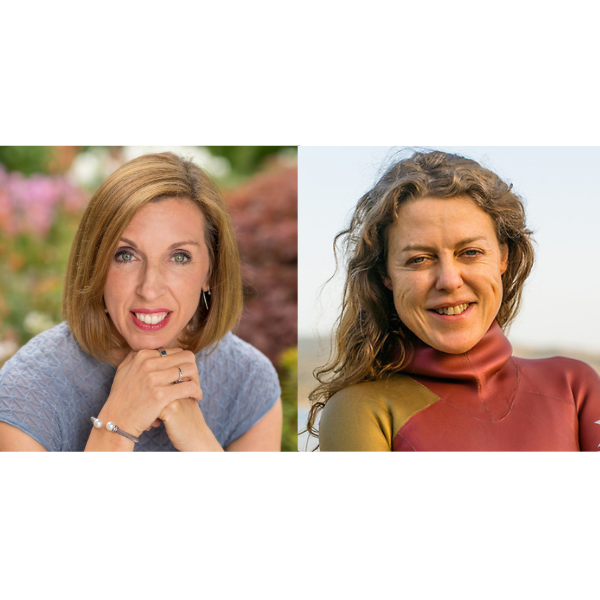
In this episode, Dr Louise Newson is joined by Liz Earle for a refreshing and empowering conversation about ageing, and why the way we think about it needs to change.
Drawing on the science behind her new book How toAge, Liz explains how factors like hormones, inflammation, circadian rhythmand even light exposure influence how we feel as we get older. She shares simple, accessible ways to support our health, from movement and sleep to looking after our mitochondria.
Together, Liz and Louise challenge the idea thatageing is something to “anti” and instead explore how women can feel stronger, healthier and more energised at every stage of life.
We hope you love the podcast! If you enjoyed today’s episode, don’t forget to leave a 5-star rating on your podcast platform.
Dr Louise Newson: So Liz Earle, you've been on this podcast a few times. I feel like you're a regular guest, but there's always more we can talk about, and today is a really exciting day for me, but more exciting for you. So can you just explain what, why it's so exciting?
Liz Earle: Oh my gosh. Well, thank you, Louise. Thank you so much for having me back on. Today is publication day, How to Age. Now you know about this because you're featured in this tome. And it's, it's been a real labour of love. It's, it's my best book yet. I don’t know whether you feel that about in books when you write them, but I think we gain knowledge, don't we? Experience and passion and yeah, it's, it's a good one. So I'm thrilled to thank you for having me on today.
Dr Louise Newson: Oh, I think it's brilliant because, well, there's lots of good things about the book, but one of the great things about you is that you're very evidence-based and you research things. So although you have a massive connection of people who you lean to and ask for advice, you don't just take their opinion. You use it as a vehicle to, to get more information. And then some of the so-called experts that you might connect with are not then the ones that you think are quite so credible. Because you work it out for yourself and you've always been, you know, you, you are, I guess in some ways we’re very similar because you're very critical and you ask lots of questions and you are very reflective. You don't just absorb and take things as face value, which a lot of people could do.
Liz Earle: Well, I think it's kind of you to say, I, I'm very fortunate to connect with a lot of world class academics and medics and researchers and, you know, people like yourself, real experts in the field, because I'm not a medic. You know, I'm not a doctor, I'm not an academic, I'm not even a, a scientific researcher. I think my role is as a communicator and somebody who can go in without a medical or scientific background and ask those questions. And I always think, you know, if I can understand something, if I can ask these amazing academics and people working in their ivory towers and their labs, whatever, to explain things to me really in a simple way, I can then hopefully translate that and give that information across to the public. You know, particularly when you look at something like ageing. Because, you know, we're all ageing. And there's so much that's really super interesting that's going on in the labs and in the world of academia behind closed doors, which will probably take what they say, don't they? 17 years from bench to bedside. Well, I haven't got 17 years to wait. I mean, I'm mid 60s, so thank you very much. You know, I'd like to know about this now if it's going to help me. And I need to go into those labs now and get the information and pull it out before, even, before it's published in many cases.
Dr Louise Newson: I mean I love the title of your book because it's How to Age rather than Anti-Ageing, because we all age, you know? And I think there's so much market and confusion out there about what ageing really is. There's a great paper, you might have read it, it came out many years ago about is ageing a disease? And it's a philosophical debate, and it does fill the criteria for a disease, although it affects all populations. So some purists will say, well, you can't have a disease that affects 100% of the population. But I'm very interested in accelerated ageing. Like what happens. With and, and, and a lot of people still, and I don't think it's as much now with your name on it, but maybe it would've done if you'd produced this book 20 years ago, think it's just about skin and it's about how you look. And, and I think there's two things. Partly it's because the skin is an organ and if your skin is healthy, your internal organs are healthy, it's a window into your organs. So I don't think it's a bad thing, but the other thing is, it's taken as it's whatever you put on your face and that's the way how healthy you are. And that's completely wrong, isn't it?
Liz Earle: Absolutely. I mean, it's funny going back in the day, so obviously I'm known for having founded a beauty company. Yeah. But even when my co-founder, Kim and I, were in the beauty company and we have no connection to it now, we sold the company back in 2010, but we were never using the term anti-ageing. We never used it on any, you know, skin cream or marketing material, whatever. Because I want to age. I mean, ageing is a gift and you know, we know several people, sadly no longer with us who didn't have that opportunity. So it's about pro-ageing. You know, we are going to age, hopefully, we're living longer. We know that statistically, particularly as women, but we're living more years now in poor health than ever before, which is just a tragedy because who wants to spend the last, you know, 10 to 15 years of their life with immobility, dementia, you know, recurrent UTIs, I mean loss of purpose, just invisible to society, loss of joy, loss of motivation, you know, just everything seems to be a lag. And actually, for me, thinking about ageing, it's, I always think of it almost like the last taboo for women. I remember when I was asked to write a book on menopause and when we first connected, do you know my instinctive reaction at the time was No because I didn't want to be associated with that word. I mean, now, thankfully we've come on, I mean, the last 10 years we can all sit and talk about menopause without fear or embarrassment or shame, which there was, I think, back in the day, and I didn't really want to use the word menopause at the beginning because I thought I would be associated with decrepitude and just being, you know, not worthy and you know, just, I don't know, just really decrepit, you know, and frail. And I didn't feel that in any way. And I think the same is true of ageing. It's almost like the last taboo for women that we're not allowed to age and to age with vitality and vigour. If you kind of Google images of older women, you get mobility scooters and care homes. You know, you don't get these dynamic women lifting weights around.
Dr Louise Newson: No, and it's, it's really interesting though. But if you look back in time, even in the 70s, what they sort of average even of celebrities when they were 50, they look quite a lot older than they do now and lifestyle and everything has changed. But yesterday I was in Buxton just with my daughter, and this lady was hobbling into this tea shop and she was very stooped. She would've had osteoporosis. You could see in her hands she had arthritis. Every step was very painful for her. And she had very dry skin, very wrinkled. And she's probably, I'm sure, pretty much younger than my mother and mother-in-law. And she was lovely. I mean, she's smiled and we said, good afternoon. And Jessica, my daughter and I just looked at each other and we were both thinking, what a shame, because she won't be on hormones. You can tell when older people are on hormones. It's, I just feel like medicine has let people down because you've got to have choices quite early on when you're thinking about how to not reduce, but how to slow down the ageing process because we don't want our organs to age. Like it's not about how many wrinkles we have around our eyes, but actually if we have wrinkles on our face and losing collagen, we're losing collagen in our tissues and we're losing bone density. And there's good studies that women who have more wrinkles have, are more likely to have osteoporosis. You don't need a DEXA scan. You can look at someone's face. And so, you know, there's all this pushback about how women look, but actually it's really important. Men and women, you know, we have to be thinking quite early on, and I think it's harder because there's so much inflammation in our bodies with all the, the diets and the lifestyle and everyone have. So the way that you've approached the book is not about taking pharma medication or even not necessarily taking lots of supplements. And I think that's what's really important is that you've, you've gone about it with a real, like looking at everything so people can choose.
Liz Earle: Well, it's quite counterculture, you know, I think when I wrote A Better Second Half, which was my last book, that was kind of a manifesto for midlife. And it was the core pillars, you know, we talked a lot about hormones in that book, you know, diet, eating more protein, lifting weights, getting exercise, prioritising sleep, getting some purpose in life, you know, those kind of core pillars. And they are still the fundamentals. But what I discovered in more recent years is that there's a lot more that we are not being told that is really simple. And a lot of it comes down to our mighty mitochondria, which are, you know, these…
Dr Louise Newson: Just explain what they are.
Liz Earle: So mitochondria, these kind of known as the batteries within our cells. They're little organelles within almost all cells in the body and they're actually much more than batteries. Although one of their main jobs is to produce energy to produce ATP, which we use all over the body, you know, particularly in the brain that's very ATP hungry. And the mitochondria do so much without mitochondria. I mean we just, you know, we fall apart and they protect us against DNA damage. They're very much involved in energy processes. They are what keep keeps us going for longer. And I guess the whole kind of, if you have to, to precis How to Age in, in a simple way, it would be if you look after your mitochondria, they'll look after you. And the simple things that mitochondria love are free and ancestral and there are things that we don't even discuss in modern medicine or even kind of the biohackers and the ageing kind of gurus don't really talk about them, the wellness warriors, if you like, don't talk about them. Why? Possibly because they're free. There's nothing to sell. You know, it's just as simple as getting outside a relationship with daylight. The circadian rhythm is really important. Looking at things like structured water in our cells, looking at vibrational energy, which sounds a bit woo woo and it, you know, it can be at one extreme, but it's also things like sound waves. You know, the impact of sound waves and what different frequencies have on our cells. I mean, it's completely fascinating and once you start to dig into what our mitochondria actually like and give them the inputs that make them respond better, you just automatically feel energised. You know, my skin has never, well, not for decades, looked this young, and I think it's because my mitochondria are thriving. We talk about collagen, you know, collagen and elastin is really important. We need our mitochondria to be making those things. So yes, you can take collagen supplements and I do, and I do all of that as well, but since looking after my mitochondria, I think my pro ageing has. I just wanna share that because it's so positive.
Dr Louise Newson: Yeah, and it makes sense. I mean, we've got trillions of mitochondria throughout our body and it's, it's so important. And often in medicine we forget the basics and you know, I think that's mainly often because the way doctors are taught about diagnosing a disease and then treating with medicine. But actually preventative medicine in my mind is the most important thing we can do and, and looking at the basics. So you write a lot about sunlight and obviously there's all sorts of benefits, sunlight and not just with the vitamin D and getting outside, walking outside with their feet and being happy. Like really… I know it sounds quite trivial, but it's really basic things that are so important because I know you've written a bit about biohacking and there are lots of, like you say, sort of in inverted commas often ‘gurus’ who are selling all sorts of things and making all sorts of claims. So then this sort of anti-ageing wellness longevity space can get very confusing and it seems to be for some people, wealthy people are really just fine tuning things, whereas you and me really are keen to help as many people as possible with our knowledge. And so I think 80% of what you say and practice are basic things that aren't rocket science, but they've somehow been forgotten with the noise of medicine and supplements and everything else as well.
Liz Earle: I think one of the things that really fascinated me is the whole concept of our circadian rhythm. And the fact that our body runs on this 24 hour cycle. And everything, you'll know this because it cascades well, our hormones start and, and are so connected to our circadian rhythm, and that starts at daybreak. So ancestrally, you know, we were designed, created, evolved, however you like to call it, to get up with the light. You know, the sun rises we get up, you know, and that early morning light, it gives us that little spike of cortisol that gets us going. And we get that UV going into our eyes. Not even UV actually, early on, it's more near infrared and, and red and green light, you know, before we even get UVA coming. And what that's doing is it's sending signals into the, the mitochondria in our retina that’s setting up our entire circadian rhythm and our hormone cascade for the day, including time setting for us to produce melanin at night. So if you get up early in the morning and you, you are up close to daybreak within kind of 60 minutes or so of daybreak and you're outdoors maybe only for 10 minutes, but you're letting that light into your eyes with no sunglasses, no glasses, no contact lenses if it's safe to do so, you know, you just need to be out looking at the light or even open a window. If you can't physically get outside, get that natural light, not through a pane of glass, but that actual daylight because of all the spectrum wavelengths that come in that's producing more melatonin, which is helping me sleep better at night. So that early morning clock. Just sets everything up properly for the day. And, and so much of that is gonna cascade through hormones, not only the sex hormones that, you know, you talk about, you know, the progesterone, estradiol, and, and testosterone our lovely PET hormones, which I talk about obviously with you in this book, but also, you know, our serotonin and our GABA, you know, the chemicals that make us feel calm and happy and confident, give us energy. And it's so simple. And yet we become disconnected. Nobody's ever said to me, open a window first thing in the morning. My mantra now for my kids is sky before screens, really simple. We sleep with our phones, don't we? Waking us up and we get drawn into that world first thing, it's, I defy anybody who puts their phone, you know, as, as their alarm and you turn it on and you suddenly, you know, you've got 15 WhatsApp messages, what are you goning do, you're gonna open them, aren't you? And then you're immediately into the doom scroll and the, the activation of everything else. And actually you need to get that broad spectrum daylight before you get that single wavelength of blue light that we're getting from our screens.
Dr Louise Newson: And the other thing that you've become, since I've met you more, more interested in is, doing weights and the way you exercise is quite different as well. And many people who follow you on Instagram will know because you let us into that side of your life. But, but that's really important that somehow people still get very confused what type of exercise to do. It can be very confusing. I still really think it needs to be individualised, but actually doing weights is really powerful because our muscles aren't just there to prop up our skeleton. They're biologically metabolically active as well, aren't they?
Liz Earle: That's the fascinating thing, and I think that's something that I've only realized relatively recently is just this activity that goes on within our muscles. And I wish somebody had told me earlier, just lift a few weights. You know, I was of that era because you know, being in my 60s now, when I was in my 20s and 30s and I had my gym club membership, I was in a shiny leotard, you know, jumping up and down to Jane Fonda doing step classes for an hour and actually not really achieve anything. And 10, 15 minutes of lifting some weight instead will do so much more for your body.
And if you don't have to lift dumbbells, you can just do some push ups. You know, you can do some squats, you can do resistance, your own body resistance. You don't even have to invest in any equipment to do it. And the other thing I started doing and adding into my exercise routine is looking after my lymph. So moving my lymph every morning so I'm aware that I've been lying flat for, you know, hopefully a good part of, you know, seven, eight hours or so. And, you know, just tapping here where the main sort of lymph nodes are, that kind of recirculate, all comes back to the sort of clavicles, doing that and doing a bit of facial massage. And then I jump up and down. I literally, like a mad woman. I'm jumping, maybe doing 40, 50 jumps, knowing that that impact is then helping to create bone density and strengthen my bone and stimulate the production of stronger skeletal system. So all the time I'm thinking about how, how can I age well, but in a way that doesn't really take up any time or cost too much money.
Dr Louise Newson: And it's doing it. So it's part of a routine is really important as well, isn't it? And I, as you, which people know, I often get up and do yoga before I start my day. Because then it's done. And like I say, I'm not, I'm not drawn into the screen. It's just part of my routine. And I'm very lucky because I do an infrared sauna every day as well. And yeah anything to reduce inflammation is really good. And that's something that you explain, I mean, I've obviously explained it in my new book, but you explain it. And that's a pivotal part that's been missing for so long. I think, you know, anything we, we drink anything we eat and when we move, everything has got to be associated with that.
Liz Earle: And, you know, I was really fascinated, you know, when we spoke for the section in my book on estradiol and its role as, anti-inflammatory. So I write about anti-inflammatory foods. You know, what you can put on the end of your fork that's really going to help. Interestingly, you talk about infrared light, you know, I'm a big fan of infrared light. I also have an infrared sauna, which I actually bought when Lily, my oldest, was so ill with her autoimmune because I'd read that it would help her. And I started to use it as well. It was, it was a big part of her recovery too. And then I noticed that my skin started to look so much better as well because I was using it. And of course, infrared is one of the key wavelengths that we get early in the morning and later in the evening. So if you want a free infrared session, go outside as close to daybreak as you can, go outside and watch the sunset. And also what's interesting is looking at the work of people like Professor Glenn Jeffery, who's an amazing neuroscientist and ophthalmic expert based at UCL and, and Moorfields together. He's done various, research papers on wavelengths and looking at these long wavelength of infrared showing that they penetrate clothing. So actually you don't even have to strip off to get the benefits. You know, you can go outside at sunrise and sunset, and again, it's giving chemical signals to the body. So around ourselves we have this, a lot of water, obviously, you know, that we're composed of a lot of water, which is why hydration is so important, especially as we get older and we lose a lot of those first signals as we get older and may not realise that we're so dehydrated. But the water that's around ourselves is structured. So it's more like a gel-like water. And there's this great researcher in America Professor Jerry Pollock, who discovered what they're calling the fourth phase of water. So previously we thought that there was just three phases of water. There's turn on the top, you get liquid water, you boil it, you get vapor, you get steam, and then you freeze it and it goes solid. So those are the three phases of water established science. But of course science os never settled, is it? It's always any theory until somebody comes along and smashes it. So along came Jerry Pollock and his research lab and they discovered the fourth phase of water, which is structured water, and that's water that molecularly has changed. So when you look at it under microscope, it's literally structured. The little particles are kind of organised. They're not just scattered in a random way. And you can go online if you Google or search, you know, structured water images, It's fascinating. And there are various things that influence the structure of water, which we have in our own body. The body structures its own water. It's structured, the mitochondria is involved in structuring water. One of the things that structures water is sunlight, or even just daylight, but primarily sunlight. So by removing ourselves from our exposure to natural light, we are removing one of the basic components, the fundamentals that our cells need to age well. And maybe that's why people who are living in the Mediterranean, we talk about the Mediterranean diet effect, being so healthy. Maybe it's just that they're receiving more daylight and their cells are behaving healthier because of that.
Dr Louise Newson: It's so interesting. There's so many basic things that we either don't understand or forgotten or have been suppressed, and I think this is where it's really useful that you are not a medical person, because a lot of guidelines. I written with pharmaceutical influence, a lot of the way we’re taught as doctors with pharmaceutical influence. I mean, as you know, I don't work with pharmaceutical companies, but my training and everything else has been very much about pharma. And so a lot of the books that I now read or have read, looking at inflammation and ageing, looking at basic principles are not about pharma, but a lot of things are still hidden from the public. And I think that's really difficult. And like you said, some of it sounds a bit woo woo. Well, it's not really, but it's just not out there. So your book is a, is a sort of easy access way of people trying to maybe think differently about how they can have day-to-day living without spending a fortune, which is really important, isn't it?
Liz Earle: And it's unbiased. You know, I'm, I'm not paid by anybody to, to promote anything here. And I, what I tried to do when I was writing it was obviously I had access to a lot of real world class medics, particularly those working in this sort, of emerging field of science called quantum biology, and which is looking at circadian rhythm, particularly in light and structured water and energy and magnetism and all those really amazing things, which will become more mainstream. But I think it's difficult because there is nothing to sell. And when you look at things like grounding, you know, you talk about me going out and being barefoot on the, the ground in the morning, whether it's even I, I do it in city streets. I've been known to get up in the middle of Manchester and stand outside on the pavement because I'm still gonna be grounding barefoot even if I'm not at home on the grass. And we know that that can reduce inflammation in the body to a certain extent. And there have been small studies that that show that. And people will say, yes, but we know where's your randomised control trial? And it's like, seriously, guys? Who is going to spend a quarter of a million pounds on an RCT to prove that you don't need anti-inflammatories? It's not going to happen, is it?
Dr Louise Newson: This is where science becomes so stupid, really, because, um, even with hormones, people still say, well, we haven't got randomised controlled studies. Well, you never will actually. But even if you did, the people in the studies are not the same as the person in front of me. And a lot of it is common sense, you know, it's not doing any harm maybe standing in the middle of the road in Manchester might be, but standing outside it's not going to cause any harm. Taking natural hormones is not going to cause any harm. But the harm is by not doing these things and a lot of them is a cumulative effect as well. So you don't see any instant results often, but you do after a while. And making it part of routine is also important because others will watch you and learn from you. And then it has this ripple effect, doesn't it? When you live in a more healthy way.
Liz Earle: I think, you know, the more you do, the more you want to do. I think the good news is it's never too late. It's also never too early. So you know, this is the information I give my daughters, Brella who's 20 ish and Lily in her 30s, and so they can kind of hopefully build it in, as you say, it becomes a ritual. It's a habit. It's like brushing your teeth. If you're going brush your teeth, you're in the bathroom, open in the window, you know, you get in the daylight. Okay. It's a really simple thing to do. It doesn't cost anything. It doesn't take any time. But I think it's about consistency. Little and often. And you just build in these little habits. And you know, I'm not anti-medicine. I'm extremely grateful for, you know, surgery and antibiotics and all the rest of it. But I think particularly as we age, especially as women, and you'll see this as a doctor, the, the whole kind of polypharmacy of women particularly being prescribed one thing and then the next, and then the next, and then the next.And actually if we can take a step back and look at what functional medicine is more about, it's look, what are the causes of these symptoms? How can we actually address it? You know, obviously natural bioidentical hormones is going to be part of that. But just the way that we live and our exposure to natural things, you know, like daylight and outdoors and, you know, hot and cold, you know, having a bit of a cold shower or whatever is, is, is worth doing. That whole shock system actually is very healthy for, for producing healthier cells.
Dr Louise Newson: Yes, and knowing why you're doing it is really important. So there's a lot in the book that's sometimes, first reading is a bit scientific and it might, people might think goodness, but actually it's really important because if you understand why you're doing something, you are more likely to do it as well. So your book's very well resourced and referenced. And like you say, you've got good experts as well. So it must have taken you a long time to write.
Liz Earle: It's funny, I started writing it. I started writing it in my head, actually, even before I finished the last one. So it, you know, more than three years coming, 'cause I realized that this was the next wave. And I know that some of it's going to sound a bit out there. Mm. It is the way ahead. And I'm really certain of that. And I don't think that what I'm saying is wrong. I think it's early. So, and I'm quite prepared to stick my head up and say, I think this is, this is early, but I gave a manuscript to a number of medics, serious medics, you know, who I really respect, I mean, yourself included, but people like, you know, professor Tim Spector, Dr Rupy, there are lots of, you know, Dr Camilla Stokholm, you know, wrote an amazing endorsement saying, you know, this is stuff that we should all be learning at medical school. You know, so, and it's full of references, just like your book has all the medical references in the back. I was very clear with the publisher that I wanted it to be read and taken seriously by academics and medics who would go, this is just all bit of woo woo fluff. You can't say that because the references are there. There is some hardcore kind of geeky, sciencey bits, but you can skip it if you want. I’ve broken up and I say at the end of each chapter, this is a summary. If you don't want to get into the weeds, just read this little bit that tells you what to do at the end of each day. And then I think for me, the more you know, the more you want to know, and the more you do, the more you feel capable of adding in that little bit extra every day. And when you see the results actually, and you feel so much better, that's, that's the goal. That's the whole thing, isn't it?
Absolutely. It's all so important. So your book should really be bought by everybody to learn from, and it's not actually just for women I hasten to add because men do age too, and our cell processes in men are the same as for women. So really important that anyone can read and learn from it. So, three, take home tips. This is really obvious, but three reasons why someone should buy or read your book Liz.
Liz Earle: Well, I think three take home tips. I mean, firstly, we're all ageing and I think we need to take ourselves in hand and say, we're going age well. I'm in my 60s and I'm fitter stronger, definitely happier than I was in my 40s or 50s. And now why can't that trajectory carry on up? Why does it have to be downhill? You know, I want to to be sitting here with you Louise, in 10 years’ time in my 70s going yeah well I was kind of okay in my 60s, I'm so much better in my 70s. That, that's my goal. And I think it's fully achievable if you know how to look after your cells. So I think, you know, number two, look after your cells and they'll look after you. Take it back to the mitochondria. Just take a moment to learn what your mitochondria need and what they use to thrive on. Because if you feed them with the things they need to thrive like daylight, you will see a dramatic difference.
It may not be immediate, but you'll see it definitely over time, not very much time. You're talking, you know, weeks and months, not years. And I think just, you know, remain, the basics, remain the same. You know, eat lots of nice protein, get your sleep, prioritise sleep more than anything else. Sleep is a superpower for women, you know, make sure that your hormones are sorted so that you do sleep well. But then, you know, make sure that you might want to try and get to bed a little bit earlier so that you can get that morning light in, because I'm a night owl. I find that really hard. But I, I have managed to do it because I see the benefits of getting up early and seeing that early morning light.
Dr Louise Newson: Brilliant, so we can all look forward to our 60s, 70s, 80s, and beyond.
Liz Earle: Way beyond, way beyond.
Dr Louise Newson: Well some of you might know, my mother-in-law recently turned 90 and she's pretty amazing. There's lots, lots we should aspire to do and change, and it's never too late to make small changes either. That's really important, isn't it?
Liz Earle: Small changes, and I should actually just say that just as we've got good daylight, Light is really good, the daylight, there's also light that's not so good and increasing evidence that LED lighting is not so good. So some other really simple change that you can do as a little takeaway is uh, whenever you can change your LEDs to old fashioned incandescent light bulbs, even if it's just one bedside light or one lamp that you have on your desk, try and make an in incandescent light bulb. And there's a lot of research out there. I think we're going to be hearing more and more about the issues of not only the benefits of outdoor lighting, but also some of the hazards of the modern indoor lighting too.
Dr Louise Newson: Thank you so much for your time, Liz, and good luck with publication day. Thank you.
Liz Earle: Thank you, exciting.