Menu

My Mission
Articles
Podcast
Events
Workplace Education
Clinician Education
Newson Clinics
Hormones Unlocked
Books
Research
Media
Contact

Balance App
Track symptoms, get insights and feel more in control.


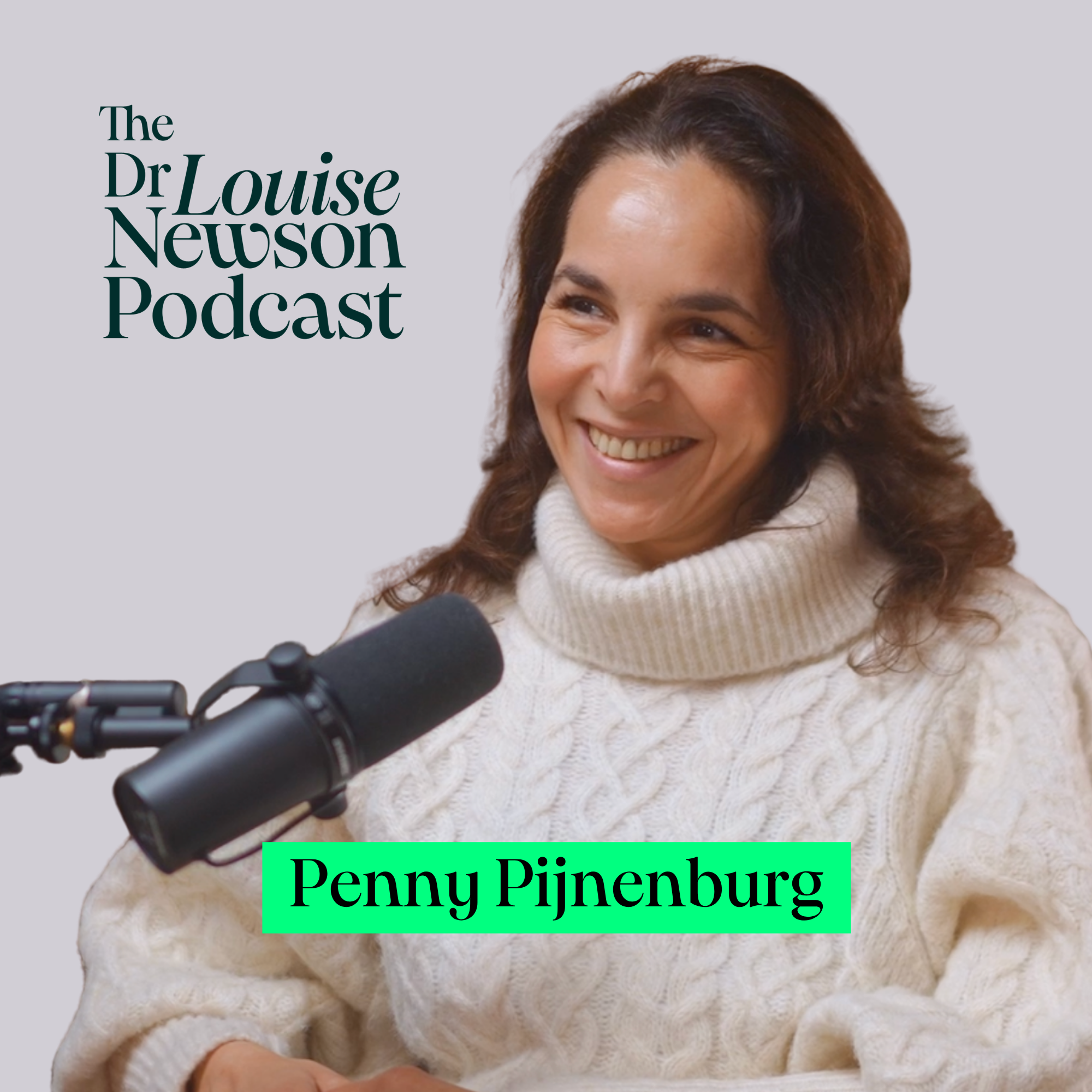
In this episode, Dr Louise Newson is joined by Penny Pijnenburg for a powerful conversation about genitourinary syndrome, a condition that affects most women but is still rarely talked about.
Penny shares her experience of living with severe symptoms for more than 14 years before realising they were linked to perimenopause, and the frustration of not being offered the right treatment.
Together, they explore why these symptoms are so often missed, how they can worsen without treatment, and why simple, low-dose hormones can be life-changing. Now passionate about raising awareness, Penny is helping ensure other women don’t go through the same experience.
We hope you love the podcast! If you enjoyed today’s episode, don’t forget to leave a5-star rating on your podcast platform.
Dr Louise Newson: So Penny, you are here in London. I've seen you in Amsterdam where you live, but I met you in London actually, didn't I? Because I was on my theatre tour, my last theatre tour, and you came up at the end and said, I want you to come and talk in Amsterdam.
Penny Pijnenburg: One minute. Yeah, I had one minute at the book signing. And I saw my chance. Yeah, it was a little bit over a year ago. And yes, I feel like we've done. So much. Yeah. So we brought you over to Amsterdam for the Connected Health weekend. Then I interviewed you for the article about long COVID and hormones. Yeah and you were so kind to review and we were in touch and yeah, it's great to be here. I mean, you know, I, I told you already back in Amsterdam. I work in sports advertising, so I did, I think now, you know, this term GOAT. Which doesn't mean the animal, but it's the greatest of all time. So, and I think you are the GOAT of menopause so own it.
Dr Louise Newson: you know, I was in Amsterdam. We had a great weekend. I gave a lot of presentations to women, men, healthcare professionals, and the healthcare professional section was really busy. I gave my presentation and then you gave yours, and I thought, I knew you really well. I knew you'd had a story, and I knew that your health had improved on hormones, but I didn't know how much you'd suffered. And you have kindly agreed to talk about your suffering because lots of women get symptoms. When I read articles, it will say the majority of women have symptoms related to genitourinary syndrome of menopause, like 70% and probably only about 8, 10% of those women have treatment. When you read it in black and white, you think, oh, that's bad, and you keep reading the article. But when you talk to women who have symptoms, it's not just words on a page. When I first learned about genitourinary syndrome of the menopause, it wasn't called that. It was called VVA, which was vulvovaginal atrophy. The word atrophy, if you look it up in the dictionary, is withering and wasting away. Like, and actually, I don't want to think of my anatomy withering and wasting away. And then some people, even then, VVA was a bit of a mouthful, so they'd just say any vaginal dryness. But as you’ll talk in a bit, it's not just always dryness. We are trying to change the terminology actually with a group of people I know in America, to just genitourinary syndrome because it's not just menopause. My 23-year-old Jess was on the podcast recently talking about her use of vaginal hormones, and she has PMDD. She's not menopausal. If I wasn't her mum and she didn't have access to a good menopause specialist, she would be having lots of symptoms. I think back in the past as a GP, I had lots of patients with, I thought recurrent thrush, a lot of vaginal soreness, irritation, urinary tract symptoms. Never once did I think about hormones in them. So I don't think it should be called GSM. I think the M is wrong. And for you, it certainly wasn't menopause where you started to experience symptoms. Was it?
Penny Pijnenburg: Yeah. In hindsight it was perimenopause. So it started definitely from my 40th, because I, I have letters from the gynaecologist, right? And I can see the year, but I think actually it probably started already late 30s and,it started just with first irritation after sex, and then it was a few days, then it turned into irritation just out of no reason. And then I, I noticed a pattern myself where I would have irritation just before I had my period, because at the time I, I was, I still had my period every four weeks. So yeah, now I know it was perimenopause and I went to the GP, then I went to, after, I think it took two years, then I, I went to see a gynaecologist, and again, I mean this was, we're talking, 2012,13, so I'd like to think now that people know more about it. But it's quite sad. And I actually, at some point, I even, and I have the letter still at home back from 2013, where the gynaecologist actually writes in her report saying, patient thinks it's also linked with hormones.
Dr Louise Newson: What, like you were crazy?
Penny Pijnenburg: No, not crazy, but she just put it there as a fact because I'd mentioned it and I, I thought it was linked to my periods, which in a way it was, it was. But it was hormones, perimenopause. And I, I basically, I, it went on like that.
Dr Louise Newson: So were you given any hormones at that time?
Penny Pijnenburg: No. No. They never really figured out what it was. In the letter that went back to the GP it says it could be lichen sclerosus, maybe it's a tumour. Like they listed basically everything. So I never really got worried, but it was just super annoying. It was like, and I see a lot of, I'm in an international support group, I see a lot of women using the word flare-ups. So, and it started with a few days of flare-ups. Then over the years it went into weeks and eventually even months, and of this, and again, like I never had any bladder infection or UTI and that, that's the thing, right? Genitourinary syndrome can be many things, so my main problem was just like this crazy irritation. I described it I think in the presentation it was like this, this constant feeling of having like a, a fire and a whole colony of ants going 24/7 through your, your underwear. You still have to, to function right? And it's not something you're going to moan about at work. You know, you, you can say, oh, I have a headache, or I pulled my back. But you're not going to say like, I have this horrible problem with my private parts. You probably would get reported to HR right if you would say these things.
Dr Louise Newson: And was it affecting your sleep?
Penny Pijnenburg : Yeah. Sometimes it, it, it was. Difficult to fall asleep. Yeah. But I think mainly throughout the day. You know, at night you can also like not wear underwear, but throughout the day and with cycling and there were whole periods where I could only wear leggings. And even sitting like towards the end. So I basically struggled through like, I think eight years. And in the beginning it was just a thing, where I thought, I need to solve this because this is going to, it's interfering with my sex life. So as you know, I work as a producer. So I'm used as a producer. You're responsible for like organising, managing everything. So a good producer will always ahead, two steps of everybody else and have like a plan. So if this happens, we have plan B,C. So I feel like this is how I manage everything in my life. So I was thinking like, okay, this is a problem now I need to get this fixed because this is not good for the future. So that's how it started. But I mean, eventually through over years it got so bad and the flare ups got longer and longer it, I mean, it was more like, how can I get through the day? How can I actually cycle? How can I sit down? So it, it was really, yeah, if I think about it. So sad. And then because I couldn't accept it, I kept searching, and again, this is quite a long time ago now, nearly 15 years. So, uh, luckily now there's a lot of information and, you know, we're doing the podcast. So eventually I think in 2023 is your, you did the first podcast with Rachel Rubin and that's when I really realized it was genitourinary syndrome of menopause. I had already kind of figured out before a few years before that that it was probably this vaginal atrophy. But again, like that, that, that term as you were just saying is it's wrong. And, and the interesting thing was what you guys were saying on the podcast, and that's when I was really like, oh my God. Um, I think it was Rachel saying that very often, she would see those symptoms starting even before any other perimenopause symptoms. And that's when I realized that's me.
Dr Louise Newson: That's amazing. So if you hadn't have listened to the podcast with Rachel Rubin, things might have been very different.
Penny Pijnenburg: Yeah, and I probably would've struggled even longer. So eventually I, I found another gynaecologist. She actually, she diagnosed, she said yes, this is genitourinary syndrome of menopause. I still have that letter at home as well. And for me to actually read that and like a specialist finally saying that already helped, but then it, it took a year to actually heal properly. And also because I'd read this in the international online support group, where someone had said, they actually needed much more of the traditional doses, which is two weeks every day, right? And then you're supposed to do it twice a week. And I read about someone saying that she actually needed it every day for a long period. So I discussed that with my gynaecologist and I'm so glad that she was actually, she said, that's fine here you have a long standing prescription and you know, just experiment yourself. Because I also see a lot of women in that support group in different countries where their doctors just refuse to prescribe more, or they're saying, oh, it's not helping, but it's probably because they don't, you know, they need more. So I, it took me a year. I needed at least five times a week. And now it's all under control and I was able to reverse it. So I basically, so that was 2023 when I got properly diagnosed, and then it took another year. So now that was 14 years. Yeah, wasted a little bit.
Dr Louise Newson: Yeah, it's, it's so sad because it is one of those symptoms that just progresses without treatment. You know, some people find that their flushes or sweats don't last that, you know, they might last months, they might last a few years, but generally they tend to, to, um, improve with time. But this is one of the symptoms that doesn't, and it's like I say, so common, but people don't always know what to look out for. And I think if anyone has any irritation at all or any sort of awareness, like I know, you know, as we are sitting talking, we shouldn't be aware of our vulva and our vagina. You know, we are not aware of other parts of our body. In the same way, whereas if you are aware, then there's probably something that's not quite right. And just the, I say in inverted commas ‘irritation’, burning symptoms that you say you are at work, you're in a meeting, you're trying to sit down. And I wasn't really taught about it as a, as a medical student or a postgraduate. And I remember the first time I saw someone with, with symptoms similar to yours in my clinic and she, she said, oh, do you mind if I don't sit down for the whole consultation? And I thought, oh, the chairs are quite comfortable. And then she said, I've just driven in my car to come here. I really need to stand up. And she was wearing this long floaty skirt. And I said, oh, can I examine you? And she said, yes, but she wasn't wearing underclothes. And I'd never seen anyone that extreme because as a GP I would always get on and treat people. She like you had seen, lots of doctors tried to get help. She'd had biopsies, she'd had steroid creams. Nothing had helped at all. But the doses of the vaginal hormonal preparations are very, very low. Incredibly low. And so using them every day really isn't a problem. And some people need to use a pessary and then I often give a cream or a gel to use externally as well. And quite often people use prasterone, which is DHEA, so it converts to estradiol and testosterone and using systemic hormones can make quite a difference as well.
Penny Pijnenburg: Yeah, I have the whole picture now. Including testosterone, which has been like the, the last thing to really help it.
Dr Louise Newson: And has that made a difference?
Penny Pijnenburg: Yeah. Yeah. And now I can really do it two, two nights a week with the vaginal hormones. Yeah, but I'm never coming off them.
Dr Louise Newson: No. And you don't need to. And I think that again, is really important because some women sadly are taken off them after a certain length of time. But there is no risk with these hormones because they are such a low dose, so they don't get absorbed into the system. And once you stop using them, the symptoms are likely to come back. And you do not want them coming back at all.
Penny Pijnenburg: No, no. I've other, some friends, in my circle of women. I've told them one who had recurring bladder infections, that you need to go and get a prescription for this. And she started, another friend who had some issues, who had some doubts about starting hormones, but she was really happy and like, everybody needs to know about this. You know, if this was a male problem, I always try to like explain, so let, let's see how this was, if this was an issue men had, right? So let's try and explain this to men. So. You have this constant burning penis, your foreskin is, is really hurting. You have small cuts appearing out of nowhere. You know, you don't even want to have sex.
So how would this be? Like, no man would accept this, right? Like the whole world would be I think it's one of your colleagues saying there would be a vaccine or maybe Rachel Rubin is saying this, there would already be a vaccine for many years. And I think also genitourinary syndrome of menopause, it's probably the last taboo of menopause.
Dr Louise Newson: This year I'm taking a new show around the UK called Breaking the Cycle: the Power of Hormones. I'll be visiting theatres across the country to talk about something that affects every part of our lives. It is still widely misunderstood, and of course, that's our hormones. They shape how we feel, how we sleep, how our bodies function, and how our health changes over time. And yet so many women are left confused, misinformed, or simply not listened to. So in this show, I'm going to be unpacking how hormones really work, where medicine has gone wrong, and why women's health has so often been overlooked. I’ll be sharing the science, some of the history and also real stories behind decades of misinformation, alongside practical insights that can help you understand your own body better. There will be moments that challenge what you think and know and space to ask questions you may never have been given answers to before. If you want to learn, reflect, and leave feeling more confident about your own health, I'd love you to join me. Tickets are on sale now. There's a link in the show notes.
Dr Louise Newson: I think it's trivialised as well. I think a lot of people don't understand the association with the urinary symptoms and the localised symptoms. A lot of people think oh, it's not that bad. And they don't understand or they don't want to understand. The treatment is so easy actually, but it can take so long. And I think also a lot of clinicians still are embarrassed talking about sex or talking about those localised symptoms and which is,
Penny Pijnenburg: And some women, I think, you know, in the Netherlands, I like to think we're quite open. I think your sister was saying after my presentation, oh, it's so good. Dutch people are so open. And normally I must say I'm a very private person, but I think after my struggle for, you know, like I said, it took me 14 years, I feel like every woman on the earth needs to know. And also because symptoms can start in your 30s, but also if, if you don't get this around your menopause, I know a woman who's in her 70s who just recently started getting these symptoms. So I've been helping her with like, you know, getting the right treatment. So, and I was reading another article where they said between, it's like some really random numbers. Between 27 and 78% of women get these symptoms. That's a wide range really. It's probably because a lot of women don't talk about it. But let's say, so basically almost everyone, right? That's nearly 80% of women who can get this at somewhere between, well, you're saying your, your daughter has it. So let's say between your 20 and your 100s. Because a lot of women in the care homes or older women, get all these UTIs, right? My sister works in a care home. I once asked her, I said, is this actually true? And she says, yes. A lot of them. And the doctors give them a lot of antibiotics and it's so sad.
Dr Louise Newson: It is. Yeah. And I, I remember going, visiting a lot of nursing homes as a GP and they'd often smell of urine. Yeah. You know.
Penny Pijnenburg: Well, they're incontinent.
Dr Louise Newson: Incontinent, and, but again. I didn't think about hormones. You know, I feel really embarrassed and I didn't, but actually now we've got this knowledge, everybody should know about it. And, and like the forums, the, the people that you're giving advice to, it's so important because then they know there's an option for them, so they don't have to suffer.
Penny Pijnenburg: Yeah but also the the doctors in the care homes. When you came over to the Netherlands, I was trying to get in touch with a doctor who was at the care home where my mother lived, because I wanted her to see also your presentation about the risk of not taking hormones, because I think the people that are the geriatric doctors that are treating elderly, I don't think they are aware, right, of this link where, and yes, it might be too late to start a 80-year-old woman maybe on hormones.
Dr Louise Newson: Not, not at all.
Penny Pijnenburg: Yeah, that's a whole discussion too, Right? But at least I think it's good if those doctors understand, but there seems to be a gap.
Dr Louise Newson: Yeah, there is. I mean there, there is a big gap with education for the doctors and education for women. And I think actually that gap is getting wider because women are understanding it a lot more. But there's still this resistance by doctors, and I'm not quite sure why. Some of it is due to lack of education. Some of it is due to the misunderstanding. So for example, you wouldn't start an older woman on synthetic hormones. So a woman in their 70s or 80s, I wouldn't start the older types of estrogen that pregnant horses’ urine estrogen, or the synthetic progestogens.Because there are risks with them. But the natural hormone estradiol, the natural progesterone, the natural testosterone, there's no reason. And in fact, one of my doctors who works with me yesterday was saying that she had a lady in her late 70s who came to see her with her daughter three months ago, and she was barely climbing the stairs to go to the consulting room. Every step was a real effort, it was so painful. And she came back for a review this week and she just walked upstairs and she didn't realise it was the same person. And she said, that's just three months of being on hormones. And so I do worry. When you look at the older generation who have missed out, you know, we are both similar age in our mid-fifties and we are lucky we've chosen to take hormones, but there are women in the generation above us really who are struggling and you see them in the nursing homes, and I often wonder what would their lives have been if they had had hormones available to them.
Penny Pijnenburg: Yeah, yeah. So my mother passed away about, a little bit over a year and a half ago, and the last nine months of her life, she was living in a care home. And when I was, each time when I, or more I was there. I looked around and I thought, must be 70% of the people living here that are women, and they all had similar things and, and you know, you never, you get, you don't get into these care homes anymore just with one thing. And my mother, she had rheumatoid arthritis. She had a severe heart disease. She had a pacemaker. She had macular degeneration, which I think is linked to estrogen, lack of estrogen. And then about a year before she died, she was also diagnosed with Alzheimer's, which is also associated with that. I always say the only thing she didn't have was osteoporosis, but I think the rheumatoid arthritis was quite bad. But looking around like, a lot of women had Alzheimer's. They had osteoporosis, you know, they were all… my sister was saying a lot of, a lot of them have the UTIs and I think it was about four months after she died, when I saw your show in London in October ‘24. And in the first half of the show you had this picture of like, what happens when your hormones kind of basically get lower and lower and you showed this picture of this old woman being hunched and I just sat there and it's like you're just describing my mother. And I realised actually more and more I realised after she died, like I think everything that she, she was suffering was probably the lack of hormones. And looking at all the other, other women, and I recently saw, a Dutch doctor on LinkedIn who apparently has, she's now working with menopausal women, but she apparently has had been a doctor working in a care home and she was actually putting on a post saying exactly my thoughts thinking, but isn't that if all these women would've had hormones earlier maybe they, they would be in better health.
Dr Louise Newson: It's so interesting. Just before I left my GP practice, I, the penny dropped and I realised that a lot of the women I visited weren't on hormones. They weren't using vaginal hormones or systemic hormones. So I did a, a search just in the record. It was quite a big practice, so I wanted to see how many people who were in nursing homes, residential homes, care homes, warden control flats, had carers visiting them. How many of those women were using either HRT or vaginal hormones? You could probably guess the number. Zero. Zero. Nothing. And Rebecca Lewis, a doctor, um, who set up the clinic with me did the same in her practice. It was in a different region, so different women. Again, she couldn't find any patients and we were both really, we were not really surprised, but we just thought how disappointing. I mean, that was eight years ago, so, but I don't think it's any better. But you do wonder when people are going to suddenly realise, and I don’t know what it's going to take for people to realise.
Penny Pijnenburg: I think it's our generation who's probably now kind of saying this, this is it because it's quite, again, I'm not a doctor, I don't have any statistics. But if I look back at my mother, uh, around mid her mid-70s, her problem started, her heart problems, her rheumatoid arthritis, and basically the last 12 years of her life, she was living in, in really bad health like constant going, see, having to see different specialists. One of her friends who is a lot younger than my mother, who's in her mid-70s now. So in the last than 12 months, she started to have similar issues. She has osteoporosis, she has some rheumatoid issue where she had to take prednisone. I'm thinking, you know how it is when you have your car and the petrol is nearly empty and the little light will come on? And you can probably still drive, I don’t, 10 miles, 20 miles. And the way I see it is, so your period stops, your menopause. So the red light comes on and maybe you can still, you know, have another 10, 15 years in, in reasonable good health, but then it's like the car stopping suddenly. And I think it looks like that the light going off, finally going off the, the petrol tank being empty is around maybe your mid-70s. And the other gap is, and I've seen this with my mother, is because of medication and treatments and the protocol for the doctors that you probably know better, but also in the homes is they will try and keep you alive as long as possible. But I've also thought about to, to what extent? You know, looking at my, again, at my mother, the amount of medications she was taking, taking for all these different diseases and symptoms. And then she was prescribed medication for the side effects of other, you know?
Dr Louise Newson: It's layers and layers. And, and, and you're absolutely right because we know that as women, we are getting less healthy as we age. The last 10 years of a woman's life is often in poor health. And that's really sad because the number of conditions, they are diagnosed with, the number of medications they're on, like you say a lot of medications have side effects so they have more medication. And it's losing independence is something that we don't want as well. So anything we can do to improve future health, not just our lifespan, but our healthspan is really important. And if you look at hormones, they tick so many boxes to improve, but I still think there's this sort of wilful blindness by a lot of clinicians that they're not thinking ahead. They're not thinking about how can we keep Penny as healthy as possible? It's more let's wait till Penny's ill and then we'll give her treatment and we've got to change.
Penny Pijnenburg: That's that whole what I was saying earlier, like this whole project manager minds. That I think is anyway, lacking in, in a lot of industries.
Dr Louise Newson: So we need to project manage medicine in a different way, really.
Penny Pijnenburg: Yeah. But also, so I was a caretaker for my mother in the last few years of her life and her palliative phase. And I've also gotten a lot of experience and insights and besides hormones, I'm also trying to raise a little bit awareness about that.
And again, I'm seeing, I don’t how it is here in Great Britain, but in the Netherlands, they're saying about 5 million people are caretakers. And a lot of people have to take care also and work their job. And I bet and I think I've, I don't have statistics, but the majority is women. But let's say even if it is even equal.I think it's more, but let's say that's still two and a half million. You want to, to make sure women are healthy. And also you want to make sure, because the other discussion, which I think is the same here, everybody's saying the healthcare system is collapsing. Too many people are ageing and it's a blind spot. So we need people to stay healthy. Also, we need people to work for the economy. We need people to take care. And we have a healthcare system that's collapsing. But why isn't more people like yourself of course, thinking about, let's look…
Dr Louise Newson: It's so obvious, isn't it?
Penny Pijnenburg: Yeah. Like start earlier and, and half the population can potentially have a lot of prevention.
Dr Louise Newson: Yeah, we, it's a total mind shift that needs to happen and I, I don't know, conversations like this will, will enable people to think differently and somewhere, somehow things have got to change for future generations who can't keep this because it's just not fair on the women that are being harmed by them being refusing hormones. So I'm really so thrilled that you've come over Penny and, and I haven't spoken in so much detail about genitourinary syndrome for a long time. So I am hoping this will really resonate with people. And those of you listening, please share it with as many people as possible. So before we end three, take home tips. So three things that you think people should do if they're experiencing any symptoms which may be related to genitourinary syndrome. What are the three things that you would recommend them to do so they don't suffer for years like you did?
Penny Pijnenburg: Yeah. Read up. Yeah. I've also, besides the long COVID article, even before, last year when the official genitourinary syndrome of menopause guidelines came out, I've written another article. It's in Dutch. Maybe I need to do a translation. But yeah, read up. I think you have a lot of information, because you might find that maybe not all your doctors have the right information. And also be aware that genitourinary syndrome of menopause is basically like an umbrella term, right? It can be anything from bladder infection to irritation to clitoral atrophy. Yeah, lots of things. So yeah, I think with anything menopause. Educate yourself.
Dr Louise Newson: So important. And share your knowledge with others I think is, is even really so, so important because a lot of people are trivialising their symptoms and we need to be enabling them to have treatment as promptly as possible to reduce suffering. So, well, thank you again so much for sharing today. It's been great.
Penny Pijnenburg: Thanks for having me.
Dr Louise Newson: Thanks so much for listening. It would be amazing if you could follow me or subscribe because it will really make a difference to grow numbers, enable this to reach even more people. Thanks so much.