Menu

My Mission
Articles
Podcast
Events
Workplace Education
Clinician Education
Newson Clinics
Hormones Unlocked
Books
Research
Media
Contact

Balance App
Track symptoms, get insights and feel more in control.


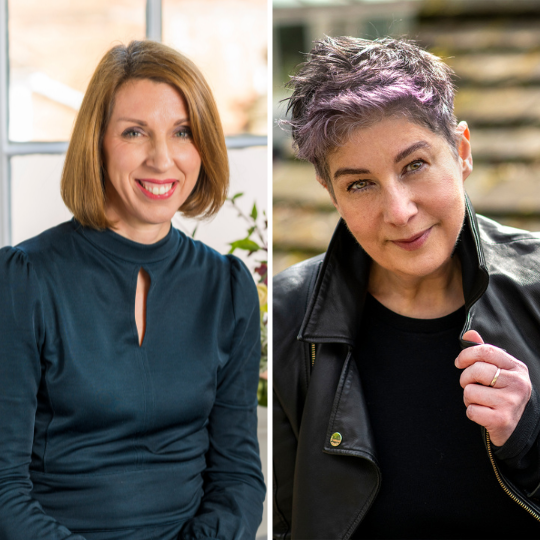
In this episode, Dr Louise Newson speaks with longevity expert and patient advocate Leslie Kenny about health span, inflammation and why prevention matters more than ever.
Leslie shares her experience of being diagnosed with rheumatoid arthritis and lupus in her late thirties and being told there was nothing she could do. Rather than accepting this, she explored lifestyle, immune health and inflammation, leading to a remarkable recovery.
Together, they discuss why medicine often focuses on managing disease instead of preventing it, the role of hormones in healthy ageing and how women are frequently dismissed during menopause. They also explore the Oxford Longevity Project and share practical, realistic ways to protect health, energy and independence for the long term.
Want more from the podcast? Sign up to my premium offer: https://www.drlouisenewson.co.uk/premium-podcasts
LET'S CONNECT
Subscribe here 👉 https://www.youtube.com/@menopause_doctor
Website 👉 https://www.drlouisenewson.co.uk/
Instagram 👉 / @drlouisenewsonpodcast
LinkedIn 👉 / https://www.linkedin.com/in/drlouisenewson/
TikTok 👉 / https://www.tiktok.com/@drlouisenewson
Spotify 👉 https://open.spotify.com/show/7dCctfyI9bODGDaFnjfKhg
LEARN MORE
Find out more about the Oxford Longevity Project 👉
https://oxfordlongevityproject.org/
Download my balance app 👉
https://www.balance-menopause.com/balance-app/
Get tickets for my new theatre tour, Breaking the Cycle 👉
https://www.nlp-ltd.com/dr-louise-newson-breaking-the-cycle/
Dr Louise Newson: We need to be thinking more about healthspan rather than lifespan. We need to be trying to prevent disease rather than cure disease. And in this podcast, I'm talking with Leslie Kenny about longevity, about her journey of being diagnosed with an autoimmune disease that she actually cured herself rather than taking medications that were suggested to her. So it's a great conversation that we can all learn from as well. So there's so much to talk about. I've known you for a little while but I just love the work that you do because you're coming from a scientist, a patient advocate, a woman, someone who's inquisitive and just wants to learn more and that's great, isn't it?
Leslie Kenny: Yeah, well, I love what I do. And I think the body is such a mysterious, but beautiful, complex guardian. And if we treat it right, we will be rewarded with a long, healthy, vibrant life. But if we forget that we are guardians of our bodies, we have the flip side, which is, if we're not supporting it with the things it needs, and we're overburdening it with toxins or stress, then unfortunately, we have to bear the consequences. Luckily, the body is wonderfully resilient. And tapping into that resilience and showing people they have more power than they think, and they can actually bring their bodies back online, back to balance, to homeostasis, that's my raison d'etre.
Dr Louise Newson: And also the body's very repairing as well. And, you know, so many of us, myself included, take our health for granted. And it's not until we're ill that we realise how fragile our health is. And I know that. I've been ill, I've had pancreatitis, I have had sepsis, I had migraines that I still have that I can't control. And you know sometimes if you do something that you know isn't right and you have a consequence, that's fine. But when you're otherwise healthy and something happens. It can be really difficult. But the other thing that frustrates me every day in my work is that when you're not listened to or you're told wrong information. And so just tell us a bit about your experience if you don't mind.
Leslie Kenny: Sure. Well, at age 39, that's 21 years ago, I was in the middle of my fifth round of IVF and I had been told that I was too old to use my own eggs, so I had to use donor eggs, which is not easy.
Dr Louise Newson: You're too old to use your own eggs? At 39? So I had my third daughter at 40, so I would have been told the same.
Leslie Kenny: Well, there is a happy ending because I did bear a biological daughter at 43 with no help. But at 39 in the United States, I was told I had to go to donor eggs. And it's not easy for someone who's half Asian, half Caucasian like me to find the right donor. And it was quite high stakes. At the same time, I began to notice pain in my hands and I went to my doctor to investigate and got that call no-one likes to get saying your results are in, would you mind coming into the office so we can discuss them? So it wasn't no problem, everything's fine, go about your daily business. It was obviously something. And when I came in, the doctor told me that I had rheumatoid arthritis, and not to worry, that I could be put on these drugs, injectables that would suppress my immune system. And when I asked about lifestyle changes that I could make, she said, no, there's really nothing you can do, but you should avoid large crowds of people. So things like the cinema, parties, church, and small children in particular, I should avoid because they carry germs. So that was my lifestyle tip.
Dr Louise Newson: Oh my gosh.
Leslie Kenny: And the lifestyle change I was told to make. And then she said but your other results indicate that you have lupus. Which I'd never heard of. And I said, well, what's the drug for that? And she said, unfortunately, there isn't a treatment to manage it, and there's no cure. This is 2004, so since then, I think they have come up with something. But she said unfortunately, you should expect it to just get worse over time. And at that point, the angry, entitled, medical consumer in me appeared and said Wait a second, I'm the client here. I'm paying you money, because we have a private system in the United States. You're the expert, you're the one with the framed diplomas behind you on the wall. Fix this, make this right. And I think so many people, especially Americans, love this idea that we can outsource our health. And then we don't have to take responsibility. Somebody else does it. Whether it's liposuction or cosmetic surgery, it's somebody else. They can fix it, right? And it doesn't work like that with your health. And she simply looked at me, shook her head, and said, because I told her I had the fifth IVF, and she said, I wouldn't do the IVF. Even if you're successful, you've only got a good five years left. Exactly. That was my response as well.
Dr Louise Newson: She said that to you?
Leslie Kenny: Yeah. And I have since heard from other patients who got the same, you got a, you've got a good five years left.
Dr Louise Newson: And how old were you?
Leslie Kenny: 39.
Dr Louise Newson: 39?
Leslie Kenny: 39.
Dr Louise Newson: So that was it? Game over at 44?
Leslie Kenny: That was it, exactly. And I was gobsmacked, I walked out of there, it's a bit of a showstopper when somebody says that, I had no response. And the more I thought about it, the more, I felt it only stood to reason that a patient who didn't smoke, didn't drink, slept better, moved better ought to have a better outcome than a patient that did those things, right? And I thought, surely, I must be able to do something. Even though she says there's nothing I can do, I'm going to try and optimise myself to be the best patient possible. And if I meet her halfway, maybe then she'll meet me halfway and will cure me because I'm still looking for cure. And that's really all that patients want. We don't want to be managed. We don't want to have these chronic conditions. We want cure. And I also went to the patient bulletin boards, which are a wonderful resource, right? The doctors tell you one thing, but patients will tell you their lived experience. And on the lupus boards, patients were saying, there's been a study that was conducted four years ago in Germany with lupus patients, they did something called intravenous immunoglobulin therapy. This is a transfusion made up of antibodies donated by anywhere from three to 10,000 donors. And what they were noticing, although it was initially made to help people who didn't to make antibodies, they noticed that it was helping people like me, it was modulating our immune systems and bringing them back to homeostasis to balance. And every one of the 13 patients improved. This was contrary to what my doctor told me. And it was a bit of a lightbulb moment and gave me hope. So I went back to my doctor and said, will you prescribe this for me? And she said, absolutely not. That's only one study. There are only 13 people. It's not statistically significant. I said, but there's nothing else. She said, no. I then looked all over the US. I found a doctor in San Francisco who was willing to prescribe me two rounds of IVIG, which I think in the UK is only available to severe MS patients. And at the same time, I thought, if I'm resetting my immune system back to baseline, I need to remove the lifestyle triggers that might be causing inflammation, causing my immune system to overreact. So that was dairy, gluten, eggs, poor sleep, poor movement, toxic thoughts, work stress. I got rid of everything. I also did trauma therapy. Honestly, I looked under every single rock. And when I went back to my doctor within six months, this was for a routine checkup. And had all my bloods done, as you would routinely do. She opened my file and looked down and simply said, well, look at that. You don't have lupus or RA anymore.
Dr Louise Newson: Really?
Leslie Kenny: What? You don't have lupus or a RA. All your blood levels have returned to normal. Do you want to know what I did? No, that's OK. And she didn't even look up because they're busy. There must be thousands of patients like me.
Dr Louise Newson: You learn from your patients, you know, every day I learn from my patients because medicine is not just a science, it's an art and individualisation of care is so important, but you know, you want to know what else people can do, how they can help themselves as well.
Leslie Kenny: But you're inquisitive as well. And I think that it's so much more work to be curious.
Dr Louise Newson: Of course it is. But it's more satisfying as a doctor.
Leslie Kenny: And that's what we patients all look for in a doctor, and I do say to other patients, if you are not getting this level of curiosity and interest from your doctor, fire them, right?
Dr Louise Newson: So you didn't go back and see her again?
Leslie Kenny: No, no, never. And in fact, it was shortly after that that I moved to the United Kingdom. And ever since then, I have gone to a functional medicine doctor on Harley Street and I have my bloods done privately just to make sure that I get everything done. And I'm looking at far more than just HSCRP, which is a marker of inflammation that most of us get tested for. I'm look for cytokines, TNF-alpha. These are the markers that were sky-high for me, and mine are quite low. And every year over the last, well, I moved her in 2006. Every year since then, my CRP gets a little bit better so that now it's 0.3.
Dr Louise Newson: Wow.
Leslie Kenny: Which is great. Ideally, you'd want it under 0.5. And when I did my glycan age biological age test last year, it remarkably came back at age 21. Now, how is that possible? I was told I should be dead by 44. How can I have the biological age of a 21-year-old? And that's where I say to patients, I'm living proof that you can do so much more than you have been led to believe. My colleague at the Oxford Longevity Project, Sir Muir Gray, who's one of the leaders in preventive medicine in the NHS for the last 50 years, He has always said that the patient is the biggest missing piece in modern medicine. We've got to empower patients so that they collaborate with their practitioners. And if we have more curious practitioners like you, then we have the opportunity to not just manage chronic conditions, but actually cure them.
Dr Louise Newson: It's so important because often in medicine it's guideline driven, it's treatment driven, you're waiting for the disease and then you treat the disease. And that's just the way we're taught even at medical school. Yet often we're not taught enough about why a disease occurs. And I'm very fortunate, as you know I've got a pathology degree and I spent the whole year studying the macrophage, which is a cell that's really key for inflammation. You know, I didn't realise until then that, you know, we need to have these inflammatory cells to protect us. But if they're in the wrong micro environment, they can become pro-inflammatory. They can switch on inflammation and make it worse for us. So those cytokines like interleukin 6 and tumour necrosis factor will get produced at the wrong amounts, the wrong levels and damage our tissue and increase diseases. And it's quite simplistic. At the time I thought, oh, I'm not really that interested in that. And then once you start to learn and you see people, I remember going back and reading my notes and thinking, actually, the root cause of so many diseases is inflammation. And also, you know, we've got inflammatory lives. We have inflammatory diets. We have inflammtory lifestyles. And some of the drugs that we prescribe now increase inflammation as well. And then if we're in the wrong microenvironment, i.e. obviously, all I think about often are hormones. If we've got low estradiol, progesterone, testosterone, we've got more inflammation, but we have to be looking at all of those things. We can't just look at exercise or just look at sleep. And I know you being such an inquisitive patient as well, you're taking responsibility for as much as you can by yourself as well. But by asking the right questions, and that's so important, isn't it?
Leslie Kenny: It's 100%. A lot of it is down to us, because if we simply accept the practitioner that we are paired with on the NHS, it's the luck of the draw. It's a lottery, right? And you might have an inspired practitioner, but you might not. And for instance, with BHRT, something I'm passionate about, it is so hard for women to get access to this, but absolutely crucial. And also for thyroid health, which is another one of my pet peeves, is thyroid support in the UK. But also in the United States, a lot of women don't get the support they need and they're just told it's the menopause, the brain fog, the extra weight, the hair loss. This is how it is, honey, right? But it's not. And I feel like this chapter, from 60 onwards or from 50 onwards... when we enter menopause, it's a magical time. And I want all other women to tap into their inner magic. But sometimes the way to do it is by having BHRT, getting the right thyroid support, making sure there's not inflammation there. And once you have a holistic programme in place for the patient and they do their part, then a whole new life unfolds for them, right? It's after children, after the career. Then they can contribute back to society, really.
Dr Louise Newson: I was sitting on the train yesterday coming down to London and I was quietly working on my laptop and there were two women talking who worked for the train service and they had recognised each other and they were probably my age, they looked menopausal, they didn't look like they were taking hormones and they both were talking about how tired they were and they said, well, and they we're talking and I had my head down because I don't think they recognised me and they say, well it's just that time of life isn't it? She goes, oh yeah, well, you will get tired now, won't you? She said, yeah. I had my tea at six o'clock and then I went to sleep on the sofa and then I woke up at one in the morning and then I just got to bed and then I woke and she said but I often really sleep so early. She was normally in my bedtime's at eight o' clock and the other one says, yeah, mine's about half eight. And I was like, what? I have so much I need to do in the evening. I don't want to go to bed then. And it's, it just made me realise, you know, we know women become invisible when they're menopausal, but actually they're becoming invisible in their own homes. And they're sort of just accepting that, you know, they're both a bit overweight. They're both struggling because they got off at Leamington. So they were hobbling a little bit. And it was just like, that's their lot. Do you know what I mean? They're sort of because people talk about this menopause sort of transition. This is how you're going to feel. And you're sort of expected to be a second class citizen because you don't have hormones. And there's no other area of medicine where we have an evidence-based treatment. That we know has important biological effects in the body, yet we're saying, oh no, you can just see how you are without it.
Leslie Kenny: It's terrible because this whole group of society actually withdraw into themselves into their homes because they don't have the energy. Now if I talk to these women they always say oh I don't time to take part, I don't have the energy and I think do you could, if I gave you the opportunity to have the time and energy back would you take it? And I want everybody listening to that they can get the energy and the time back because not only can you get the energy through, say, BHRT, but BHRT will help you become biologically younger, hence giving you more time to live your life. You will have a longer healthspan and more time to spend with your family, more time to give back to your community, more time to do all the things you wanted to do. And that's what I'm doing with my life at 60.
Dr Louise Newson: Which is so important. And you know, talk to me a little bit about the Oxford Longevity Project because it was just so wonderful to be part of it and I'm still so grateful that you invited me to be a speaker, because longevity means different things to different people. But you also mentioned healthspan, so just elaborate a bit because it's so crucial people understand.
Leslie Kenny: So, your longevity is really how long you will actually live, but we know many people who live in very poor health. So healthspan is really, how long will you live in a healthy state. And that is much more important than how long you live. I don't think any of us want to be in pain like those women were hobbling off the train at Leamington, or feeling exhausted, like they can't cook for themselves, they can't cook for their families, they can't shift the weight, they're brain fogged, right? We want to live in full vitality. We want feel vibrant. And once you do things like replace your lost hormones, your bioidentical, with bioidentical hormones, that helps. So that's really the difference between healthspan and longevity. And If we look at countries like Japan, they're doing a good job at lengthening the years of healthy life. And the more years of healthy life you have, the more years you can work, the more years you can pay taxes. So I hope the Starmer government is paying attention. I know Layla Moran in parliament is going to be having Muir Gray speak in a few weeks' time about this. This whole cohort of people in their 60s, 70s, 80s, and 90s like Sir Christopher Ball, they can give back, and they want to give back and they have so much experience. So in the East, older people are seen as elders. They're wise and they're there to help share. And you've heard of ikigai, this Japanese idea that each one of us has a unique purpose, a reason why we've been put on this planet. And when you step into your wisdom when you were older, you embrace that ikigai and you share it with everyone else in your community. And I think it's a wonderful way to give back, but it gives this sense of purpose to older individuals. And so that's why I'm so passionate and my co-founders of the Oxford Longevity Project are so passionate about helping empower people to really get actively involved in authoring their own healthspan. And the Longevity Project is really there to bring the latest scientific breakthroughs around healthy ageing, but also science, whether it's Nobel Prizes, like the 2016 Nobel Prize around autophagy or cell renewal, or like the Tregs Nobel that was just announced yesterday around the immune system. We want to explain these things to people. So they understand them and think, oh, autophagy, cell renewal, I can do that if I fast or if I eat certain compounds that will activate this for me. I didn't know I could do that. No doctor is going to explain that to them because they don't have the time and they've got their prescription pad. It's so much faster to use the prescription pad, right? No, I don't want to throw shade on doctors because we need them and I have benefited from them. And you're a wonderful doctor, case in point, right? But a prescription pad is a quick way to get your patient through your office in what, doctors get six minutes on the NHS now?
Dr Louise Newson: We do need to think differently because you know, the last few years when I was a GP, it was a revolving door. People were just coming back and back and getting sicker and sicker. And it's a two-way thing, you know, some women and men are not taking responsibility for their health, but more so, doctors and not just in the UK, but globally, are not able, but they're not trained to take responsibility for preventing disease. And even my husband, he just, he works in the NHS and he said, but Louise we can't, we're swamped, we're drowning. But then I said to him, do you ever give vitamin D to your patients, Paul? And he said, well, no, because why would I? I said, would you ever test? And he says, no because they'll all be low. It's like, well. But when I was a GP, they'd stopped us, they wouldn't allow us to prescribe vitamin D because they said it's so cheap, people can just buy it. But I worked in a very deprived area and people don't prioritise their health over their cigarettes and their alcohol and whatever else. And that's just fact. Whereas if it's a free prescription, they're entitled to free prescription. They would take it and more importantly, they would give it to their children. So just a simple, cheap thing. I know on a big scale it gets expensive, but you know, just look at how vitamin D works. You know, it's very important. It's very basic. It's not very sexy. It is not big pharma, but actually it's still really important. And that's just one example. You can't really eat enough vitamin D. Living in the UK, you can't get enough sunshine to boost your vitamin D.
Leslie Kenny: That's right, that's right. But think about it, it's anti-inflammatory, it's good for the immune system, it helps prevent MS. At least some studies indicate that. And I think that if we look at how much we could save, there was a study that people have talked about for a long time. Andrew Scott at London Business School, Martin Ellison at Oxford, and David Sinclair at Harvard co-authored this paper in Nature. And they said if they could just slow down the ageing process in all Americans by just one year, that it would save the American government something like $38 billion a year. It was a huge amount. And over 10 years, it was something like $3.8 trillion. So they call it the longevity dividend. This is Andrew Scott's work. And I think we really need to pay attention to this if we can prevent we have a financial gain as a society. But governments also stand to gain from people who stay in the workforce for longer. Communities gain because people are contributing for longer, and all that suffering and pain that I'm sure every single person listening to this has known or knows somebody who's been touched by this. We could shorten that period of pain. The goal is really to compress the number of years that we have ill health, make them small, as small as possible. And I think that's my goal. I certainly hope that the wheels fall off simultaneously, and I'm gone like that, right? Because I hope I'm working right up to the last minute. But we can't do that if we don't focus on preventive medicine.
Dr Louise Newson: Absolutely. And it just is a no-brainer, I mean, even taking the conversation back to hormones, if I may. Philip Sarrel, who's a professor of psychiatry and gynaecology in Yale University, he did a study a while ago now looking at the cost of women who've had a hysterectomy not giving back their hormones. And, you know, it's billions of dollars because hystorectomy is a very common operation. Lots of young women are still not given hormones, we know over here a study we did showed that only 5% of women are prescribed hormones after having their ovaries removed when they're young with a benign cause, 0% testosterone. It's just like madness. And it's draining on healthcare systems, but also economic systems because these women are less likely to work, they're less likely to be promoted at work. If they do work, they're more likely to have a divorce. So much is stacked against them and it's very simple and very straightforward actually to think about the most obvious things first.
Leslie Kenny: Yeah, I think it really is going to take advocacy work, like the work that you do, and some of the work we do, or Sie Muir Gray does, in order to really show the government that this is worth investing in. Prevention is, well, they say it right, an ounce of prevention is worth a pound of cure. So it seems so obvious.
Dr Louise Newson: I think it is becoming more obvious. People are more prepared to take responsibility. I look at my older children are 23 and 22. Already their lifestyles are completely better. So much better than I was when I was 21, 22. But they're looking, they're more aware of nutrition. They're more of aware of things, you know, they want to exercise. You know, I got to London yesterday, my 21 year old was going to a gym class. You know it's really good that they are looking at that for the future as well. Because I think also, you know, they know the impact on their physical health, also their mental health, and the two are so closely intertwined, as you know.
Leslie Kenny: Very true. And I think that programmes where GPs automatically prescribe things like exercise to patients if, for instance, they're being prescribed metformin or Prozac. These are great things. And in fact, that's starting with NHS Hertfordshire. So that's another initiative of Sir Muir Gray.
Dr Louise Newson: Yeah, absolutely. But also, you've got to do as you, you know, practise as you preach. There's absolutely no point me sitting and saying to my patients, you need to exercise regularly if I don't exercise regularly or to say you mustn't have or you should reduce your processed foods and I'm going to McDonald's twice a day.
Leslie Kenny: Yeah, of course.
Dr Louise Newson: So we've got, but it takes a while and it does take generations. But I do think things are moving in some ways, but then... You know, I've been in Norway recently, and I was in Amsterdam a couple of weekends ago, and people are definitely a lot leaner, a lot healthier in those countries than over here. And I just look at the inflammatory diets that we're poisoning people with, and I feel really sad.
Leslie Kenny: I agree with you. One interesting thing is people here always say, I can't go outside to exercise. It's too cold. And I'm thinking, have you seen the Norwegians?
Dr Louise Newson: Yeah, I know.
Leslie Kenny: There's really no excuse. But that's where I'm hoping that government will do things like, why did they get rid of the sugar tax? That should have been a no-brainer, really. And at the same time, We get these social prescriptions in, again, like Muir Gray was saying, and if we have community initiatives that are fun, like what Angela Rippon is doing with Let's Dance, and I know you've had her on this programme, then it makes it much more compelling because the doctors are saying you should get active. Your friends are saying, we're gonna do the Let's Dance programme. We're doing salsa down at the dance studio. Wanna come? And it's a fun night out that doesn't necessarily involve alcohol or going down to the chip shop. And they get a benefit. They get that social oxytocin boost. The dopamine hits away from their phone. They're not eating the bad things. They're are not drinking or smoking the bad things. And they're actively investing in their health. That's another thing I always say is, everybody's so good and takes it so for granted that we should all invest in a pension, right? But we don't think of investing in our health and going to that salsa class or making the choice not to have the fried food but to have this salad or the vegetables or the stew is better than the chippy. Every time you do that, you were making an investment in your health pension. And you should think about it like that.
Dr Louise Newson: Absolutely. It's so important. We have to take responsibility. So I'm really grateful for you coming. You can't go without me asking for three take-home tips though.
Leslie Kenny: Sure.
Dr Louise Newson: So three things that anybody who's listening could do to improve their healthspan.
Leslie Kenny: Number one is walk. And there's a new Japanese walking phenomenon that you can do, which is you walk briskly for three minutes, and then you sort of go at a leisurely pace. Then you speed up again for three minutes, then you do this until you hit 30 minutes. And not only will you get your steps in, but you'll find it's kind of like, it's the easy equivalent of sprint training, only you're not sprinting. So that's one. Another one is make sure you get strong legs. And muscle tissue releases something called myokines. They're anti-inflammatory compounds. So we have to start thinking of our muscle as actually an organ. The easiest way, I know everybody is sedentary and working in front of a desk, but try every hour to get up and do 10 squats. And at least in my company, we do it in meetings and just to normalise it, right? So that's one thing. Do 10 squats. If you can then move from every hour to every 20 minutes, then that's better. Strengthen those legs. Finally, I would say make sure you do some kind of physical activity that is social. You're getting your steps in and you are doing it in a social way, which boosts oxytocin, which is not just for bonding, but is itself an anti-inflammatory, and you're getting your dopamine hits.
Dr Louise Newson: Brilliant. So but really good, easy and not expensive advice as well.
Leslie Kenny: All free.
Dr Louise Newson: So thank you ever so much for coming.
Leslie Kenny: You're very welcome.