Menu

My Mission
Articles
Podcast
Events
Workplace Education
Clinician Education
Newson Clinics
Hormones Unlocked
Books
Research
Media
Contact

Balance App
Track symptoms, get insights and feel more in control.


Having your ovaries removed causes an immediate menopause,yet many women are still told to simply ‘see how they get on’ afterwards.
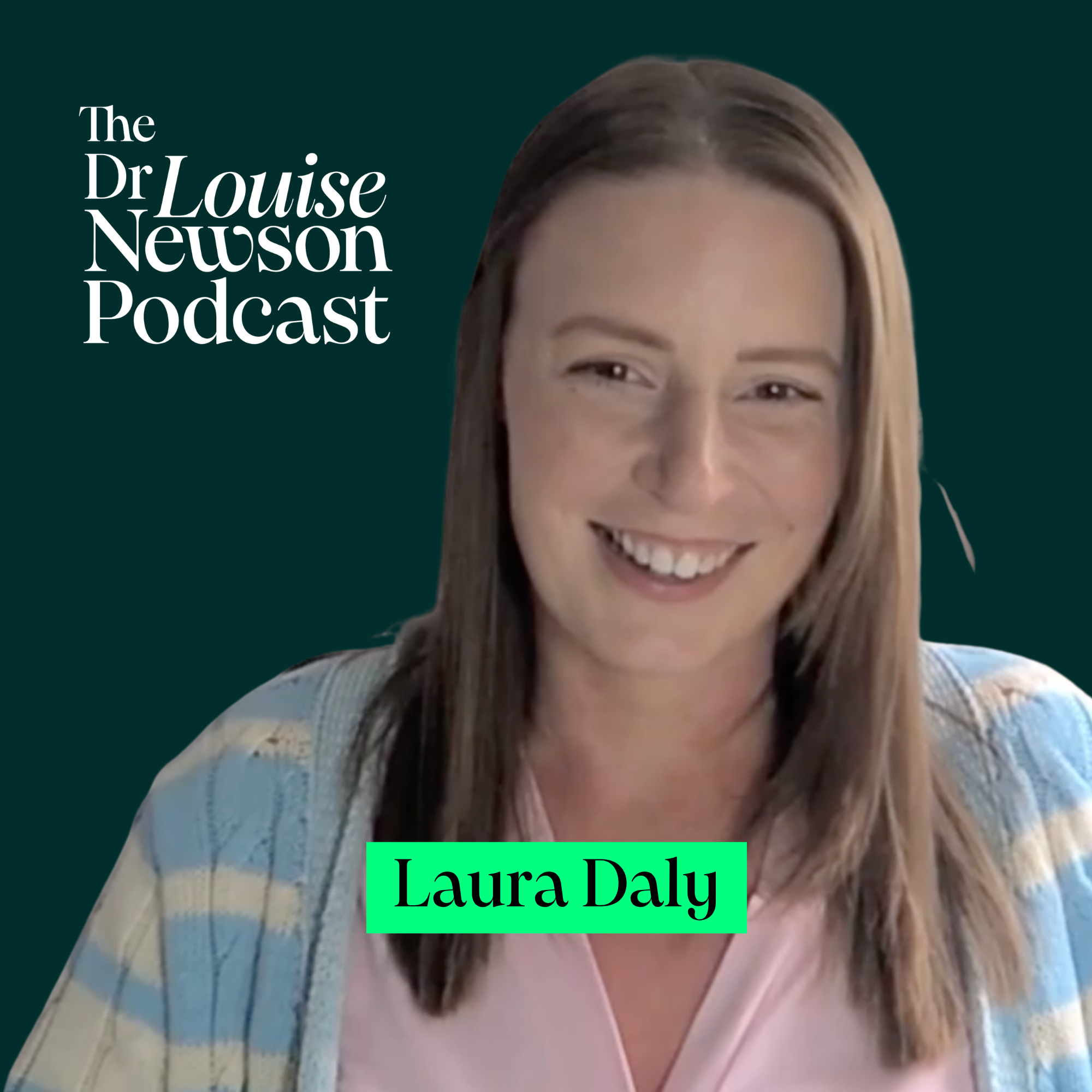
This week, Dr Louise Newson is joined by Laura Daly, who shares her experience of surgical menopause at the age of 37 following treatment for severe endometriosis. Having seen first-hand how hormone treatment transformed her mother’s life after PMDD, Laura knew she wanted to understand her options before surgery and advocate for the care she needed.
Together they discuss why replacing hormones after surgical menopause is about far more than relieving symptoms. Laura shares how she experienced brain fog, anxiety, joint pain, palpitations, poor sleep and a loss of confidence despite being prescribed a standard dose of HRT, and explains the remarkable improvements she noticed once her hormone treatment was personalised.
Louise and Laura also explore why hormone treatments should be individualised, why women who have their ovaries removed lose more than just estrogen and why treating the underlying hormone deficiency is so important for both current symptoms and future health.
Louise and Laura discuss:
· Why women need a plan for hormone replacement before surgical menopause
· Why replacing oestrogen, progesterone and testosterone can all be important
· Why hormone treatment should be tailored to theindividual, not standardised
· The long-term health benefits of optimising hormones after early menopause
· Why women deserve informed choices about their treatment after ovary removal
This episode is an empowering conversation about advocating for better care, understanding your hormones and ensuring women receive the treatment they need to protect both their quality of life and their future health.
LET'S CONNECT
👉 Subscribe on YouTube
https://www.youtube.com/@menopause_doctor?utm_source=DLNpodcast+&utm_medium=shownotes&utm_campaign=BAU+
https://www.instagram.com/menopause_doctor/?hl=en&utm_source=DLNpodcast+&utm_medium=shownotes&utm_campaign=BAU+
https://www.linkedin.com/in/drlouisenewson/?utm_source=DLNpodcast+&utm_medium=shownotes&utm_campaign=BAU+
👉 TikTok
https://www.tiktok.com/@drlouisenewson?utm_source=DLNpodcast+&utm_medium=shownotes&utm_campaign=BAU+
👉 Spotify
https://open.spotify.com/show/7dCctfyI9bODGDaFnjfKhg?utm_source=DLNpodcast+&utm_medium=shownotes&utm_campaign=BAU+
LEARN MORE
👉 Download mybalance app
https://balance-app.com/?utm_source=DLNpodcast+&utm_medium=shownotes&utm_campaign=BAU+
👉 Order my new book
https://bio.to/ThePowerofHormones?utm_source=DLNpodcast+&utm_medium=shownotes&utm_campaign=BAU+
👉 Speak to Newson Clinic
https://www.newsonhealth.co.uk/?utm_source=louise_podcast&utm_medium=show_notes&utm_campaign=clinic_cross_promotion
👉 Visit my website
https://www.drlouisenewson.co.uk/?utm_source=DLNpodcast+&utm_medium=shownotes&utm_campaign=BAU+
Dr Louise Newson: [00:00:02] So Laura is on my podcast today, who's a very inspirational person for lots of reasons. She's experienced first-hand hormonal changes in her mother that we're going to talk about and she's had her own challenges, including having menopause at an earlier age as well. So welcome Laura. [00:00:19][17.9]
Laura Daly: [00:00:21] Thank you. [00:00:21][0.2]
Dr Louise Newson: [00:00:22] It's great. I've known your mum for quite a while and now recently got to know you. And you have got a story which we'll talk about, but what's been great, actually, is you are such an advocate for your own hormonal health. You are like the picture of how I wish all women could be because you're very calm, you're very knowledgeable, and you've got a huge wealth of knowledge. Would that be fair to say? [00:00:48][26.0]
Laura Daly: [00:00:50] Yes. With mum going the way she has I felt like I had to. [00:00:50][0.5]
Dr Louise Newson: [00:00:54] Well, your mum's had to advocate for herself in many ways, you know, many years ago she reached out to people in London and she's, you know, she's not, doesn't live in London, but she's had a, she has been on my podcast before and talking about her own PMDD, but just talk to me from your experience of living with a mother with PMDD. [00:01:14][20.4]
Laura Daly: [00:01:18] Firstly, me and my mum are best friends and when I was growing up, I remember her regularly just being in tears. She would snap at us, like we were kids, she'd snap at for something that, we probably were being naughty, but she'd snap. And then I'd go in 10 minutes later and see her in tears because she felt so bad that she'd overreacted. I just, but it was horrible seeing her so upset and finding that she just was always so sad. And I remember when she got her treatment, it was like a light switch, all of a sudden she was just, she was happy and she was calm and just, yeah, it just was lovely to have my mum. And even like when she was on, she on the implant for a long time, by this point me and my brother were more grown up and we'd moved out. And when the implant was running out, you'd start seeing some of the symptoms come back. And I mean, it got to the point we could joke about it. We'd go around, we'd get snapped at and we're like, when's your implant due? My brother would just refuse to come around... [00:02:33][74.4]
Dr Louise Newson: [00:02:33] Really. [00:02:33][0.0]
Laura Daly: [00:02:33] ...he's like, I'll be back next month once you've had your implant. Not like, just we used to joke about because we knew how bad it got but since then, she's been fine. But she's had to fight for that. [00:02:46][12.5]
Dr Louise Newson: [00:02:47] It's amazing. Yeah, and I remember one story she told me, I hope she doesn't mind me sharing, but where she, I think she'd forgotten her front door keys or couldn't find them. And the only way to get in was through the garage door, but she had to, is this ringing any bells? She had to damage the garage door to open it. So she did that, but there wasn't enough gap so she put, I don't know whether it was you or your brother, one of you under the gap to open the front door. [00:03:12][25.5]
Laura Daly: [00:03:13] Yeah. So I don't remember it happening. I've been told the stories. I was four and yeah, she just drove into the garage to dent it. And then I was small enough, I could crawl underneath and open the door from the inside. I remember the dent in the garage. I do remember always having a dent in the garage. But it was mum who told me the story about what had happened. [00:03:38][24.7]
Dr Louise Newson: [00:03:40] I remember her telling me this years ago. And it's funny, but actually I worry about children a lot. I worry about domestic violence and women. I worry about women's vulnerability, especially when they've got PMDD and this uncontrollable anger. Your mum is the calmest person I know. She's really not that sort of person if you met her when she's balanced on hormones. But if someone had got in her way then she would have done anything to them and probably run them over. And so we know people commit crimes more when they have hormonal changes, but the children aren't looked after. I mean, she was never violent to you, but there are people that really have this uncontrollable anger and it's really quite scary actually, but just to grow up with someone who's got this volatile temper that was needless actually, because you saw how much better she was with hormones. [00:04:31][50.8]
Laura Daly: [00:04:35] Yeah, yeah and it meant that I was very aware of hormone issues and what it could cause. [00:04:39][4.3]
Dr Louise Newson: [00:04:40] Yeah. So what about your own hormones? [00:04:42][1.8]
Laura Daly: [00:04:44] So I have had endometriosis probably since I started my periods and I got put on the Pill when I was like 13, because I had horrendous periods. But it last year resulted in, I needed to have a full hysterectomy and kidney removed. It caused my kidney to fail. The surgery was obviously really scary. We thought it may have been cancerous. And my biggest fear was surgical menopause after all that and I said that to my doctor, I was like, I know he'll get me through the surgery. I'm so scared of what's coming afterwards, having seen what mum went through. [00:05:26][42.0]
Dr Louise Newson: [00:05:26] Because they removed your ovaries as well. [00:05:28][1.7]
Laura Daly: [00:05:29] Yes, yes. So both ovaries are gone. [00:05:31][1.9]
Dr Louise Newson: [00:05:32] And how old were you when you had the operation? [00:05:34][1.8]
Laura Daly: [00:05:35] I was 37. [00:05:35][0.4]
Dr Louise Newson: [00:05:37] Yeah. So your hormones, you were having hormones from your ovaries and then you knew overnight that your hormones would plummet. [00:05:44][6.9]
Laura Daly: [00:05:45] Yeah. And obviously mum is on higher than standard dose estrogen. I knew that, you know, I'm very similar, there's a very good chance I might not absorb estrogen as well. And I booked an appointment with you before I even had my surgery. [00:06:06][21.2]
Dr Louise Newson: [00:06:06] This is why it's perfect though because you know if I was having my thyroid gland removed I would want to pre-operatively talk about when am I going to start thyroxine, how's it going to work and somehow so many women have their ovaries removed and they're told just see how you get on but actually you're young. The guidelines, the evidence is very clear that you have to have the right dose of hormones to improve your future health even if you didn't have any symptoms because women, especially under the age of 40, have an increased risk of diseases without those hormones. But you did the right thing because you came in and we spoke because your knowledge of hormones is so much better than a lot of people. It was a very educated conversation, very shared decision making because also we spoke about not just estrogen, didn't we? [00:06:57][51.0]
Laura Daly: [00:07:00] Yeah, I knew I wanted all three from day one. I've got three hormones there now. [00:07:01][0.9]
Dr Louise Newson: [00:07:03] Yeah. Which again makes sense and it's interesting because I'm not really wanting to be rude about other doctors, but if you'd come to see me maybe 20 years ago when I was a GP, I would have not been able to have that conversation with you. And I would've said, hang on, I don't think you need the other hormones. I think it's just estrogen. Honestly, I wouldn't have known because no-one taught me. But I did learn. Probably as a teenager, actually, that our ovaries make estrogen and progesterone. And then someone at medical school told me that we don't need progestorone unless we've got a womb. And I don't know why I didn't challenge it then, because it works all over the body and the brain, as you know. And then about 15 years ago, I learned for the first time that women had testosterone in their bodies, because no-one taught me that before. And then I'm like, hang on. If we've got it in our bodies, it must have a function. So I learned about the physiology and how testosterone works in our brain and body. And about half of our testosterone is made in our ovaries. And I remember saying to a menopause specialist a few years ago, so, do women routinely just have testosterone when they have their ovaries removed at a young age? And she looked at me and said, no, Louise, only if their libido is really bad after the operation. And that still like stuck with me because at the time I thought, oh, maybe I've asked a stupid question, so I said, okay, okay, thank you for telling me. And I really don't agree with that statement at all, because it doesn't make sense. [00:08:28][84.9]
Laura Daly: [00:08:30] No, I mean, I started testosterone as soon as, literally the day after my surgery, because I got an email from you while I was in recovery saying, yes, your testosterone levels were low before the surgery. And I took it for six months before I even went to the GP to ask her to replace it, because I thought there's no point in even having this conversation. And she did give me it, I'm quite fortunate, I've got quite a good GP actually. But she said, we tend to avoid doing this until you're on the top level of estrogen because of the side effects, because it's a male hormone. And I was like, but men don't have ovaries and that's where I'm producing it. [00:09:16][46.5]
Dr Louise Newson: [00:09:17] So what did she say to that? [00:09:19][1.5]
Laura Daly: [00:09:20] She was quite happy to give me it. And she just went, I'd be interested to hear. I've since been back to her and she said do you have any side effects? Other than feeling like fantastic, so I feel like I'm in my 20s again, it's amazing. [00:09:36][15.6]
Dr Louise Newson: [00:09:37] Well, the thing is, so there's a couple of things there. One of the things is people with endometriosis often have low testosterone and there's been some studies to show that women even from a young age have low testosterone and are more likely to get endometreosis. So the chances are you've never had the full amount of hormones that you've needed because no-one thought of looking, so you probably do feel better than you felt for quite a while with your own hormones balanced. But the other thing is lots of people think you have to have estrogen first and then testosterone. Some people, some women have recently contacted me and said that they've been told they have to have 100 microgram patches or they can't have testosterone. Now this is like saying you have a 100 microgrammes of levothyroxine if you've got an underactive thyroid before I can start you on insulin because you've also got type 1 diabetes. Like, it doesn't make sense, you know, if you'd broken your arm and your leg. I wouldn't say, well, let's repair your arm first and then I'll come to your leg in a bit, Laura. They're just two different hormones. We know that testosterone gets aromatased to estrogen, but that still doesn't make sense. It absolutely makes no sense at all. And some women, as you know, who have regular periods, they might have enough estrogen and they might have enough progesterone and they might be very deficient in testosterone. So why would I start them on a hormone they don't need? So anyway, so you're on it, but you don't have any side effects? [00:11:04][87.3]
Laura Daly: [00:11:10] No, other than feeling great. Yeah. Even confidence, it's amazing. My friends laugh. They're like, is this you becoming more manly, like getting a job interview. [00:11:18][8.5]
Dr Louise Newson: [00:11:20] Well, it's interesting and a lot of women say this to me actually that they can stand up for themselves more, they're more assertive and some people have told me that their partners don't like the way they've become because they're like, no, you can unload the dishwasher. You can take a bit of responsibility. And, you know... It's quite an interesting thing, isn't it because, you know, there is some evidence that you choose your partner differently if you're on the contraceptive pill to when you're not on it, because your own hormones are suppressed on the contraceptive pill and it's, I think some men don't like women being, being well. But you talked about the doses as well, now this is really important because dosing of hormones, all three of them is individualised, we're all different, but when we use the estrogen and testosterone through the skin. The skin is a barrier. There's not many hormones or drugs we can put through the skin, but estradiol is one. But there's two things really. One is that you're young and we know from studies and guidelines that young women do often even need a higher amount of estrogen in the body just to replace what's missing. But then secondly, some women don't absorb the same amount through the skin. And so you've got two things, really. One of them is you're young that we've said already, you're under 40, so the chances are you probably need a higher amount in your body to get full optimisation of symptoms and the future health benefits. But the second thing is that you don't absorb it particularly well through the skin, do you? [00:12:55][95.5]
Laura Daly: [00:12:56] No. So I had blood tests done and over the course of a patch, at some points it was just above 300 and sometimes it was below that, it wasn't even 250. Yeah, I spoke to the menopause clinic about that and they said it doesn't matter, which I know isn't true. [00:13:21][25.0]
Dr Louise Newson: [00:13:22] They said, what, the blood test doesn't matter? [00:13:23][1.4]
Laura Daly: [00:13:24] Yeah, they said that and the fact that it drops below 250 probably every three days doesn't matter as long as it goes above 250 at some point in a patch cycle, which as a mathematician I find that incredibly difficult to believe because the average will be lower. [00:13:45][20.9]
Dr Louise Newson: [00:13:46] Well, this is exactly right. And levels are only a guide, as you know, like a blood test for anything we do in medicine is a guide and it's in clinical context, of course. But one of the reasons that you're taking hormones is to try and improve your future health. You don't want to get osteoporosis and heart disease and other inflammatory conditions. And we know that if you have a normal physiological level, which normally is between 250 and 1000. Then you're less likely to have increased bone turnover and osteoporosis, for example. So the blood tests are a guide, but yours were consistently low. So we increased the dose. And the most important thing in my mind as the clinician happened is that you started to feel better. [00:14:32][45.5]
Laura Daly: [00:14:33] Yeah. Yeah. Like within a week, some of the symptoms had started going away and within three weeks, I felt fantastic. I felt so much better. Virtually every single symptom that I had, had gone. [00:14:50][17.3]
Dr Louise Newson: [00:14:51] So what symptoms were you getting? [00:14:52][1.3]
Laura Daly: [00:14:54] Oh, there was, there's a long list. I was getting palpitations, migraines, chest pain. I had costochondritis... [00:15:02][8.2]
Dr Louise Newson: [00:15:05] Yes, very common with low hormones. [00:15:08][2.6]
Laura Daly: [00:15:08] ...with chest pain and I had joint pains. Brain fog feels like it's underselling what I had. I couldn't remember people's names that I've worked with for 10 years. Anxiety was quite bad. Just really low mood, I was really lethargic. I was finding it hard to get out and exercise, which I've never struggled with. I was snapping at my husband and my son, like the things that wouldn't normally bother me. I couldn't sleep. I was finding it hard to get to sleep and then I was waking up in the middle of the night. I think that's my symptoms. [00:15:48][39.8]
Dr Louise Newson: [00:15:51] So a lot. So you're on a higher than licensed dose and you're feeling great and obviously my clinic is private, so understandably and very reasonably, you don't want to be getting HRT from me all the time because hopefully you're going to be living for decades and decades, so any way that you can get something on the NHS is better. So you've gone to a menopause clinic to try and be prescribed the dose of hormones that make you feel well and are safe and did you manage to get them? [00:16:21][30.0]
Laura Daly: [00:16:24] No. They agreed that the symptoms that I had were most likely low estrogen. They acknowledged that on the higher dose that I'm on, all those symptoms had resolved. And then they suggested I go back to 100 and they would add in gabapentin or venlafaxine. [00:16:42][18.8]
Dr Louise Newson: [00:16:44] So let me just get this clear, gabapentin is a highly addictive drug. I've written about it in my book, The Power of Hormones. It's a highly addictive drug that is associated with suicides and death and might help some flushes, but I don't, aware that it's got any evidence for any other symptoms. And venlafaxine is an antidepressant, but you don't seem depressed or you've never seemed depressed to me. Do they think you were depressed? [00:17:13][28.6]
Laura Daly: [00:17:15] No, they said venlafaxine might help with my concentration and hot flushes again, which I don't have. [00:17:22][7.9]
Dr Louise Newson: [00:17:25] So one symptom you don't have is hot flushes. [00:17:25][0.3]
Laura Daly: [00:17:25] Never had a hot flush. [00:17:26][0.9]
Dr Louise Newson: [00:17:28] So, but they're giving you treatment, non-hormonal treatment for hot flushes that you don't have. So did you question that? [00:17:33][5.6]
Laura Daly: [00:17:35] I did. Yeah, and I said, what about all these other symptoms that I get? And they just said it won't help with them. And that was the end of the appointment. [00:17:47][12.4]
Dr Louise Newson: [00:17:48] Okay. And so did they, out of interest, warn you about the risks of taking something like gabapentin or venlafaxine? [00:17:55][7.1]
Laura Daly: [00:17:57] No, so with gabapentin, I probably didn't give them a chance. As soon as she mentioned it, I said, I'm not taking that. I know how bad that is. With venlafaxine, I expressed my own concerns. My mum reacted very badly to SSRIs and SSNRIs. I'm sorry. I explained to her at that point that they made my mum suicidal. But she still thought that was a sensible approach for me when I'm not depressed. And actually depression isn't a symptom I've had, I've lethargy, but not depression. [00:18:41][43.9]
Dr Louise Newson: [00:18:43] And it's interesting because, you know, SSRIs probably have got a role and SSNRIs probably have a role, but really when you look at the risks of these medications, one of the risks is an increased incidence of osteoporosis and probably dementia as well. Now, because I've already said you're young, if you don't have the right dose and type of hormones, you have an increased risk of osteoporosis and dementia, so you've probably, I mean, I might not know you well enough to presume this, but you probably don't want to have a drug that increases your risk of conditions that you're at increased risk of? [00:19:17][34.0]
Laura Daly: [00:19:20] No, no, definitely not. I actually asked about my bone density because my grandma had osteoporosis, so it's something I'm really scared about because obviously I know this is a long-term thing for me. And they said because I'm on 100, as far as they're concerned, estrogen, they wouldn't even consider letting me have a bone density scan because I said I'm concerned that I'm not getting enough protection. And so the doctor I saw said she would speak to her team, but they said, no, because I'm on estrogen and I exercise, so I don't need a bone density scan. So I can't even get the sort of comfort that I'm okay at the moment. [00:20:05][44.9]
Dr Louise Newson: [00:20:06] But the guidelines actually for early menopause or POI women under the age of 40 are saying that you should have a DEXA scan and it makes sense really to think about that. So, and what about testosterone and the progesterone, were they happy that you were taking those? [00:20:26][20.1]
Laura Daly: [00:20:27] Yes,the reason I'm allowed progesterone is because I had endometriosis. [00:20:29][2.3]
Dr Louise Newson: [00:20:31] This is again very interesting because a lot of women, as you know, who have surgical menopause have their ovaries and womb removed. People say if you haven't got a womb, you don't need progesterone. And you're right in that you don't need progesterone to protect the womb that you don't have, but you actually benefit from progesterone for your brain, your body, everything else as well. And you're right with endometriosis often you don't want to flare up any endometriosis elsewhere, but even if you'd had a surgical menopause for a completely different reason, you'd probably still want to take progesterone. [00:21:08][37.3]
Laura Daly: [00:21:10] Well, and mum has just added it in because I said, why aren't you on progesterone? It's like I'm taking it. [00:21:17][7.0]
Dr Louise Newson: [00:21:19] And is she feeling any better on it? [00:21:20][1.0]
Laura Daly: [00:21:21] Much better. Yeah, her sleep is much, much better. [00:21:24][3.2]
Dr Louise Newson: [00:21:25] It was very interesting. I challenged what I asked in a polite way, somebody at a conference recently about why we are we not advised to prescribe progesterone to women who have had a hysterectomy, especially when they're young. And so, and she said, well, Louise, it's not in the guidelines. And then she said next question, please. And then moved me on and the whole audience actually gasped because that is not a reason to do something or not do something because a guideline written by a committee of people who hardly ever see patients and don't think about science. You're like, how can we ever help our patients. [00:22:02][37.4]
Laura Daly: [00:22:03] Possibly several years ago... [00:22:03][0.0]
Dr Louise Newson: [00:22:03] Yeah, it's just ridiculous. So there's no reason not to have natural hormones and not to have the right dose. So it's amazing that you are advocating for yourself and in a sad way, you've had a difficult way of learning because you've you've had, you know, experienced your mother, but if you hadn't have had your mother and didn't have any knowledge, then what would you have done? [00:22:26][23.4]
Laura Daly: [00:22:29] Honestly, I don't know where I would be. I did so much research before my surgery because I need to make sure I know what I need. Because if I go to the doctors, they'll tell me this is all you can have. I feel for the ladies that go to their GP and believe what they're told that this is it. I've got a friend who said just to sort of manage my expectations to that I might never get back to the way I was before. And it just makes me so sad that there's women that think once you've had surgery, it's basically, well, that's life. [00:23:14][45.4]
Dr Louise Newson: [00:23:16] It's really sad and one of the reasons I work so hard is the injustice really and the suffering that's needless for so many millions of women. And we've been gaslit for so long, too long, being told things like that. Even PMS and PMDD being normalised that, oh, you will feel bad for a few days a month, but it's only a few days a month. So get over it really and even quite a few PMDD charities. Spend a lot of time and money talking about all the talking treatments, all the self-help measures. And of course, you know, having a cup of tea with a friend will help anybody, but it won't treat the underlying cause. And there's no mention about hormones at all. The doctors are so needlessly scared of natural hormones, but they've prescribed the contraceptive pill to anybody, and meanwhile, it's the women that are suffering and you know, what's great about you is that you advocate for others as well. And I know you've helped some friends and that's so important because when you understand it, it's very simple medicine. It's just really, you're just replacing what's missing. It's not like, like giving venlafaxine, you haven't got a deficiency of venlafixine in your body, so it's more complicated medicine really. [00:24:38][81.7]
Laura Daly: [00:24:39] Yeah. No, I'm, it's, I feel I'm at work if I ever hear any women mentioning brain fog, I mean, have you got your testosterone yet? Or someone's got a UTI. Have you got vaginal estrogen? At my Pilates class. [00:24:54][14.5]
Dr Louise Newson: [00:24:56] But it's great because I think that's where the landscape, and it seems to have changed even more over the last few months, because women are working it out for themselves. And I strongly feel, especially with some of the negativity I've experienced, is it's not about me and my messaging or me or whatever at my clinic. It's nothing about that. It's about women being empowered to make choices. Because if I was doing all this work and then women said, you know what, Louise, I never want hormones. I'm going to carry on with my venlafaxine, gabapentin, or whatever. I would slow down because women, in my mind, just need to have a choice to do the thing that they want. But what is happening is more women are understanding and like you're saying, no, I don't want drugs, I would like my natural hormones back first. And it's, that's how we need to make changes, I think, going forwards for your generation and younger generations, because your future health and life could have been very different if you were having all those symptoms and not able to receive hormones. You know, you've got a good job, you've got a lovely future ahead of you, but that could have been quite different if were suffering those symptoms every day. [00:26:08][71.6]
Laura Daly: [00:26:09] Yeah. Yeah. Even on 100, I did not feel myself. I'm quite fortunate actually that I didn't feel dreadful, but I was gradually getting worse, probably because my body was just getting more and more desperate for the hormones I needed. And yeah, I'm fortunate I could come to see you and get the treatment I needed, but I worry for the ladies that don't know. [00:26:41][32.0]
Dr Louise Newson: [00:26:42] So that's why this podcast is so important. So people can get knowledge, there's lots of information on Balance app. There's more podcasts and you know, just listening today will be so helpful for people. So before we end, I always ask for three take home tips. So if someone's listening and they're about to go and have an operation to remove their womb, their ovaries, their womb and ovaries, any of their reproductive organs, which will likely relate to their hormones being low. Before they have this operation, all those people that are listening that have had it and haven't got hormones, what are the three things that you would recommend them to do? [00:27:22][39.2]
Laura Daly: [00:27:23] Do their research, learn about the three different hormones that they need, find if they can, find a private consultant so that they can, if they need to fight the NHS, they can fight it feeling good rather than fight it feeling bad. Warn your friends and family because it's a bit of a balancing act and I think friends and family need to know that it can take a while to get back to you. [00:27:55][31.2]
Dr Louise Newson: [00:27:56] That's really important, because sometimes when you're with yourself the whole time, you need someone else to validate that you're either improving or you're not improving or worsening. So I'm so grateful for your time today, Laura. It's been a wonderful conversation. So thank you. [00:28:09][13.4]
Laura Daly: [00:28:11] Thanks for having me. [00:28:11][0.0]