Menu

My Mission
Articles
Podcast
Events
Workplace Education
Clinician Education
Newson Clinics
Hormones Unlocked
Books
Research
Media
Contact

Balance App
Track symptoms, get insights and feel more in control.


Hormone treatments are often seen as a treatment to help with symptoms, but many clinicians still do not understand how they can improve our future health too.
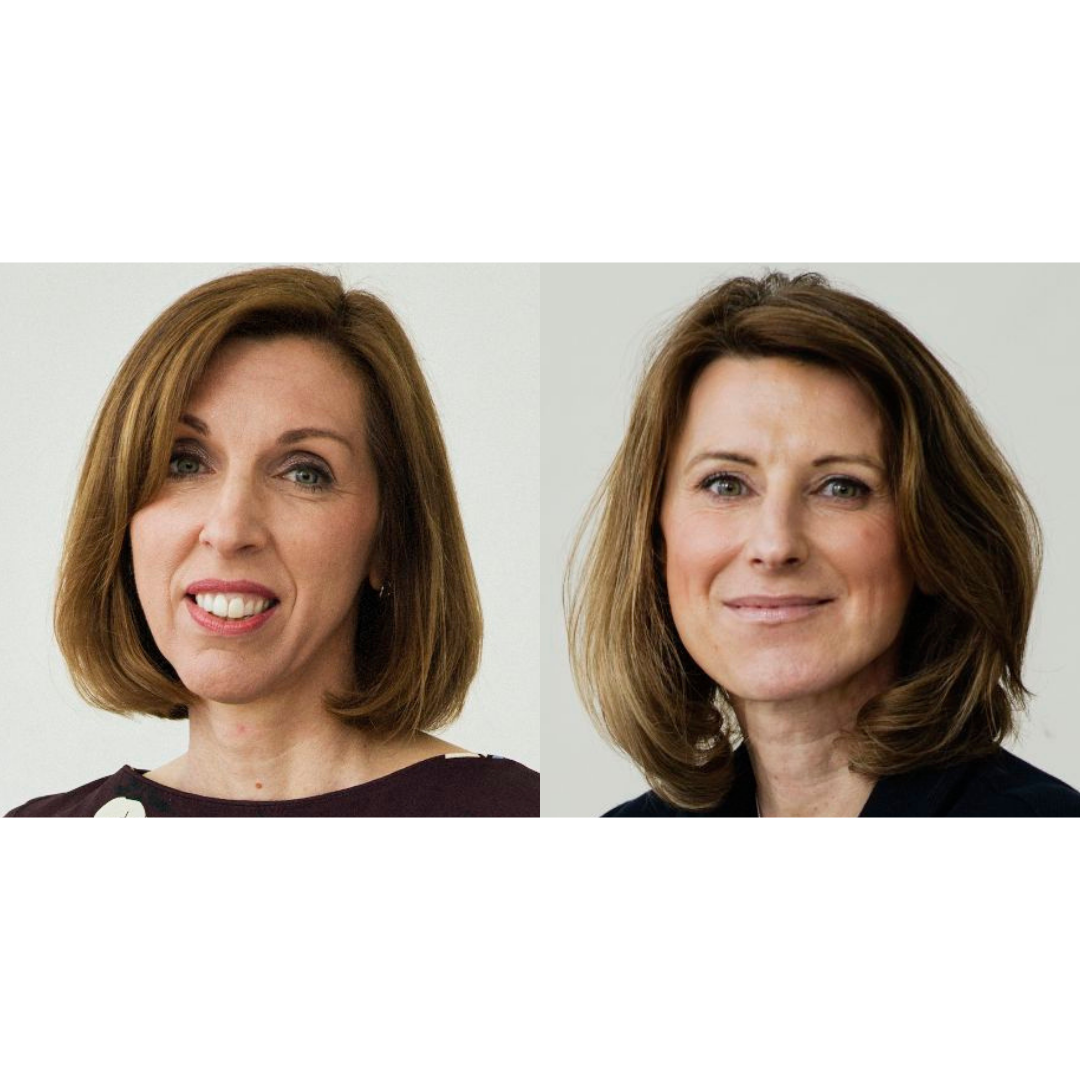
This week, Dr Louise Newson is joined by physician, endocrinologist and longevity expert Dr Florence Comite to explore why balancing hormones is about far more than managing symptoms. Together they discuss how hormones influence every organ in the body, why healthcare should focus more on preventing diseases than treating them and why personalised medicine is key to helping people live healthier for longer.
Florence explains why the hormones estradiol, progesterone and testosterone are so important for brain, heart, bone and muscle health, why testosterone starts declining long before menopause, and how understanding an individual’s unique biology can transform the way we approach ageing.
Together, Louise and Florence discuss:
This conversation challenges the traditional approach to medicine and offers a powerful reminder that optimising hormones isn’t just about feeling better today, it’s about investing in your long-term health.
LET'S CONNECT
👉 Subscribe on YouTube
https://www.youtube.com/@menopause_doctor?utm_source=DLNpodcast+&utm_medium=shownotes&utm_campaign=BAU+
https://www.instagram.com/menopause_doctor/?hl=en&utm_source=DLNpodcast+&utm_medium=shownotes&utm_campaign=BAU+
https://www.linkedin.com/in/drlouisenewson/?utm_source=DLNpodcast+&utm_medium=shownotes&utm_campaign=BAU+
👉 TikTok
https://www.tiktok.com/@drlouisenewson?utm_source=DLNpodcast+&utm_medium=shownotes&utm_campaign=BAU+
👉 Spotify
https://open.spotify.com/show/7dCctfyI9bODGDaFnjfKhg?utm_source=DLNpodcast+&utm_medium=shownotes&utm_campaign=BAU+
LEARN MORE
👉 Download mybalance app
https://balance-app.com/?utm_source=DLNpodcast+&utm_medium=shownotes&utm_campaign=BAU+
👉 Order my new book
https://bio.to/ThePowerofHormones?utm_source=DLNpodcast+&utm_medium=shownotes&utm_campaign=BAU+
👉 Speak to NewsonClinic
Dr Louise Newson: [00:00:02] So Florence, I've got holding up your book here for everyone to see. I was sent this book actually called Invincible, Defy Your Genetic Destiny to Live Better and Longer and just the cover is enough for me to read it and I have read it but I've been itching to talk to you because everything you've written is so obvious for me, really obvious for you, but sadly not obvious to millions of people including healthcare professionals. [00:00:33][31.1]
Dr Florence Comite: [00:00:35] Yes, I couldn't agree more and it's impressive how long you've been in the game of hormones and had to stand your own ground because I have had the same experience in stuyding in women's health. [00:00:47][12.6]
Dr Louise Newson: [00:00:48] It's quite phenomenal, I'm the only person in my family that's ever been a medical doctor. And I said to my children recently, I'm actually really embarrassed often to be a medical doctor. I'm very proud of being a doctor and I love my clinical work. I really enjoy my patients, but I feel so sad because I'm sure you're the same, every day in my clinical practice. I hear stories, women come and see me because they've been let down by the medical system. They've been told it's in their heads. It can't be your hormones, you're too young, you don't need testosterone, it's a terrible hormone, blah blah blah. Yet these women are offered antidepressants, antipsychotics, they've all been on contraceptive pill, which as you know isn't a proper hormone. Yet somehow when you just talk about hormones, as in natural hormones, I don't know, everyone just thinks I'm talking a different language and people are really scared and it seems that we're going back in time almost. [00:01:44][56.5]
Dr Florence Comite: [00:01:46] Yes, I agree. I think there was, well, there was the frightening Women's Health Initiative trial in America that was poorly designed. They only used Premarin and Provera hormones that are not healthy. So it's, Premarin is from pregnant mare's urine and has a lot of stuff in it from horses that we don't need as women. And the medroxyprogesterone acetate was also not the best type of progesterone. It wasn't a physiological progesterone like a micronised progesterone. And the outcomes were actually interesting. It wasn't all negative. The estrogen plus aspirin reduced the risk of colon cancer, but they were also taking care of women, besides the poor choices of the medication, they were taking care of women who were 65 and older, who already had underlying metabolic disease and heart disease. And so there was no clarification of where these women started. And that's why the data in the end said, you have to start it right around perimenopause and menopause. But I think people are scared and frankly while we underserved women I think we don't even begin to get to hormones for men. The only thing we talk about is testosterone and yet men are affected and live, don't live as long as women So there's a catch-22 in here somewhere. [00:03:00][74.7]
Dr Louise Newson: [00:03:01] It's really interesting isn't it. I used to write a weekly article for all GPs. It went into a magazine called GP and I just wrote every week and it was on different evidence, guidelines, just to really help GPs learn very quickly. And my mother's still got these articles. So she was showing me recently and there was one from 2001 and I'd written about hormones and really, I think a lot about my bones, so I wrote a lot about osteoporosis and hormones, HRT, really beneficial for osteoporosis prevention. And then I wrote again in 2002, just after the WHI study came out. And I just had read the article. I'd just taken it all apart. And like you, I just wrote to say, well, these are synthetic hormones. There are still benefits from them. If there is a risk of breast cancer, it's so small, it's similar to drinking a couple of glasses of wine most nights. But the bigger picture is these hormones are safe. So I carried on prescribing, then learned more about the natural body identical hormones. And it was only when I sort of came out into this space that I realised that the whole world has stopped prescribing something that was less risky than most other medications that are prescribed anyway. And now, like you say, we don't even prescribe them. They're completely different. So it feels like 20 plus years on, people are still harking back to a study that's irrelevant. Because it's not even what we prescribe. [00:04:27][85.7]
Dr Florence Comite: [00:04:28] Yeah, in the States anyway, I can't speak of the UK, back in November, they did remove the black box. [00:04:34][6.3]
Dr Louise Newson: [00:04:34] I know, which is brilliant. [00:04:35][0.5]
Dr Florence Comite: [00:04:36] But speaking of the kind of medication that you were seeing women taking years ago, I remember the fact that the women, when I met with them and they would say, well, I don't know if it's in my head, I do have some brain fog and I've been told it's all just my feelings and kind of get over it, like get used to it. And I would explain to them that it actually is in their head because all these hormones, estrogen, progesterone, testosterone, cross the blood-brain barrier and they affect neurotransmitters. And so, yes, of course we're affected. We know that as women instinctively because every week of our cycle, we can feel different. So we've adjusted to that till we get to perimenopause meets PMS. And then at that point, it's very confusing for most women around their 40s, right? But we have adjusted to the fact that our system changes quite dramatically and then we get pregnant and we know that that's a difference. So hormones play a tremendous role and it's not just estrogen, progesterone and testosterone. It's also glucose, it's also cortisol. It's all the different kinds of messages in our body that affect the mind and the body. [00:05:46][70.6]
Dr Louise Newson: [00:05:47] And that's so important when you take things. I'm quite simplistic, but I like to go back to basics. And if you think about how all our hormones work together, but also, I'm thinking about inflammation, which is the core problem with so many diseases that we have as we age, but also we have more of them if we don't have hormones. So reducing inflammation in our body with having those hormones is just key to preventing disease. Yet as doctors, we're just always told, wait for the disease and then you give the treatment. But wouldn't it be nice if we took a step back? [00:06:22][34.5]
Dr Florence Comite: [00:06:23] Well, I completely agree, and we see end stage inflammation. One of the biomarkers that I do measure as we continue to evaluate a person is called CCRP, or C-reactive protein, or high sensitivity, because it specifically looks at the end organ inflammatory effects, and they include the lining of the arteries. And when that number gets up a little and not even very high, but from like one to three, one to five, because technically you want it below one. It's an end stage design of not having enough hormones, having your sugar go out of control because we don't have enough muscle because if you don't enough testosterone, you're not gonna put on muscle. You're not going to be able to package the sugar. The sugar will affect different organs in your body, depending on your genetic makeup. And that was kind of the point of my book in that. In defying our makeup, because all of us are programmed to get disease as we age. Father time is not very nice to us. Mother nature takes care of us, and then all of a sudden we hit father time, and we begin to decline. But I think by balancing hormones, as you eloquently refer to, and looking at a human being's risk factors, not just reactively, but proactively, how do you define, I feel like we have a crystal ball into each person's future health trajectory and by stopping it and using medications and looking at it through the lens which we chatted about before through risk benefit. As you pointed out with osteoporosis, I myself was a very high risk on both sides of my family. My father had it more severely than my mother. Men actually get it 10 years later than women. They start getting all these fractures of the wrist, spine and hip because they have more testosterone. We have more protected heart disease. Men get heart attacks in their late 30s because they don't have a lot of estrogen and estrogen actually protects the heart. So does testosterone, it's a muscle. And I started taking testosterone 30 years ago because I did not wanna go down the path that my two aunts and my father, who I manage, using bisphosphonates to protect his bones at the time. But both my aunts, one on my mother's side, one on father, my mother, maternal aunt, had scoliosis, which actually also worsens osteoporosis. My father's aunt, my father's sister, my aunt, was, they were all immigrants, my parents, and I was born in America, but as immigrants, they are afraid of me talking to their doctors. So they didn't want me to interfere and talk about estrogen and testosterone at the time. So unfortunately, osteoporosis really, you know, really ended their life in a way, because as you get more and more osteoparotic, you can't breathe, your lungs collapse... [00:09:16][172.3]
Dr Louise Newson: [00:09:17] I know and you can't digest food the same. [00:09:18][0.7]
Dr Florence Comite: [00:09:18] ...and it led to their ultimate demise, and I didn't want that. So here's the end of this, beginning the end of this story. So I'm an identical twin, and my identical twin is a dermatologist, so she's a fabulous doctor and smarter than me, but she didn't start taking testosterone until about 15 years ago. So I took it twice as long. She has early osteoporosis. I don't. [00:09:45][26.7]
Dr Louise Newson: [00:09:46] Isn't that interesting. [00:09:46][0.3]
Dr Florence Comite: [00:09:48] And so we had a natural experiment of identical twins who can be different, but in this case we both started out the same, but she ended up with more osteoporosis and I have been on testosterone longer and I think it protected me because my bones look the same as it did 30 years ago. [00:10:04][16.3]
Dr Louise Newson: [00:10:05] That's amazing because, you know, I'm quite jealous of you. I'm not a jealous person, but I'm jealous of you in the respect that I only knew that women had testosterone in their bodies about 15 years ago. Before that, I had no idea. I didn't know at all because no-one had ever taught me. And then I read something and I was like, what? No, and I'm quite inquisitive. So I went and read all the literature. And I was blown away by how it works, obviously, in the body and the brain, the bones, everything else. And I get frustrated that testosterone is thought of as a menopause hormone, whereas we know testosterone starts declining, sometimes in the 20s and 30s. [00:10:46][41.7]
Dr Florence Comite: [00:10:47] No, it does in the 30s by 1-3% a year and it's not, it actually contributes to brain fog, which you told me a little earlier is one of the most common complaints of women in the perimenopause. It declines way before we go through perimenopause. [00:11:01][14.3]
Dr Louise Newson: [00:11:02] And that's what we're not looking at, and we do in the clinic and someone, I'm not going to mention any names, but someone who's quite well known in the menopause space, a few weeks ago wrote something in the papers and said, if women have normal regular periods, they do not have a hormonal issue. This is the end of the conversation. [00:11:21][18.9]
Dr Florence Comite: [00:11:22] Oh my God. [00:11:23][0.4]
Dr Louise Newson: [00:11:23] And I'm like, that's so wrong. [00:11:24][1.2]
Dr Florence Comite: [00:11:26] Completely wrong because you can have regular periods, get this, so one of my relatives had regular periods when she was pregnant with her third child and I've had other patients with that... [00:11:39][12.8]
Dr Louise Newson: [00:11:39] Yeah, we've all seen it, haven't we? [00:11:40][1.2]
Dr Florence Comite: [00:11:40] You can have absolutely regular periods but not be ovulating and then you can have irregular periods and still ovulate so one thing I do know for sure is that each woman is unique. Now men are unique too, but men tend to change hormonally in a linear fashion, where we women could be anything at any time. Even a regularly ovulating woman in her 20s can skip a month, can not ovulate for a month. There's a lot of reasons for that. So that comment is so general, it has no bearing on anything in women. [00:12:14][33.3]
Dr Louise Newson: [00:12:14] It's so awful. I know. And then I remember, about 10 years ago, I saw a lady in my clinic and my clinic hadn't been open very long and she came to see me when she was 72. And she did take hormones then was told to stop taking them. And, then she wanted to explore the conversation. But she said the beginning of every calendar month, pretty much, she gets anxiety, low mood and some sweats as well. And she had a hysterectomy many years ago,and clearly she wasn't having periods. And I thought, this is weird. And then I have always been taught to listen to my patients and believe them and reflect. So I said, well, you need hormones anyway to protect your, if you want them, you know, to protect you bones and everything else. And anyway, her symptoms melted away. She felt wonderful, but then I felt really embarrassed because then I went back to basics and realised how much our brain makes our hormones. It's nothing to do with our ovaries the whole time. And I felt really, again, annoyed as a doctor. Like, why didn't anyone tell me the obvious things? Because so many people are told, well, have a hysterectomy, we'll remove your ovaries and that will sort out your hormone problem. And that feels like that's not, all our hormones are not made in our ovaries. So it's not going to cure our problem. [00:13:30][76.4]
Dr Florence Comite: [00:13:31] Yeah, I think this brings up a very good point that I think about a lot. Because as physicians one of the reasons or rationales I think many physicians give themselves is do no harm and it means to them don't venture where you don't know or you're not sure and basically say, you know that's impossible or I won't go there, but I wonder when do no harm does harm and I think in this case, when we're looking at each individual woman and we know we want them to have vitality and a quality of life, and if they're gonna live long, which we are now, live well instead of being in poor health with chronic disease, at least one, sometimes two and three in America, and I think the UK is not dissimilar, take care of them because we're not, when we worry about do no harm without looking at the data. To me, the data and using it through the lens of precision medicine is absolutely paramount. [00:14:29][57.9]
Dr Louise Newson: [00:14:30] Yeah, so there's the data and there's basic science, and if the two match, then you can't ignore it. People don't like it when I say this, but I will say it, and I'm sure you'll agree, is that there are more risks of not taking hormones than taking them. And we've got to change that so that whole do no harm, none of us as doctors wants to harm, but not prescribing hormones, estradiol, progesterone, testosterone. Not prescribing them is doing more harm to millions of women than prescribing them and it's a real mind shift but we have to think about that. [00:15:11][40.7]
Dr Florence Comite: [00:15:13] Absolutely. [00:15:13][0.0]
Dr Louise Newson: [00:15:13] And especially, my work a lot is about giving knowledge, which will give power to women, and then choice. So I'm talking here about refusing hormones to those women that want them. Because as doctors, we have to really encompass our patients and share decision-making. [00:15:29][16.1]
Dr Florence Comite: [00:15:31] How much Louise do you think... some of it to me is that I think, first of all, you have to have an enquiring mind. When I was at Yale, one of the things we looked for in medical students, because I was on the admissions committee for about a decade, and it was a tremendous amount of work, but it was also very rewarding, and I think curiosity and the ability to question and then look at risk-benefit in a way that is not possible. A lot of doctors don't have time. New papers are being manufactured, what, a thousand a day, even in your own field. How do you keep up? If you're not insatiably curious and you're a lifelong learner, you're gonna be stuck. As you said, nobody taught you about testosterone until all of a sudden, your eyes. I put women, my own mother was on testosterone, estrogen until the end of her life at 102. It prevented urinary tract infections. She had one or two of them, and in women who are reaching their 70s, 80s, 90s, urinary tract infections are quite dangerous and can cause sepsis and they end up confused. And so to your point, we affect hormones are messengers, they affect every cell in the body. Thyroid itself, for example, it not only affects the way you metabolise, it affects your hair, your memory, your cognition, your muscle, your bone. It works in sync. Your heart because of arrhythmias and atrial fibrillation. So looking at a whole system proactively and understanding that do no harm when you don't know about enough or you haven't gone out of your way to really maybe learn as medical school is over in four years in the States and then you train for one, two, three, or four years depending on your specialty. You must continue that, but it's still very hard. So in some ways I don't hold my colleagues responsible because many of them have panels of 2,000, 3,000, 4,000 patients a year. They're seeing 30, 40, 50 patients a day. And so the system itself does not support doctors. And that is one of the issues I have. [00:17:34][123.3]
Dr Louise Newson: [00:17:34] I totally agree and it doesn't. And someone was talking to me the other day and saying, well, it's really hard for doctors to keep up to date. And, it is really hard for everyone to know something about everything. And I said to her, as a family physician, if I told you that I knew nothing about raised blood pressure treatment, would you come and see me as a doctor? And she went, well, no, probably wouldn't, because that doesn't seem very good. I said, well if I tell you I knew nothing about diabetes. And she said, well, I said, okay, but it's acceptable for doctors to say, I know nothing about women's hormones. In my mind, it's unacceptable. Because there's all the talk over here, people say, well we should just have one person trained in each practice or we should go to the gynaecologist or your OBGYN. And I'm like, hang on, like also, I'm 55, I've had a hysterectomy, I don't need to see a gynaecologist, but I want my hormones balanced. In the UK, if my GP didn't know what to do, I would be referred to a menopause clinic run by a gynaecologist. I don't need to see a gynaecologist. What a waste of their time. I'm more worried about the, you know, the hormones in my brain and my body, but I can't, you, know, neurologist knows nothing about hormones. [00:18:45][71.4]
Dr Florence Comite: [00:18:45] Well, that's the other issue. You're bringing up the issue of siloed care. [00:18:49][4.5]
Dr Louise Newson: [00:18:50] Totally. [00:18:50][0.0]
Dr Florence Comite: [00:18:50] And the problem is that hormones affect the heart, hormones affect the brain. And so doctors should be aware of what interactions are in the body. So that may be another issue, the siloed care, whereas I believe in a system approach to people. You have to look at a system and not only that I stopped using chief complaint because remember you go to a doctor when you're sick, not when you're well, right? And to me, it's about knowing that whole human being. So I used to find myself when I started women's health at Yale, I had been in the research, more in the research end of things and people, treating women with endometriosis, infertility, fibroids, ovarian cysts, children with early and late puberty and growth issues because I was kind of, a highly specialised trained in both investigational medicine, as well as all fields of endocrine. In fact, at Yale, I had a triple appointment. I was in the Department of Paediatrics endocrine, Department of Internal Medicine endocrine, and OBGYN. [00:19:48][57.8]
Dr Louise Newson: [00:19:49] That's very unusual. [00:19:49][0.7]
Dr Florence Comite: [00:19:50] Yes, and I trained at NIH with people who were brilliant, and my mentors. And one of the things I came up with is beyond patient-centric thinking and care, which has become a thing in America now, I believe in getting a health story. Because how can I help somebody who doesn't sleep enough or doesn't eat in a way that would be helpful instead is doing too much processed or ultra-processed food? Or doesn't exercise at all when we know that resistance training as we get older is even more important to put muscle on with testosterone and eating enough protein. So to me, the whole story had to be unfolded almost like a book. I think I'm very curious as you are, obviously we chatted about that. And I'm curious about a human being and how they live. And I think it harks back to the old fashioned family physician. Who not only knew you, but knew your family. They could extrapolate if somebody showed up in their office with depression. They could say to Joan, oh, you know, your mother experienced some of this around the time she had you as a baby. So let's talk about postpartum and what you go through. It's not available, I think, any longer in our world. And that is also a huge deficit. [00:21:04][73.9]
Dr Louise Newson: [00:21:05] It totally is because it's also about confidence and trust with patients as well. And, you know, I was talking to my husband recently and saying, I was very lucky because I was in the same general practice for 20 years. And it was quite a deprived area, but I'd pick up where I left before. So even in a 10 minute consultation, I could get a lot done in 10 minutes because I knew the person, the way they walked into the room, the way they did or didn't do eye contact with me. I knew exactly what was going on and I knew, and it's such a privilege and also you know what to prioritise because you know what their concerns are, whereas it's very formulaic, guideline driven medicine now which doesn't prioritise the person's health in the same way. [00:21:50][44.8]
Dr Florence Comite: [00:21:52] Yes, I completely agree. And I have done the similar things in parallel with you. So it's kind of fun to talk to you because I haven't met anyone who's been so immersed in hormones for the same years that I have. And I will tell you when I screen people cause they had no understanding of the work I did. So before somebody became a patient, I would talk to them. And in a way I've reversed my path in that I now, we treat families. We have parents and children because of the genetic and epigenetic work I do, once I see that somebody has genes that are at risk, for example, ApoE4 or MTHFR, I can extrapolate and tell them if they see that both parents, what the odds are their children would have inherited it. So I believe in enquiring and asking, for example, about relationships. One of the things I'm always curious about is family history, because to me they're more important than genetic tests still in this day and age because the emergence of genetic conditions that I believe we can reverse with good choices and include medication and supplements, but the choices we make and how we live life. And one of the thing I remember from years ago, it was studies out of the university of Pennsylvania. And it talked about the fact that if somebody came in with a heart attack, and then went home afterwards to recuperate. If they went home to a home with a partner, a spouse or partner, they did better than if they went home to a house that they were alone in. And get this, if they when home to an animal, like a dog or a cat, it was unconditional love. They did the best. [00:23:33][100.9]
Dr Florence Comite: [00:23:33] So part of the screening that you learned naturally through being a family physician, I had to back into again, as I grew the centre in New York, I became a sort of new age family doctor because the whole systems, you know, your whole system's involved as well as the life you live. So the health story to me is so paramount to making decisions about how to take care of yourself as you head forward. And that's why I wrote the book. Because I felt by extrapolating the data I had learned because I did it as a protocol, the N-of 1. I wanted to look at what made us each unique. Why was my twin and I, even though we're identical twins, we live different lives. She's a dermatologist, as I mentioned. She loves gardening. I murder anything with roots and leaves. I can live on sushi and sashimi. She doesn't touch fish, so I have that. My mercury was sky high when I first started testing. I was actually kind of proud of it because nobody had as high a level of mercury. And now I brought it down to less, right away, to less than four. I have MTHFR, which is a gene that makes it impossible for me to absorb B vitamins that aren't methylated. And as a result, over 20 years ago, I had sudden sensory neuro hearing loss in one of my ears. And now I stop that in people by diagnosing it and making sure my children don't take the, they take the right kind of B vitamins that they will never face that because it also increases your risk of deep vein thrombosis, early heart attack, clots, pulmonary embolus. So there's so much you learn as being the family doctor where you really get to know the human being. And it is an honour. I actually think it's the deepest trust I get. I sometimes have learned about patients more than they've shared with their partner. [00:25:23][109.6]
Dr Louise Newson: [00:25:24] Oh, for sure. It's such a privilege, they tell you, and it was interesting, I was up with my daughter, my oldest daughter has chronic migraine and she was having some botox injections at Queen Square Neurology Hospital in London yesterday and I was with her and I saw a neurology consultant come in and out and then there was a junior doctor coming, calling her patient in and I said to Jessica, I hated hospital medicine and she said, what do you mean? I said, this junior doctor here will never see that patient again. She said, what do you mean? I said, because her job will be six months, a year. She'll probably never see that patient again. She'll never know whether she's got better or worse. She's just doing what she thinks is best, but the patient she'll never learn from. But whereas when you've always got your patients coming back, you individualise care and if this didn't work, you would try something else, but you also build up this picture of who they are and what else they do. And then you start to introduce lifestyle and nutrition and like you say, supplements or whatever. But you can do it in phases as well, and that makes such a difference. So you're building up this story and treatment pathway that it works for them. [00:26:29][65.9]
Dr Florence Comite: [00:26:31] I completely agree. I think we've really lost something in the new age kind of world where in America, most people change doctors every year. In fact, most people use urgent care. So it's exactly as you described. They have no knowledge of where that human being, what their ethnicity might tell you in terms of their diet and food and how they live life, how they experience anything in their life because you don't get to know them and that is an important aspect. It's not just about operating on a broken arm or leg and that's it, you're settled. It's about taking care of that human being and to me that's vital. [00:27:09][38.6]
Dr Louise Newson: [00:27:10] So important. So before we end, I've got one question, quick question that I'm going to ask you and I know the answer but I just want my listeners to hear from someone that's not me. Testosterone, over here in the UK, we're only supposed to give it for reduced sexual desire and some menopause societies say we can only give it if women have hypoactive sexual desire disorder and one of the criteria for that is women have to be severely psychologically distressed for at least six months with their reduced libido. Would you agree or disagree that that's the only indication for prescribing testosterone for our patients? [00:27:49][39.3]
Dr Florence Comite: [00:27:51] I absolutely know that testosterone is critical for memory from my own data and research. Critical for the heart, the heart's a muscle. Critical for bones to grow and prevent osteoporosis and fractures and things that either cause us to die or live in poor health, dependent on family or assisted nursing. I think even more important than that, and I've been asked this question and told that indeed the only way you get testosterone. Is I basically think every woman should just tell their doctor, if they're not lucky enough to have access to you or to me, they need to just say to their doctor I have poor libido and this is why I'm suffering the last six months and get that prescription for testosterone. I have not seen testosterone hurt a single patient that I've treated. Now you have to manage the doses. I happen to use it as a cream, but there are pellets. I have some issues with pellets because sometimes it's too high a dose and you can't manage it so carefully. But over time, it is the most important hormone in effect or sex steroid hormone because we have more testosterone circulating, even as young women, than we have estrogen. The estrogen goes up and down and is only elevated around ovulation. And so I look to optimise hormones. I actually don't even call it hormone replacement therapy because I'm not mother nature. So I wanna look at the risk benefit. So I want to give people the benefit of it at the lowest possible dose. And that's different for every woman because the way you eat, exercise, work out, metabolise varies between you and me. [00:29:27][96.5]
Dr Louise Newson: [00:29:28] Yeah, totally. So that was the right answer. Thank you very much. [00:29:32][3.4]
Dr Florence Comite: [00:29:32] Well, thank you. [00:29:33][0.6]
Dr Louise Newson: [00:29:33] I knew you were going to say that to clear that up. [00:29:34][0.7]
Dr Florence Comite: [00:29:34] Thank you for the great work you've done. So the other thing, I wish I had met when I'm was in England, are you in London? It would be fabulous to meet up personally. [00:29:40][5.4]
Dr Louise Newson: [00:29:42] Yes, so the other thing before we end is I always ask my guests for three take-home tips. So what I'm going to ask you is three reasons why women and healthcare professionals should think very differently about those three hormones, testosterone, estradiol and progesterone? [00:30:00][18.6]
Dr Florence Comite: [00:30:03] Does it have to be effectively those three or can I enlarge it a little bit? Because they're effective. [00:30:07][4.8]
Dr Louise Newson: [00:30:07] You can, I'll let you enlarge it. [00:30:08][0.9]
Dr Florence Comite: [00:30:09] Ok and it's relevant in women because of when they're pregnant and they have oral glucose tolerance tests or minimal ones. So here's what I think. I think you can change the nature of your future health if you use a continuous glucose monitor. You can now get it over the counter. Hormones like estrogen, testosterone, and progesterone are affected by the way sugar changes in our body and in each one of us genes will dictate and there are thousands of genes that control the way sugar is interpreted in the body. So insulin is a hormone, it's very important. It affects us in terms of risk of diabetes, heart disease, stroke, skin disease, neurological disease. So that's a role that we have to think about and continuous glucose monitors and other wearables to monitor sleep will make a huge difference and I speak about that a great deal in my book. Invincible: Defy Yoyr Genetic Destiny, to Live Better Longer. Testosterone is critical not just for bone and maintaining bone, but for muscle and for the heart and the brain. And along with testosterone as a second tip, you need to do resistance training two to three times a week, which is weight training. You don't need to lift 100 pounds. You can lift five pounds. You can even use your own body if you do Pilates. And if you do resistance training, and as a third part of that second tip, you want to eat enough protein, and in order to keep your body as healthy as it can be and manage the hormones in your body, always start a meal or a snack with protein. Protein, fat, and fibre modify the release of other hormones like insulin. And finally, get enough sleep, and probably make that number one. Not just enough hours, like six to eight, but the quality of sleep. And sometimes if you need to sleep greater number of hours, like... 12, 13, 14, it's because you're not getting deep sleep. So there's the Apple Watch, there's Garmin, there's Whoop, there is Aura, and I think that's available to people around the globe. And that would make a huge difference. Those three areas to me are the most important approaches we can use to change the future of our health and keep ourselves vital till 120. [00:32:26][136.8]
Dr Louise Newson: [00:32:28] That's so good, totally. It's not so much that age at the end, it's just that whole journey and keeping as healthy as possible for as long as possible. [00:32:35][7.1]
Dr Florence Comite: [00:32:36] Healthspan. [00:32:36][0.0]
Dr Louise Newson: [00:32:37] Yeah, the whole healthspan. And I totally recommend people to buy and read this book and buy it for others, including your doctor too. So it's great to have you on the podcast. Thank you so much. I've really enjoyed it. [00:32:48][11.1]
Dr Florence Comite: [00:32:49] You're welcome. It was great Louise, and I did that on purpose. When you look at the book, you'll see, because I wrote a book called Keep it up for Men in 2013, way before anybody thought of the field. Obviously, a play on words, keep it up. But in the back of each book that I wrote, in each chapter, I have references to show the scientific evidence behind why I do what I do and what we should all be thinking about and learning. So if only that, the book should be gifted to your healthcare professional. [00:33:16][27.3]
Dr Louise Newson: [00:33:16] Absolutely, thank you so much. [00:33:19][2.5]
Dr Florence Comite: [00:33:19] It's a pleasure. [00:33:19][0.0]


.png)
