Menu

My Mission
Articles
Podcast
Events
Workplace Education
Clinician Education
Newson Clinics
Hormones Unlocked
Books
Research
Media
Contact
Balance App
Track symptoms, get insights and feel more in control.


What happens when a woman is finally diagnosed with ADHD, only to be blindsided by perimenopause making everything harder?
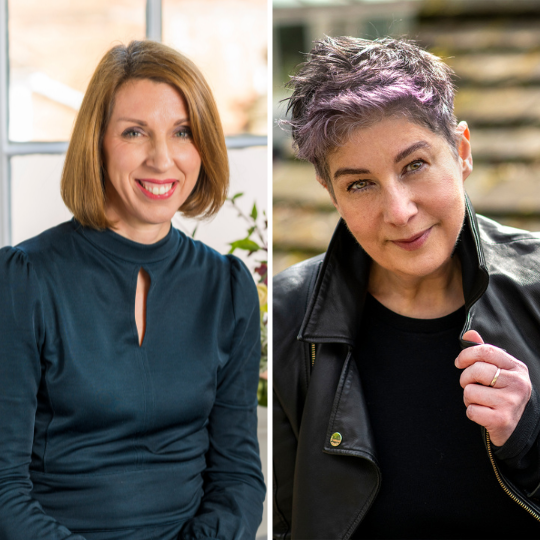
In this episode, Dr Louise Newson is joined by Sarah-Jane Ayers for a powerful and deeply personal conversation about ADHD, perimenopause and the devastating impact hormonal changes can have on mental health.
Sarah-Jane shares her experience of feeling dismissed, desperate and unable to cope, before finally finding the right support and treatment. Together, she andLouise explore why women with ADHD are so often overlooked in hormone care, why symptoms are frequently misunderstood and how too many are being left tostruggle alone.
We hope you love the podcast! If you enjoyed today's episode, don't forget to leave a 5-star rating on your podcast platform.
Dr Louise Newson: So Sarah-Jane, it's great to have you on my podcast. We're just laughing actually because Sarah Jane's just told me that she waffles on a lot. If there's some interruptions, we'll know why. It's, one of the things that keeps me going actually. Someone was asking me last night, you know, why do you keep going when you keep being told off or you keep being blocked? And it's because of stories, it's because of women and my patients, but not just my patients actually. Increasingly people recognise me, they stop me in the street and it's not just a thank you for your nice Instagram account, it's actually usually thank you because you've saved my life, because I've got information from your Instagram or your podcast or Balance app and it's made me realise what's going on in my life and then they could get help. Whether they got help in my clinic or elsewhere is irrelevant actually because the first treatment in my mind is just being empowered with knowledge and it's very humbling and I don't do any of the work for that but it makes me realise that it's really important work that I'm doing and I do it with a great team of people. So you reached out to say thank you but it's just useful I think to hear stories from real people so if you don't mind just sharing a little bit that would be great.
Sarah-Jane Ayers: Yeah, okay, hi Louise thank you for inviting me, so I'll try and be as quick as I can because I go around the houses so basically I was diagnosed with ADHD last year last September. Life-changing. All my life I thought I was stupid and lazy got this diagnosis got the medication and wow absolutely wow my life completely changed but in such a challenging way. I just tried, it's like starting my whole life after 46 years but then the perimenopause crept up along and absolutely blew me out of the water to the point where I felt like I was on a rollercoaster and not the fun kind. I didn't want to get up in the morning, I have everything in my life and more but I didn't feel like I existed, I felt numb and desperate basically, and suicide was something that has been in my mind because I just couldn't cope anymore so I had to start pulling my socks up and deciding that no-one's going to help me I need to go and do it for myself so after listening to podcasts about being diagnosed late and ADHD and listening to podcasts with you in and another lady as well, a very well-known lady, as I'm walking around taking the dog for a walk because I didn't have any time to do this and I thought okay testosterone keeps coming up, what is this link? So I'd research like before I couldn't retain information now I'm like a sponge I am two o'clock in the morning, right what can I research now? And I came up with the testosterone so I went to my doctors and I said, I'm looking at testosterone, they're saying, no, we don't do that, but we can give you estrogen. And I was like, well, I heard that because with ADHD hormones, I think it's a lot worse for us and that we need X amount of this, this, this. Oh, well, I don't really know about that. So here's a patch. So they gave me a patch and within an hour I felt sick and within three hours I thought I had the flu. So I took it off and thought, right, okay, that's not right. I went privately to a menopause specialist and I said do you any knowledge about ADHD? And she says no. I was like right, okay, but I really need that support because there's a link, different link, you know we are getting treated like other ladies without ADHD, but we are needing more help. She says well, I can give you some gel, I'll reduce the amount, off you go. Put the gel on and oh my goodness, I was in and out of consciousness. I put it on at night time and I felt like the whoosh.
Dr Louise Newson: So are you still having periods at this time?
Sarah-Jane Ayers: Yeah, I'm still having periods now. Yeah.
Dr Louise Newson: You see, just for listeners to know, like, if women are still having periods, they're still producing some, it's impossible to know how much, estradiol and progesterone. So sometimes when we give hormones, estradiol and progesterone, when women are still producing it, you can get too much in the body. And this is sounding like, obviously, I don't know the ins and outs, but it sounds like that's, so when people have low progesterone, low estradiol then having those hormones obviously can make a lot of difference but for some women it can amplify too much and make things worse which is what it sounds like happened to you.
Sarah-Jane Ayers: Absolutely yeah and it wasn't just affecting me because like I've masked all my life and all of a sudden having to put my mask back on just to get through the day you know my family really suffered because my moods were horrendous to the point where I was I was shouting at my husband because he didn't fill the the water jar up or what's it called? Filter that's the one. And you know I'm like he's just emptied the dishwasher for me and he's just done this for me and he's just done that and I'm going absolutely mad at him so again I thought right, okay I need to really look at this so again I went back to your information. I did a bit more research on you and again like you said previously about you know, you're upsetting a few people because of the ways that you're wanting to help people which is so brave of you. I think it's amazing because it needs to be done women are losing their lives. And so I went to the clinic I did all online. I had to pay, which is obviously when you're in a situation like that you will pay the money but I'm very fortunate to be in a position where I can pay, whereas lots of people which I've been in touch with recently can't afford the payment so I've said look Christmas is coming up can you ask people for a bit of money instead of a present then you can put this money together? Because I said really you only need like I had two appointments that's all I had and I got diagnosed with PMDD which I didn't even know what that was but I started my first period at eight. I had really heavy periods, I had every contraceptive going that hasn't helped and I had postnatal depression for two years. So again I’ve been let down that side.
Dr Louise Newson: So it all fits in really doesn’t it?
Sarah-Jane Ayers: So it's like, so when I was talking to this doctor, one of your lovely doctors, Dr Dando, she was really, really nice and she was a bit, okay, this is gonna be a tough one. Let's see how we go with this. We'll have to do things probably backwards with you. Like she she thought the PMDD, which made sense. So she said, what we're gonna start with is testosterone. So a small amount every morning, every evening and then we're going to introduce the progesterone so I had two weeks on two weeks off and then see how you get on with that three months later we'll have a chat again and then we'll look at the estrogen, Oestrogel because clearly I was a bit scared about doing that after my last two experiences. So within that I would say within three weeks wow I was, my husband's like, whoo, what's this? I'm like I know this is the person I should be but I can't be because of the hormones but then I'm just a crazy lady you know I would be put away in a psychiatric ward years ago and that's what's happening still and it's absolutely heartbreaking because I went to your talk Louise which was amazing and that story you told I was bawling my eyes out to the point where I actually reached out to someone afterwards because she had the similar experiences and I just feel as though like I say I was so amazed by the difference and then after three months I went come on let's let's do it let's try it. And within three days that was it that was a final piece of the jigsaw to the point where, sorry that's why I've my jumper on, I cried because I was just I've never ever felt so good in my life I'm 47 now and I've never felt so alive I think the word is because I always felt so numb because I've had lots of things thrown at me but then I realised I have to be a warrior and and that's what I'm doing I'm a warrior I'm on a ADHD UK app, on Facebook and as soon as I see this post going I've had enough I can't do this anymore I'm like straight in there with have you checked this? Have you checked that? And people have private messaged me, I think I've helped about 20 people so far and they were going, this is what I needed to hear because I'm not getting any answers but a lot of it is to do with the cost, people can't afford that.
Dr Louise Newson: No, absolutely and people shouldn't have to pay. You know, I've learnt a lot as a doctor over the last 30 years and you know, when I qualified I knew vanishingly little about hormones, especially the role in the brain. But also as women it's often normalised a lot. You know, the hormonal changes we get throughout our cycle is just something we have to put up with almost. And you know, I don't know why we have to put up with something because you know, if people have pain because they've hurt their finger or they have headaches or they have arthritis, they don't have to put up with it. It's fine to medicalise various symptoms. But the problem is for women, it's almost like, well, that's just their emotions. And people do know it's due to hormones, but they're too almost scared or they don't have the right understanding because then they think, well, let's just give contraception because that's labelled as hormones, but it's not hormones. And so increasingly we see and speak to a lot more younger women who are like you were 20 years ago, experiencing symptoms. And it's really sad because a lot of people don't know what it's like to feel well because they just had to carry on like that. And many of us, myself included, wish we'd started hormones many years before. And we try really hard. I think that many years ago, I was trying really hard with exercise and nutrition and everything else. Some people just said, well, you've got three children, you'll be a bit tired. But they never said that to my husband, not once. And often women know something isn't right. And if you're not getting help from a healthcare professional, we ask other people. There's a lot of criticism about social media, actually it allows people to have conversations with people they've not had before. And not all the information is correct. Of course it isn't. But a lot of it is. And I think that's what's happening in these conversations. And I'm sure it's the same for the forums that you're joining as well, is that women are joining the dots quicker than healthcare professionals often.
Sarah-Jane Ayers: Yep, definitely and it's like that's awareness now where you know I get people say to me, you're jumping on that bandwagon are you? Got ADHD have you? And I say what a strange thing to say. I didn't know you was with me all my life and then I don't justify it anymore. If you're my friend, you're no longer my friend. I have lost friends. I am not bothered because they're not my people. People who get me have stuck around people who question me or are not interested then I'm too busy now too busy to to get that on with everything else. I want to make a difference and I don't need that but going back to the hormones, like so I'm on three lots of HRT and I said to Dr Dando is this something I can get on the NHS? She's like well yes but you've gone privately now, doctors aren't great with doing that so I was like right ok I will try that then. So the next day I actually emailed the doctor saying look I asked for your help you couldn't help me I'm on my knees, my family are on their knees, I've just had this thrown at me, now I've had this thrown at me and I just want to live. I just want to feel good so please help me because everything I've been prescribed I can have on the NHS so why should I have to pay when everybody else doesn't? What have I done wrong to deserve that treatment? And I said you know I need to have a blood test after three months. Again they have to charge me. Why? Why? Please help me. And the next day, yes we can.
Dr Louise Newson: Amazing.
Sarah-Jane Ayers: If they didn't, I would make a way. People can't say no to me now because I'll find a way round it. It's like I am on a mission.
Dr Louise Newson: It’s very important because you're absolutely right to ask for hormones and it's really interesting because in the clinic, obviously the clinic that I work in is a private clinic, but a lot of people actually are able to come once or twice, they go on the right hormones for them and then their NHS GPs take over their prescribing. But there are still a lot of GPs that say, no, you can't, we won't. And I can sort of understand if they're not getting the right training or education or if it was a really, really unusual condition. So say, for example, I was running a rheumatology clinic and someone had an autoimmune condition that needed quite high doses of a biologic agent and which has lots, can have lots of potential risks and side effects and maybe needs monitoring. If I wasn't confident as a GP, you know, I wouldn't want to prescribe something I wasn't confident in. But what surprises me is that GPs seem quite happy to say, I'm not trained in menopause, yet, or hormones, yet half of their population will have hormonal changes. So it feels like almost embarrassing that they’ve just got this wilful blindness. Whereas if I was a psychiatrist and I'd prescribed you some antidepressants and said, could you continue these on the NHS? The chances are they probably would. Whereas there are more risks with antidepressants than there are with hormones. And you've been very clear. thank you for that, talking about how the hormones have probably saved your life as well and improved your mental health. and your family life and everything else too. So you're not on methadone, you're not on some awful drug that has got risks and then the natural body identical hormones so they don't have the risk of breast cancer or stroke or clot or whatever the older synthetic hormones do. So it just feels this real like, sometimes I think I live in a parallel world really and it must be like that for patients because you know, why do you have to ask so, you know, be so sort of worried about asking for something that is just replacing your natural hormones?
Sarah-Jane Ayers: That’s it. It's like with the synthetic hormones for ADHD people, that is the worst thing you can do. I had a Mirena coil fitted and within three or four weeks I had it taken out and they were like oh no you need to keep it in for longer. I was like listen I need this out and I've done some more research, this is the worst thing I could have had and if you don't take it out I'm gonna take it out myself because I can't, it was even worse, my moods were bad anyway, this was even worse. It's like, we're in the 21st century, we can talk to people from all over the world and be in front of them, but we can't look at, so it's been out forever and ever, we've always had the menopause. We've always had periods so why why are we not being looked at? You know it's like I've been let down with, I wasn't looked at as ADHD because it was the ‘naughty boys’ that got all the attention and the support obviously or not support, we didn't. So okay right okay I've grieved for that let's move on. And then it's like well hold on a minute now I'm going again am I? I'm having to get up and stand up and just wobble some heads because nobody's doing it for me so I'm having to do that. And I am put on this planet to help people that's why I'm here and I have got so many different things going on with different things and I just want to make a difference. And if I can save just one person which I have done then I'll keep on doing and listening to you and the amazing work that you're doing, you know like yes a few people have like been a bit upset about things but actually if you look at the bigger picture how many people have you saved. They don't look at that. You know? No! No!
Dr Louise Newson: No, course not. No one wants to think about good things. But you see, it's happened for many years actually. I'm very interested in the history of medicine and there's lots of female doctors that have been taken down by the establishment over the years, but also women have not been believed and listened to. You only need to take a peek into the asylums in the Victorian times. They were full of hormonal women, but they were a nuisance. So it's easier just to lock them away. If you go into a psychiatric hospital now, there'll be lots of women who've been sectioned and some of those women, they'll have hormonal changes. If you go into the prison service, which I have done last year, most of the women in prisons have hormonal changes, but people are only worried about them getting pregnant, so it will give them synthetic hormones. And so the synthetic hormones, like you say, block the natural hormones working in the brain and often mental health can worsen. But people don't join the dots in medicine, so the psychiatrists don't think about hormones, and the people who are prescribing contraception don't think about mental health. So the people that are suffering with these conversations are women. And the people that are suffering the most are the women from lower socioeconomic classes…
Sarah-Jane Ayers: Yes, I was about to say about that, yes.
Dr Louise Newson: Women from different ethnicities, often because of different cultures, but also if English isn't their first language, and women that just don't have a voice because they're just pummelled to the ground. So it's not always people from low socioeconomic classes. You there's a lot of people I see who are actually very wealthy, but they are having such an awful life and they have no one to advocate for themselves as well. Because if you're in a relationship, it might not be a good relationship, so you can't share that. And I think a lot of times when people are feeling very vulnerable and low, they need somebody else to help them get the treatment that they want and understand about the value of hormones. And that's where, you know, working with other people, you know, I couldn't have done this work 40 years ago without the internet, without social media, we couldn't have done this podcast, you know, it, things have really moved on. And I think a lot of medical people don't like this empowerment that's happening outside the consulting rooms. But I think it's really, really powerful actually because a lot of things are about choice. You know, we can choose about all sorts of things that affect our health, either positively or negatively. So I can choose whether I'm going to have avocado for lunch or whether I'm going to have fish and chips or burgers for lunch. And no doctor is telling me off for having an unhealthy diet choice. I could smoke 20 cigarettes a day and no-one would come knocking at my door. Whereas if I ask for some natural hormones to help my mental health and physical health, it's suddenly come to this awfulness. And it does seem a bit almost laughable. If people weren't suffering, it would be laughable, but the suffering is palpable.
Sarah-Jane Ayers: Absolutely, that’s why I want to make a difference because not everybody’s got what I’ve got, and that’s why yes, on a mission because, yes.
Dr Louise Newson: Which is great because there's lots we need to do and we need to work together and women work better when they lift each other up, not push people down and you know this is a global revolution that we're starting or we've started or we're continuing. I don't know who started it but it's been going for a long time that women deserve a voice and we can amplify our voices in a lot quicker ways. So it's great for you to be so open to talk about what you're doing because we all can help each other and we learn from our own experiences so much definitely. Just three things Sarah-Jane that you think are going to make the biggest difference over the next 10 years because we can't be in this mess in another five, 10 years’ time. It's not fair on women who are suffering.
Sarah-Jane Ayers: No, not at all. So the only thing is, is just getting it out there really. And also, like, doctors, why can't they have one nurse who does a course on menopause? Menopause in ladies with ADHD, menopause without ADHD. And have a nurse at that practice. That's sensible. It's simple, isn't it?
Dr Louise Newson: Yeah, it's not rocket science, but I think things are changing and we need to just keep changing quicker and faster to help and reach more women.
Sarah-Jane Ayers: Yeah, yeah. But that's from people like yourself. You, you didn't come into menopause support. You had a different life before this. But you've made such a difference to so many people's lives. And you're just such an inspiration. Yes, you need to be cloned. So I want to be one of you. I'll be a little minion.
Dr Louise Newson: No-one really wants my life, I tell you. Well thank you so much for coming today, it's been really great, thank you.
Sarah-Jane Ayers: I really appreciate the support, thank you.