Menu

My Mission
Articles
Podcast
Events
Workplace Education
Clinician Education
Newson Clinics
Hormones Unlocked
Books
Research
Media
Contact

Balance App
Track symptoms, get insights and feel more in control.


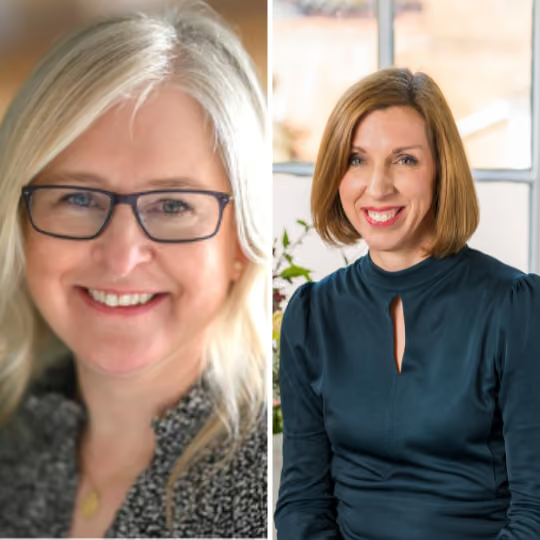
Cath Janes spent 15 years on mental health medication, yet no one ever checked her hormones. Could they have helped?
Cath, an award-winning anatomical embroidery artist, was on and off antidepressants after severe postnatal depression and was then prescribed quetiapine to help her sleep. Since starting estrogen and progesterone in perimenopause, the racing thoughts that once kept her awake for 48 hours have quietened, and she now questions her ADHD diagnosis.
She joins hormone health expert, Dr Louise Newson, to ask why hormones are so rarely considered in mental health care, how drugs such as quetiapine can lower estrogen, progesterone and testosterone, and how low progesterone can fuel overthinking. Louise explains why she treats the hormone imbalance first, how some women can then reduce other medicines, and why any change must be gradual and agreed with your doctor.
Cath ends with three changes she wants to see, including psychiatric services looking at hormones.
Follow Cath: @cathjanesanatomy
If you're struggling with your mental health, please speak to your GP and don't stop or change any medication without their advice. If you're in crisis, you can call Samaritans free on 116 123.
LET'S CONNECT
👉 Track your symptoms before your next appointment with the symptom questionnaire in my balance app: DrLN.co.uk/balance
👉 Follow the podcast so you never miss an episode: https://drln.co.uk/podcast
👉 More from Dr Louise Newson: https://linkin.bio/drlouisenewson
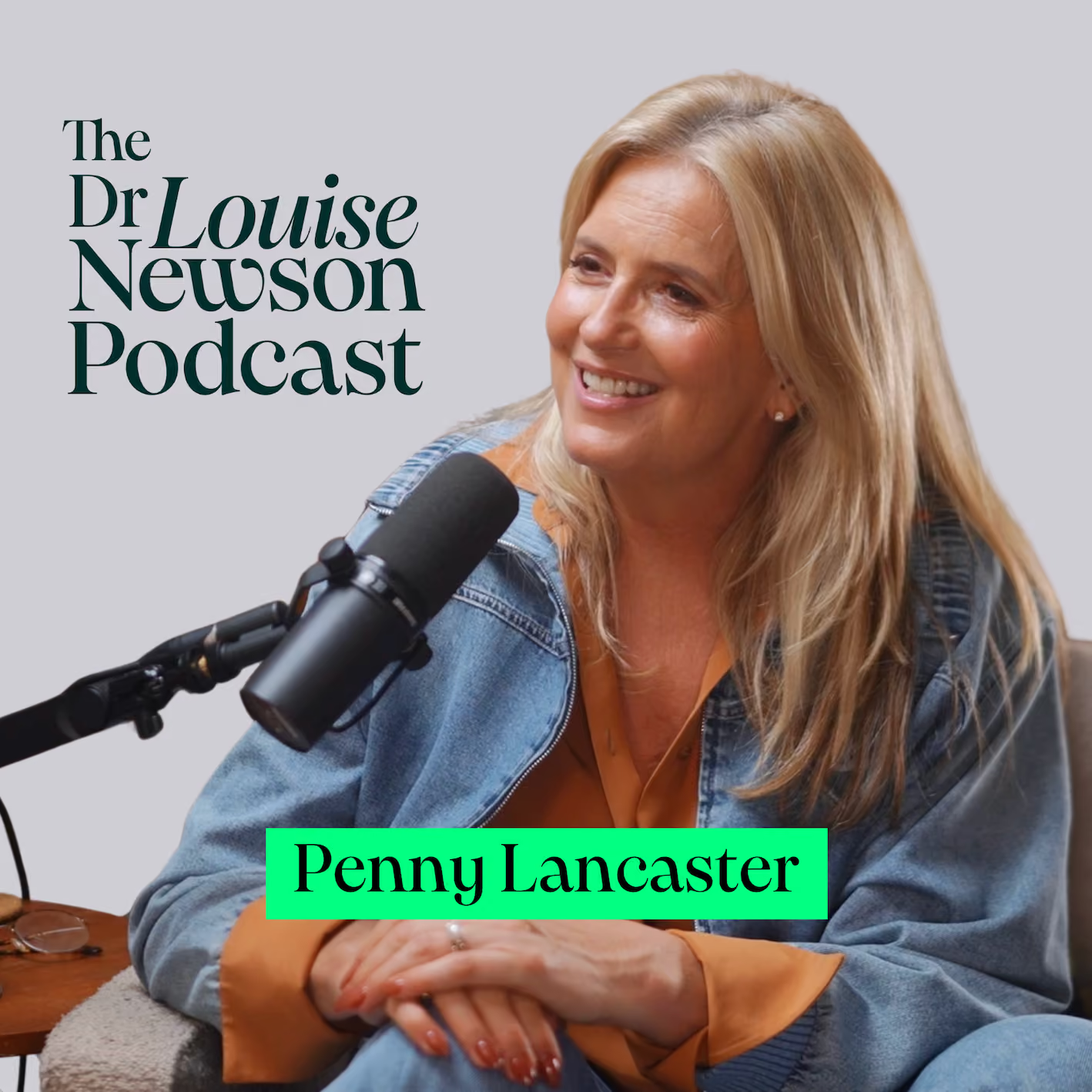
Dr Louise Newson: [00:00:02] So today on my podcast, I've got Cath, who I reached out to on Instagram, actually. She's a very talented artist and creator of all sorts of things. And I was just really struck by when she spoke about her postnatal mental health. And we just want to have an open conversation today about it. So thank you, Cath, for coming today. [00:00:25][22.9]
Cath Janes: [00:00:26] That's ok, thank you very much for having me. [00:00:27][1.5]
Dr Louise Newson: [00:00:28] That's fine. Well, I've been a doctor for 32 years, a long time, and I've spoken a lot how when I was training as a doctor, doing psychiatry, doing obs and gyne, I knew nothing about the role of hormones in the brain. I saw a lot of people with postnatal depression, postnatal psychosis, never once thought about the big hormone imbalance that occurred. And only now, really, I realise that other doctors knew about it for decades. Many years ago in the 60s and 70s and Katharina Dalton, a very inspirational pioneer doctor, was giving people hormones, natural hormones and transforming their lives and I feel a bit cheated that I didn't know what I know now so I'm trying to make up for lost time. [00:01:11][42.9]
Cath Janes: [00:01:14] I'm glad you are, I'm glad somebody is. [00:01:15][1.3]
Dr Louise Newson: [00:01:16] Oh thank you so if you don't mind tell me a bit about you know what, what happened what's happened to you and your story if that's okay? [00:01:22][6.2]
Cath Janes: [00:01:24] Of course, yeah. My daughter's 18 now so I got pregnant when I was 37 and in preparing for this chat it's made me think back over my experience. I think how much hormones were involved from the very beginning. I'd had endometriosis from a really early age in my mid-teens and I'd been told I was infertile and honestly I was completely at peace with that. I had big plans for travelling the world and whatnot. But the pain of the endometriosis and the flooding from the periods was so awful and disruptive. My gynaecologist and I decided I'd have a hysterectomy at the age of 37 and he started injecting me, I think it's called Zoladex, the drug. And within weeks of starting that treatment, I got pregnant. I got pregnant on honeymoon of all places and then went on to have my daughter. It was really interesting I think that within weeks of giving birth my mental health felt like it completely collapsed. [00:02:27][62.2]
Dr Louise Newson: [00:02:29] Gosh. [00:02:29][0.0]
Cath Janes: [00:02:29] I'd gone through a birth trauma when I was giving birth and that was less physical and more emotional. It was very much about, I had identified all my life as a woman who couldn't have a baby and it was in the middle of labour when my body started pushing I suddenly realised oh God there's a baby. And I think mentally I just couldn't really deal with that. I'd had a history of depression on and off anyway as well, which might have contributed, but after giving birth, the depression just, it was complete and almost instant. It didn't recognise the description of things like baby blues. It was all-encompassing and it was an enormous shock. I think I went on antidepressants. I was lucky enough that I was diagnosed with depression and antidepressants and I did that on and off and things got increasingly worse until I became suicidal and then of course I needed real like psychiatric treatment and care and I've kind of worked my way back to health over the last 18 years really and it's only since hearing you talking online that I started to realise hormones could have played an enormous part in that and nobody once said that to me that that could have been the case. [00:03:50][81.0]
Dr Louise Newson: [00:03:51] So no one spoke to you about hormones at all? [00:03:53][2.8]
Cath Janes: [00:03:55] Not a thing. My depression became so bad that I stopped sleeping and I would routinely be awake for like 48 hours at a time with my racing thoughts which got particularly bad at night. And when I spoke to my psychiatric consultant about that, he put me on Quetiapine, which is an anti-psychotic, to make me sleep and I was suicidal at the time. So I can appreciate the need to just crack on and get on top of it. But it fascinates me now looking back that nobody once thought the hormones could have played a part in that. And since going through the perimenopause which I am now and taking estrogen and progesterone, I'm starting to see the impact, the good impact they're having on things like my anxiety and then I do wonder whether if I'd taken those 18 years ago perhaps I wouldn't have gone so far down the path of depression that I actually did. [00:04:52][57.0]
Dr Louise Newson: [00:04:54] It's very interesting isn't it because you know we all know and even probably at school a lot of people know that when they're pregnant they have lots of hormones in their body and actually I mean I don't know how you felt when you were pregnant but many people feel great when they are pregnant as in they feel emotionally quite well you know is that how you felt? [00:05:13][18.8]
Cath Janes: [00:05:14] After a while, I think at first, the first three months, I was in enormous shock, people kept telling me it was a miracle baby, I'd been struck by lightning. I certainly felt like I'd been struck by lightning. So I think after the first three months then I did feel much more, I guess calm and balanced definitely. [00:05:31][17.1]
Dr Louise Newson: [00:05:33] Yes, and we've got really high levels of hormones, especially estradial and progesterone, but also testosterone goes up. So it's not just mentally, physically, people often feel well, it's the time when the hair is thick and the nails grow and the skin is glowing and it's a really, you know, lots, but there's lots of hormones obviously in the body. So we know that, we've known it for many, many years, but we also know that as soon as the baby is born, there's a massive drop of hormones and even when I listen to people, especially psychiatrists talking about postnatal mental health disorders, they will mention the word hormonal drop, but then no-one then joins the dots and thinks well what about topping up those hormones? And it feels really like it's so obvious and sometimes the really obvious things are ignored especially in medicine but when someone pointed it out to me about 10 years ago I just thought what, of course it makes sense you know and then the drugs like Quetiapine can block hormone production even more. [00:06:33][60.8]
Cath Janes: [00:06:35] I didn't realise that. [00:06:35][0.0]
Dr Louise Newson: [00:06:35] So because one of them, yes, one of the ways they work is that they affect a hormone called prolactin in the body and a lot of people, you probably had your prolactin levels measured as part of your blood test when you were on it and prolactin actually suppresses the hormone called follicle stimulating hormone in the brain which then normally makes hormones so if you've got low FSH then the body thinks well I don't need hormones and switches off estradiol, progesterone, testosterone. I know, and I've been asking psychiatrists for many, quite a long time now, I say, where are your guidelines about measuring hormone levels in people who use Quetiapine, and they say, well, we don't have any. And we know that Quetiapine can also raise cholesterol and blood pressure, so people on those drugs often have their cholesterol done, they have blood pressure done, they have their blood glucose done for diabetes, but no-one thinks about their other hormones. So it's almost like a double whammy, really. [00:07:32][57.0]
Cath Janes: [00:07:32] Yes. [00:07:32][0.0]
Dr Louise Newson: [00:07:33] But it feels really strange that the psychiatrists aren't thinking about a hormonal imbalance and treating that as well as any other drugs that are needed. [00:07:43][10.0]
Cath Janes: [00:07:45] I agree. I'm absolutely shocked by that. I think going into psychiatric services locally when my daughter was still a baby, I'd assumed that that would have been some sort of red flag that I'd gone through this like massive life change, body change, hormonal change and it was worth checking out those things. And I don't recall a single conversation with anyone. Whether they did blood tests or not, it's kind of lost in the midst of time now in my head, whether anyone even checked the hormones or saw the results and thought there may be something off. I find that quite shocking. I don't know if that's perhaps because I was immediately into psychiatric services and it's a kind of a silo mentality. [00:08:36][51.1]
Dr Louise Newson: [00:08:37] Well, it is, but you see, psychiatrists are medically qualified doctors, but the problem is they go often straight into psychiatry, so they haven't, you know, done other specialties. And then obstetricians and gynaecologists usually go straight into obs and gyne, so they have not done other specialties. But I sometimes think, you know, if you say had a big bleed after having a baby and your haemoglobin dropped, you became for me anaemic and you were very tired, and you also had postnatal depression. They would do your blood count and say, well, let's give you iron or let's get you a blood transfusion to top up your iron. And then if you've still got mental health, you know, you might need drugs in parallel. Or if you had, I don't know, an underactive thyroid gland, they would always give thyroxine as well as giving any other drugs for mental health. But somehow this area of medicine, giving those hormones back, is just being completely ignored and the gynaecologists and obstetricians don't really know about mental health, they often say there's no mental health component with hormone imbalance so they're not trained and then psychiatrists once you're in a psychiatrist you're you know it's all about mental health so it feels like women are just lost and I spoke to a psychiatrist about two years ago, he did a lot of work with postnatal depression and psychosis in the 80s and 90s and he's now retired and he said, Louise, nothing really works. He said the drugs are just a bit like a chemical straitjacket, they just calm people down. But he said the only thing really worked was when the women had their periods again, when their periods started, then often their mood would improve. And I was saying, yes, because that's when their hormones started to increase again. But why would you never give hormones in those months or weeks or even days when people are really struggling? [00:10:36][118.9]
Cath Janes: [00:10:38] It's quite staggering, isn't it? I assumed the medical profession was much more on top of this, much like you are, than it actually is, and it kind of concerns me. I sometimes write off my experience a little bit, as in, it happened 18 years ago, so surely things have changed. I'm starting to worry that things haven't. [00:11:01][23.7]
Dr Louise Newson: [00:11:06] No, I think they've got almost worse because the knowledge has increased, you know, women are working it out a bit more and other doctors and healthcare professionals, but then what's happening is that people are working it out and then they're asking for hormones and being turned away. And psychiatrists, I mean, I do quite a lot of teaching and I did a lot for psychiatrists a few weeks ago and they were really interested. But then some of them work in mother and baby units and they said, but Louise, it's not in the guidelines. We're not allowed to prescribe. And I'm just like, hang on, you're an independent practitioner. And I met one doctor who's going to be a consultant in a few months' time. And she said, I work in a mother and a baby unit. I really want to prescribe hormones, but if I do, I'll get told off by my consultants and then I won't get a reference and I won't be signed up to be consultant. So that's, like, really shocking. [00:12:03][57.1]
Cath Janes: [00:12:04] It is, it's awful I think when people coming in, I guess to the profession have a better knowledge and they're going to be almost punished for wanting to apply that knowledge then aren't they? [00:12:16][11.5]
Dr Louise Newson: [00:12:16] Well you're absolutely right. I mean I've written a chapter in my book about the medical establishment really and the hierarchy of medicine and it's really difficult to challenge your seniors in medicine and I was talking about this to my husband yesterday because it's very hit and miss actually, medical training, because often you learn on the job and you learn by your peers and that's the same with lots of other professions, I'm sure. But it really does depend on who's teaching you. And so, you know, we've all worked for doctors where we thought, oh, I'm not really sure I want to do that. I don't want to learn that. But if you don't have any basic knowledge, if someone's telling you, you have to treat postnatal depression with antidepressants, you're not going to question it because this is your senior person telling you and you're not allowed to question. You know, it's not. So then it just carries on the same and then when you've got someone like me or Katharina Dalton 50 years ago saying, well, what about hormones? People don't like challenge. Whereas I'm very happy to admit that I've done things differently in the past and I think as doctors, we're human beings, we're not robots, we can evolve. And I think patients like it if we evolve. And sometimes people get very cross if we don't work out of the guidelines, but guidelines can be old or outdated or they've got the wrong evidence in or whatever. So actually sharing uncertainty with patients and saying, well, look, this isn't in the guidelines but actually you've had a big hormone drop after your baby. I'm happy to prescribe you just some natural bioidentical hormones, some estrogen, progesterone, testosterone if you need it. Even if you're breastfeeding, it's just natural hormones. If they go in the breast milk, that's fine. And lets, do you want to try it and see? Do you see what I mean? And then it moves on the conversation. And, you know, I speak to a lot of women who are like you really, who have had hard experiences, battled with mental health, and then take hormones when they're a bit older, and then think, I wish I'd tried them before. But they never had that as an option. [00:14:30][133.9]
Cath Janes: [00:14:33] ... Tried them a long time ago. It's really interesting that, you know, I had my breakdown and I was suicidal with my breakdown and people ask me when I recovered. I sometimes say, you know any day now, I'll get over it. And it's like a very long, slow journey to kind of get back on my feet really. But a few years ago, I was diagnosed with ADHD. And what's interesting to me is that since I started taking bioidentical hormones, the estrogen and the progesterone, the things that made me wonder whether I had ADHD have kind of disappeared. Like that continual whirring motion feeling I had inside myself from the moment I woke up in the morning, that little internal engine. That kind of went when I started taking progesterone and that's not to say there aren't other aspects of my mental health journey that I'm still working on. It just feels that little bit easier now. And so I do wonder that motor that was whirring has gone with the progesterone. That was what was keeping me awake all night and led to me taking the Quetiapine. So I do wonder. And as you said, I think I'd rather a doctor say to me, look, this isn't in the guidelines, but I've got a hunch. I've got all this experience. Let's just try this. If it doesn't work, we just stop. It's not a one-way street and I would rather almost in concert with my GP go on an exploration of what could happen rather than just be told one thing and I have no idea that there are any other options at all. [00:16:11][97.8]
Dr Louise Newson: [00:16:11] Yes, and it's so interesting and I've been a GP for many years and I really share everything with my patients and we go through everything and that's the way it should be really. But it's interesting, we see a lot of people with either newly diagnosed ADHD or they've had ADHD and it has worsened when their hormones change. And we know the way our hormones work in the brain. All three of them, so progesterone, estradiol and testosterone. And a lot of women who when their hormones are balanced actually, especially progesterone and testosterone, then their brain becomes calmer, like less sort of chatter in it. And it's easier to prioritise. And we know that progestorone helps with sleep. When you sleep, your brain repairs and restores, which is really good. And I think ADHD, there's so much in the media now, it's being overdiagnosed and whatever. And the thing is, lots of people have ADHD and it's, for some of us it's great because it's an ability to multitask and we want to be able to be creative and do lots of things but it's when it becomes overwhelming and you can't see the wood for the trees and you're worrying about the things you know you shouldn't be worrying about, it becomes very, very difficult. [00:17:28][76.9]
Cath Janes: [00:17:29] Absolutely. When I was, sorry to interrupt there, when I was diagnosed with ADHD, it felt like I'm going to say the perfect diagnosis. I kind of ticked every box and looking back I'm thinking it was the perfect storm of my lack of hormones, my journey with my mental health journey. I think the perimenopause was actually kicking in really hard and it created this perfect storm that fitted all the ADHD kind of tick boxes, I guess. And when I was diagnosed and I was offered medication and I took it, I thought I really do tick every box here. That same process now that I'm on the hormones, I don't know if I'd accept that diagnosis. I don't even know if I would seek the diagnosis because the things that were prevalent then that make me think I've got this no longer exist. So it's been a really interesting journey taking the estrogen and then the progesterone and seeing, trying to step back from my feelings and emotions and experiences to see how they're impacting on it. I think it's had that greater change on me, really, that I may not accept the ADHD diagnosis now that I'm on the hormones. [00:18:40][70.3]
Dr Louise Newson: [00:18:42] See that's really interesting and I hear that a lot from people and one of the things that I worry about diagnostic labels is that with a diagnosis comes a treatment. So with an ADHD diagnosis it's a stimulant drug or it's an amphetamine based drug and you know they're not without risks as well and for some women and men they can work well but I see a lot of people who it makes them almost too focused in one thing that they forget to eat or forget to do other things and it changes them. But also in medicine, I'd always want to try and treat the underlying cause. So if it is this hormonal imbalance, low progesterone causing, you know, this overthinking and the rumination and all the symptoms you're experiencing, it's always better to have the natural hormones first. And, and it's interesting because, you know, you've noticed that change. [00:19:33][51.0]
Cath Janes: [00:19:35] I absolutely have. It's been fascinating actually. I took HRT patches, I used those for a while and they helped and then they didn't help so much. And then I started using estrogen gel and upon seeing you, you increased my dose and now I'm on progesterone. I think watching those hormones using them like in that incremental way until I got to where I am now has been really instructive seeing the impact that they're they're having on me. When I would start taking the ADHD medication I became quite bothered quite quickly. I used to describe myself as being like Judy Garland, I would take medication to make me sleep and then medication to wake me up and I thought this can't be right. It can't be right. And it feels so much more natural to take the bio identical hormones and now I'm going to try coming off the Quetiapine because I really feel the progesterone has slowed down my thought processes enough that perhaps at night my brain will shut off in a way that it hasn't done before. [00:20:49][73.2]
Dr Louise Newson: [00:20:50] And that's so interesting, isn't it? And we've published some data as well about deprescribing. So it feels weird as a doctor to talk about deprescribing because everyone talks about prescribing. We see a lot of women in our clinic, once they're on the right dose and type of hormones and they feel better, then often, very gradually, it has to be very gradual. We can deprescribe drugs like Quetiapine, olanzapine antidepressants, also painkillers as well, and sleeping tablets, which It's not good for big pharma, but it's really good for the individual person. So, you know, no-one wants to take a medication that they don't need. And like you say, with drugs like the anti-psychotics, such as Quetiapine, when you're in a crisis, then obviously they work very well. But when you are stabilised and you're treating the underlying cause, then do these drugs really have a role. Probably not. But one of the problems is the psychiatrists do no training about hormones, they never prescribe hormone treatments, so then they never see the results. [00:21:55][65.1]
Cath Janes: [00:21:56] Of course, I guess then they've never got that comparator where they can see a patient start hormones and improve and then they reduce, say, the antipsychotics and see how stable that patient remains. And I guess until they start doing that, they're always going to stay on the path of prescribing these literally brain-altering drugs. It does bother me sometimes. I've been on the Quetiapine for 15 years. And I get routine blood tests to check that I haven't had an impact on my heart, for example. But it does bother me how much the Quetiapine will have changed the way my brain functions now over such a long period of time. So it'll be interesting to start coming off it to see what happens, I guess. [00:22:41][44.5]
Dr Louise Newson: [00:22:42] It's really interesting, isn't it, because people have been scared for the wrong reasons of HRT for many years, and even now people have these unfounded fears. Yet Quetiapine is associated with an increased incidence of diabetes and cardiovascular disease, obviously long-term effects affecting metabolism, so people can sometimes put on weight as well. And we don't really know all the long- term effects because the studies haven't been done. When the antipsychotics first came to market they were actually used as a tuberculosis treatment and then they realised people were starting to feel a bit happier and then they started to prescribe them so they've not had like long-term data we don't know but somehow we know that you know like like you say you have the blood test done so they they're established risks that people are looking for but see somehow that's okay but people are worried about HRT, which doesn't have the same risks. And it feels a bit weird, really, that no-one's joining the dots. And like I say, people often on long-term Quetiapine, their own hormones decline even more. So there's lots of people in psychiatric institutions and going to psychiatric clinics where they have low hormones that they're never checked for, they're never asked about, and they're never prescribed hormone treatments. [00:24:02][80.0]
Cath Janes: [00:24:04] That is absolutely staggering, isn't it? When I think that I've been on Quetiapine for 15 years and I've not once had a blood test on the basis of that to find out the impact on my hormones, I find that quite staggering. And I'm glad we're talking about it now because the next time I see my psychiatric consultant, I'm going to raise it and ask it what we can do, what we could look at. And I don't know if that'll change anything, but it might just start a conversation. [00:24:32][28.4]
Dr Louise Newson: [00:24:34] Well I think people are starting to think a bit more because, you know, hormone levels are a guide but estradiol and testosterone can be done and if you're ticking a box for a blood test that you're having anyway it's just another box to tick. But the other thing is we've got the symptom questionnaire. So the one we use in the clinic but also on Balance app and my website has got 84 different questions and often when people do them it's not just the mental health symptoms they might have some muscle and joint pains, they might notice some palpitations, they might have, you know, some urinary symptoms and then that really makes people think well it's probably not just a mental health condition maybe it is my hormones but the problem is if you're not asked those questions by your mental health team you're not going to to volunteer them often because they're focusing just on your mental heath so the other thing I often encourage women to do but also doctors and and people working in mental health teams to do is to to go through that symptom questionnaire. Do it in advance of the consultation and say, look, I've got all these symptoms. Because also you can have more than one condition in medicine. You can have, you know, clinical depression, mental health disorder, but you can also have low or changing hormone levels. So having two treatments in parallel is absolutely fine as well, because the hormones don't interact with any drugs. [00:25:54][80.2]
Cath Janes: [00:25:56] That's really interesting. I think it just struck me as you were chatting there about, I think this is the, I'm 55 and this, going through the perimenopause, it's been the first time in my life I've gone to my GP and not just listened to what they've told me and that's on the basis of reading your book and seeing you online and learning about my condition, a 'condition', perimenopause, and actually going into the GP armed with my checklist of all the symptoms I had and going in with that feeling of defending my corner. And that's the first time I've ever done that and I do wonder perhaps if I'd known a lot of these things whether I'd approached my mental health in the same way. I mean back when I was put on Quetiapine I was desperately ill so I probably wouldn't have had the ability to vocalise anyway. But I think if women just know more broadly about this stuff that when they do go and see a consultant or a GP, they can go kind of armed, prepared, they know what they want to say. And it's more of a to and fro kind of conversation rather than seeing a GP, being given an answer and leaving. [00:27:16][79.7]
Dr Louise Newson: [00:27:18] Absolutely and it's the way it should be. I think a lot of doctors don't like the work I do because they're complaining that women are asking for it, but I think it's the only way to really change things and we should as women be able to challenge and question and ask and be empowered and, you know, I just hope younger people listening to this who, you know, once they're out of that acute situation with a mental health disorder especially postnatally will then have the confidence to talk about hormone treatments. Because, you know, we can't go back in time I don't know how you would have been 10 or 15 years ago but going forwards because you have advocated for yourself your future health and hopefully mental health will continue to improve which will be wonderful. [00:28:02][44.2]
Cath Janes: [00:28:03] That's the hope. And, you know, you said at the start that I'm an artist and everything I'm creating at the moment is about my experience of maternal mental health, my PTSD, my PND, my suicidal feelings. And my hope is that by talking about this stuff out loud, it'll stop perhaps one day my daughter going through the same thing, women who are giving birth now going through this same thing. It's that whole kind of sunlight being the best disinfectant really isn't it? The more we all talk about it the more hopefully we can change things. [00:28:36][33.4]
Dr Louise Newson: [00:28:37] I think that's just so wonderful. So I'm so grateful, Cath, for you coming today. So I always end with three take-home tips. So I am just going to ask, because I've got young daughters as well, similar ages, so three things that you would love to see change in the course of, hopefully our lifetime, but certainly the younger generation. [00:28:55][17.9]
Cath Janes: [00:28:57] Ooh la la just three. I think, I think listening to women more when they give birth and in the aftermath. Not just saying it's just natural to feel that low it's normal it's normal to be in pain. I think that'd be amazing. After talking to you and learning everything so much of what you know I think psychiatric services looking at hormones, absolutely. And I think perhaps things like perimenopause and menopause being taken into account again when women engage with psychiatric services, looking at a broader idea of what could be wrong rather than that kind of siloing. [00:29:43][46.2]
Dr Louise Newson: [00:29:45] Absolutely. Brilliant. So let's see what we can do. But thank you so much for coming today, Cath. It's been really great. [00:29:51][6.2]
Cath Janes: [00:29:52] Not at all. Thank you, Louise. [00:29:52][0.0]
[1732.6]